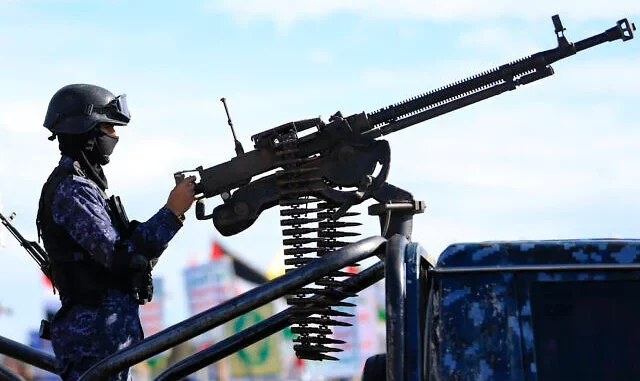
Security personnel stand guard as Houthi supporters gather during a rally in solidarity with Iran and Lebanon, amid the US-Israeli war with Iran, in the Houthi-held Yemeni capital Sanaa on March 27, 2026. (Mohammed HUWAIS / AFP)
Published March 29, 2026
Iran‑aligned Houthi rebels in Yemen have escalated their involvement in the expanding Middle East conflict by launching ballistic missiles toward Israel — marking a significant development that could widen the war and disrupt key global trade routes. The strikes have stoked fresh fears that Houthi forces may renew attacks on Red Sea shipping lanes, jeopardizing international commerce and energy supplies.
Missile Barrage Marks Houthi Entry Into Middle East War
On March 28, Iran‑backed Houthi fighters launched a ballistic missile toward southern Israel, triggering air‑raid sirens and prompting Israeli defenses to intercept the threat. Officials later confirmed a second ballistic missile launch aimed at Eilat, also intercepted by Israeli forces.
The assault marks the Houthis’ first direct involvement in the war between the U.S.–Israel coalition and Iran, significantly expanding the battlefield beyond the Iran front and the Levant.
Tehran’s Ally Signals Broader Intent
The Houthis, long regarded as one of Iran’s most prominent regional proxies, declared that they would continue operations “until the aggression against all resistance fronts stops,” effectively tying their actions to the broader Iran conflict.
Yemen’s internationally recognized government condemned the involvement, accusing Iran of dragging the country deeper into regional strife through militant proxies.

The Bab el Mandeb Strait located at the southern end of the Red Sea.
Red Sea Shipping Threat Looms Larger
Experts warn that renewed Houthi aggression could shift focus again toward the Red Sea and Bab al‑Mandeb Strait, two vital chokepoints for global trade. Between 2023 and 2025, the group conducted more than 100 attacks on merchant vessels in the area, prompting rerouting of ships and increasing insurance and freight costs worldwide.
The potential closure, partial blockade, or repeated targeting of shipping lanes could significantly disrupt global supply chains and energy markets — particularly amid the ongoing conflict and the closure of the Strait of Hormuz.
What This Means for the Conflict
The shift by the Houthis from Yemen’s internal civil war into a broader regional confrontation signals a growing alignment with Tehran’s strategic objectives. While Houthi leadership previously showed restraint, internal pressures and Iran’s influence appear to have pushed the group toward direct engagement.
This expansion not only complicates the ongoing war but risks drawing in additional regional players and deepening international involvement. It also threatens to widen the conflict and potentially impact global trade, energy prices, and diplomatic efforts aimed at de‑escalation.
JUST IN: 🇾🇪 Yemeni Houthis say they are considering closing Bab El Mandeb Strait.
12% of the world’s trade passes through it. pic.twitter.com/Eomc53n4xH
— BRICS News (@BRICSinfo) March 29, 2026
International Reactions and Next Steps
World powers and regional governments are closely watching developments. Diplomatic efforts continue in parallel with military actions, but the Houthi strikes represent a risky new chapter in a conflict that has already strained global supply lines and heightened geopolitical tensions.
As this story continues to develop, the world may be forced to confront not just a Middle East war but its broader consequences for commerce, security, and regional stability.
🧩 Reading Between the Lines:
Beneath the headlines about missile strikes and Red Sea threats, the Houthi attacks reveal a larger strategic picture. These moves are not random—they reflect Tehran’s growing influence in the region, a willingness to escalate conflicts, and the potential risks to global trade and security. Key points include:
- Strategic Expansion
The attacks signal the Houthis’ entry into the broader Middle East conflict, showing Iran’s proxies are extending their reach beyond Yemen. - Pressure on Israel
Striking Israel directly is a warning that Tehran and its allies are willing to confront U.S.-aligned nations, testing both military and diplomatic responses. - Threats to Global Shipping
By threatening the Red Sea and Bab al-Mandeb Strait, the Houthis are targeting key international trade routes, which could disrupt energy supplies and increase global shipping costs. - Demonstration of Regional Coordination
The attacks suggest coordination with Iran, signaling that proxy forces are being leveraged to exert influence while minimizing direct confrontation with U.S. forces. - Implications for Diplomacy
These actions complicate ongoing diplomatic efforts, forcing world powers to consider both military and economic strategies to prevent further escalation.
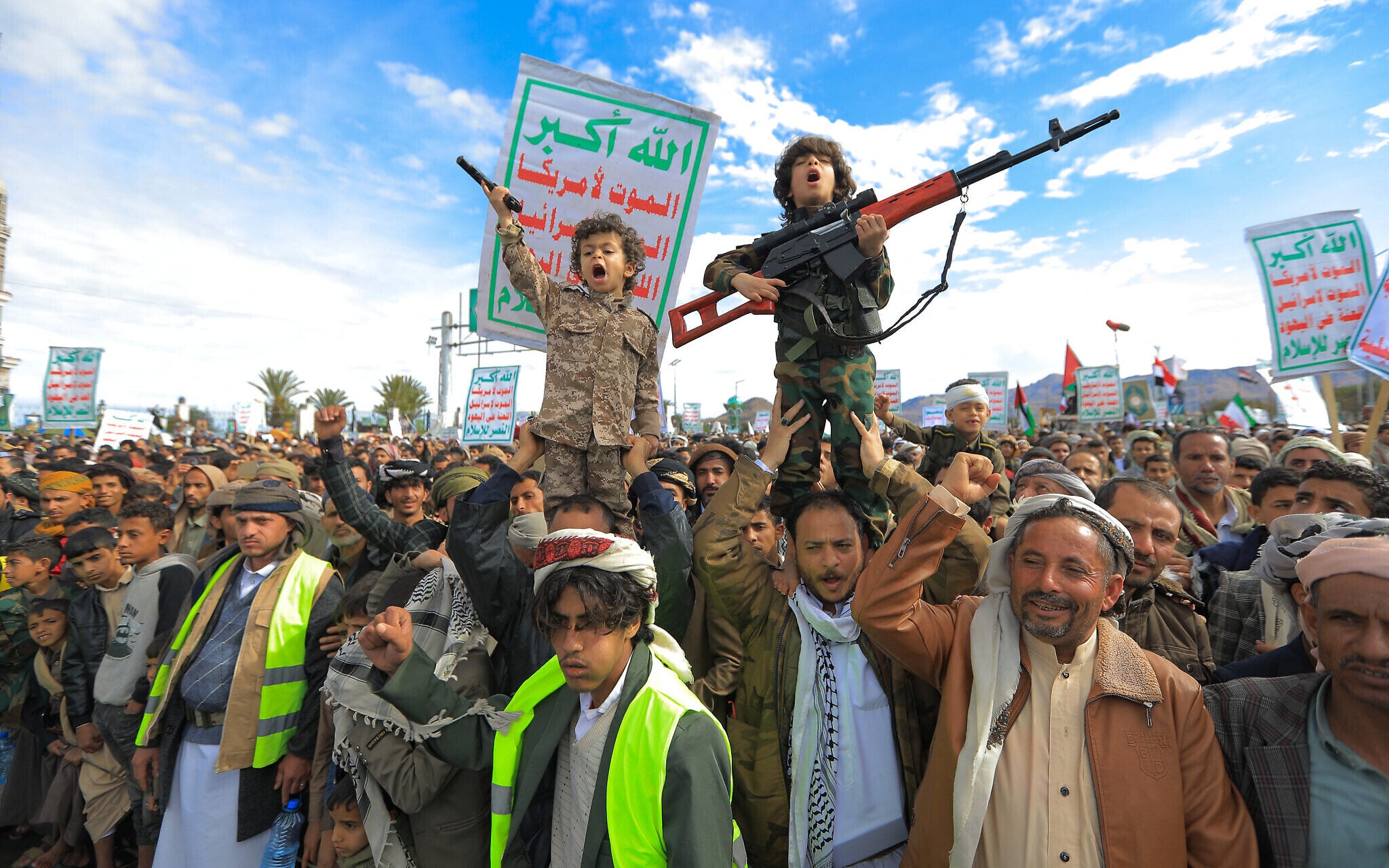
Young Houthi supporters hold weapons during a rally in solidarity with Iran and Lebanon, amid the US-Israeli war with Iran, in the Houthi-held Yemeni capital Sanaa on March 27, 2026. (Mohammed HUWAIS / AFP)
🔗 The Stakes:
The Houthi missile strikes on Israel signal a dangerous expansion of the Middle East conflict, with consequences that go far beyond Yemen. The stakes are high for both regional security and global trade:
- Escalation of Conflict
Houthi attacks show that Iran’s proxies are willing to confront U.S.-aligned nations and Israel directly, raising the risk of wider war in the region. - Threats to Global Shipping
By targeting the Red Sea and Bab al-Mandeb Strait, the Houthis could disrupt critical trade routes, impacting oil shipments, international commerce, and energy markets worldwide. - Pressure on Israel and Allies
Direct strikes test Israel’s defenses and challenge the strategic balance, potentially drawing in other nations and escalating military involvement. - Regional Stability at Risk
Neighboring countries may be drawn into the conflict, either as targets or through pressure to mediate, increasing the complexity of the war and the chance of unintended consequences. - Diplomatic Challenges
These actions complicate efforts to de-escalate tensions. Global powers must balance military readiness with diplomatic strategies to prevent further escalation.
🏁 The Bottom Line:
The Houthi missile strikes on Israel signal that the Middle East conflict is growing more dangerous and more complex. These attacks are not just a threat to Israel—they put critical global shipping routes in the Red Sea at risk, which could disrupt international trade and energy supplies, affecting economies far beyond the region. The escalation also demonstrates how Iran’s allies are extending their influence and testing the limits of U.S.-aligned forces, forcing nations to carefully weigh military and diplomatic responses. Staying prepared, showing strength, and having clear plans are essential to protecting troops, supporting allies, and preventing a limited conflict from turning into a broader war. At the same time, leaders must continue diplomatic efforts to reduce tensions, coordinate with partners in the region, and prevent the crisis from spiraling further. How the U.S., Israel, and regional powers respond in the coming days will shape not only the outcome of this conflict but also global perceptions of stability, security, and the ability to deter future aggression.
SOURCES: THE GATEWAY PUNDIT – Iranian Proxy Group the Houthis from Yemen Say They May Close Bab El Mandeb Strait
BLOOMBERG – Houthis Enter War and Say Attacks on Iran, Hezbollah Must Stop
THE TIMES OF ISRAEL – Houthi missile attack on Israel stokes fears of renewed strikes on Red Sea shipping