Published June 14, 2026
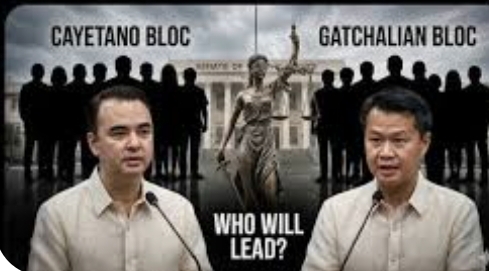
MANILA, Philippines — A constitutional and political standoff has erupted in the Philippine Senate after a disputed session involving a 12-senator quorum led to competing claims of leadership, with Malacañang openly recognizing the bloc aligned with Senator Sherwin Gatchalian.
The controversy centers on whether 12 senators can validly reorganize Senate leadership, or whether the Constitution requires a 13-vote majority to install or replace a Senate President.
⚖️ The Core Dispute: 12 vs 13
The crisis began when 12 senators convened a session and declared a quorum, invoking Supreme Court precedent in Avelino v. Cuenco (1949) as legal basis for proceeding despite absences in the chamber.
According to multiple reports, the group moved to:
- Declare all Senate leadership positions vacant
- Reset committee chairmanships
- Install Senator Sherwin Gatchalian as acting Senate President / Senate President Pro Tempore
However, opposing senators led by Senate President Alan Peter Cayetano argue that:
- The Constitution requires at least 13 votes (majority of 24 senators) to elect or remove a Senate President
- Therefore, the leadership change is invalid and without legal effect

Senator Alan Peter Cayetano is no longer Senate President, a statement from the “new majority” said Wednesday
🧭 The Quorum Argument
Supporters of the 12-senator session cite jurisprudence suggesting that quorum may be based on “available senators”, not the full 24-member composition in all circumstances.
The Gatchalian bloc argues that:
- Some senators were absent or outside effective reach
- The Senate can still function to avoid institutional paralysis
Opponents counter that:
- Allowing 12 senators to reorganize leadership risks setting a precedent for a “minority takeover”
- The 13-vote rule remains the constitutional standard for leadership elections
Malacañang Position: Recognition of Gatchalian Bloc
Malacañang has taken a clear stance recognizing the leadership formed after the 12-senator session.
Palace Press Officer Claire Castro said the Executive branch:
- Recognizes only the Gatchalian-led leadership
- Considers the development consistent with law and Supreme Court precedent
- Rejects claims that a constitutional crisis exists
She also emphasized the principle of majority rule in legislative bodies, stating that the Executive will coordinate only with the recognized leadership for official Senate dealings.
Competing Claims Inside the Senate
The Senate itself remains divided:
🔵 Gatchalian-aligned bloc:
- Claims the Senate was “reorganized” after a valid quorum
- Argues leadership reset was necessary to restore functionality
- Points to precedent cases where reduced membership still constituted quorum
🔴 Cayetano camp:
- Maintains Cayetano is still the legitimate Senate President
- Says no valid election occurred because 13 votes were not secured
- Calls the session and resulting actions unconstitutional
 Public / Political Reactions:
🏛️ Malacañang (Executive Branch)
Malacañang has taken a calm but firm stance, saying there is no constitutional crisis despite the Senate leadership dispute.
Palace officials stated that the Executive:
- Respects and recognizes the Senate’s chosen leadership arrangement
- Urges senators to resolve internal disagreements quickly
- Prefers stability so legislative work is not disrupted
At the same time, the Palace has also emphasized that it will coordinate only with the currently recognized Senate leadership, effectively backing the working majority formed after the disputed session.
🏛️ Senate leadership camps
Inside the Senate, reactions remain sharply divided:
🔵 Gatchalian-aligned bloc
- Defends the 12-senator session as valid under quorum doctrine
- Argues the Senate must continue functioning to avoid paralysis
- Maintains that leadership changes were procedural and necessary
🔴 Cayetano-aligned bloc
- Calls the move unconstitutional and procedurally invalid
- Insists that 13 votes are required to elect or remove Senate leadership
- Rejects the legitimacy of the acting leadership structure
This split has effectively created competing claims of authority inside the chamber.
⚖️ Legal and academic observers
Legal analysts and political scientists cited in reports note that:
- The dispute hinges on interpretation of quorum rules vs majority vote requirements
- The situation resembles earlier Philippine Senate leadership controversies where precedent and procedure clashed
- If unresolved internally, the issue could reach the Supreme Court
Experts also warn that prolonged instability could affect:
- Legislative productivity
- Budget approval timelines
- Public trust in institutions
📊 Public reaction (media and general sentiment)
Media commentary and public discourse show:
- Strong online debate and polarization
- Concern over whether the Senate is becoming too politically fragmented
- Calls from commentators for senators to “focus on legislation instead of internal power struggles”
Some analysts quoted in coverage describe the situation as a “stress test” for Senate rules and political discipline.
 Resulting Effects
The Senate leadership dispute and the 12 vs 13 quorum controversy have triggered several immediate and wider effects across government, politics, and public administration:
🏛️ 1. Disruption of Senate operations
The most direct impact is operational paralysis and confusion inside the chamber.
- Competing claims over who presides over sessions
- Rival directives on committee hearings and investigations
- Temporary suspension or delay of some Senate proceedings
Reports noted that the dispute affected the Senate’s ability to function normally, with uncertainty over authority inside the chamber.
⚖️ 2. Legal uncertainty over legitimacy
The core constitutional issue—whether 12 senators can constitute a valid quorum—has created a legal gray zone.
- One side relies on the Avelino v. Cuenco doctrine (quorum based on “available members”)
- The opposing camp insists the Constitution requires 13 votes (majority of 24) for leadership decisions
Because both arguments are grounded in legal interpretations, the situation risks escalating to the Supreme Court for final ruling.
🏛️ 3. Malacañang recognition affects executive coordination
The Palace’s decision to recognize the Gatchalian-led bloc has practical consequences:
- Executive agencies are expected to coordinate with the recognized Senate leadership
- Budget coordination and legislative negotiations may follow that alignment
- It strengthens the perceived legitimacy of one faction over the other
📊 4. Legislative slowdown and policy delays
The dispute risks delaying key national work:
- Budget discussions and approvals
- Ongoing investigations in Senate committees
- Priority legislation tied to economic and governance reforms
Even short-term Senate instability can slow down the entire legislative pipeline because committees are leadership-driven.
⚠️ 5. Increased political polarization
The issue has intensified political divisions inside the chamber:
- Senators are aligned into competing blocs with conflicting claims of authority
- Public messaging from both sides is increasingly adversarial
- Institutional trust is being tested as each side claims legality
This kind of split creates a “dual legitimacy” problem, where two groups both claim to represent the Senate majority.
🧭 6. Risk of Supreme Court intervention
If neither side backs down, analysts note the likely next step:
- A petition for grave abuse of discretion may be filed
- The Supreme Court could be asked to determine:
- who is the legitimate Senate leadership
- how quorum should be properly counted
This would turn the dispute from a political fight into a constitutional case.
 Future Outlook
The Senate leadership dispute involving the 12-senator quorum and competing 13-vote legitimacy claims is unlikely to end immediately, and several possible paths are now emerging based on current reporting and precedent.
⚖️ 1. Possible Supreme Court intervention
If neither faction backs down, the most likely escalation is a constitutional challenge before the Supreme Court.
- A petition may question:
- Whether a 12-member quorum is valid for leadership actions
- Whether the removal of Senate officers without 13 votes is constitutional
- The Court could be asked to revisit precedents like Avelino v. Cuenco (1949), which is now central to both camps’ arguments.
👉 If the Court steps in, it could definitively settle:
- Who the legitimate Senate leadership is
- How quorum is properly counted in a partially paralyzed chamber
🏛️ 2. Consolidation of the “working majority”
Recent reporting shows that Malacañang and the House have already recognized the Gatchalian-aligned leadership as the working authority.
Likely outcome:
- Committee control becomes more stable under that bloc
- Executive agencies continue coordinating with the recognized leadership
- The opposing bloc risks becoming a de facto minority without procedural control
🔁 3. Possible negotiated settlement (power-sharing)
There are ongoing political signals that a compromise arrangement may still be possible.
Potential scenarios:
- Term-sharing of committee leadership positions
- Redistribution of key Senate committees
- Formal agreement on session rules to prevent future quorum disputes
However, earlier proposals for power-sharing have reportedly been rejected by one side, making this path uncertain.
📉 4. Risk of continued legislative slowdown
Even if formal leadership stabilizes, analysts expect lingering effects:
- Slower committee hearings
- Delayed confirmation and investigation processes
- Reduced efficiency in passing priority legislation
This is especially critical ahead of major national agenda items like budget deliberations and oversight hearings.
🧭 5. Political realignment inside the Senate
The crisis has already triggered shifting alliances, and more changes are possible:
- Senators may switch blocs depending on committee influence
- “Undecided” members could become kingmakers in future votes
Future leadership elections may become more tightly contested and less predictable
📊 6. Long-term institutional impact
Observers note that the dispute could leave lasting effects on Senate norms:
- Quorum rules may be clarified or tightened
- Stronger safeguards may be introduced to prevent future “minority quorum” takeovers
- Political trust in Senate procedures may be weakened in the short term
 Bottom Line
The Senate dispute over the “12 vs 13” quorum and leadership legitimacy is essentially a clash between procedural power and constitutional interpretation.
🏛️ The Palace recognizes the Gatchalian-aligned leadership, giving it practical executive coordination advantage.
⚖️ The opposing camp argues that 13 votes remain the constitutional requirement, meaning the leadership change is not legally valid.
🔁 Both sides are still operating inside the same institution, creating a dual-claim situation inside the Senate.
📉 In the short term, the result is confusion, slower legislative work, and political tension.
⚖️ In the long term, the issue may be settled either through political compromise or a Supreme Court ruling.
In simple terms:
The Senate is still functioning, but it is currently divided over who has the legitimate authority to lead it, and that question has not been fully resolved.
SOURCES: GMA NEWS – Solid Bloc 12: Alan Peter Cayetano ousted as Senate President
GMA NEWS ONLINE – Palace: No constitutional crisis amid Senate leadership row
GMA NEWS ONLINE – Palace only recognizes Win Gatchalian-led Senate bloc, says Claire Castro
GMA NEWS ONLINE – Alan Peter Cayetano is still Senate President, says Erwin Tulfo