
Published June 19, 2026
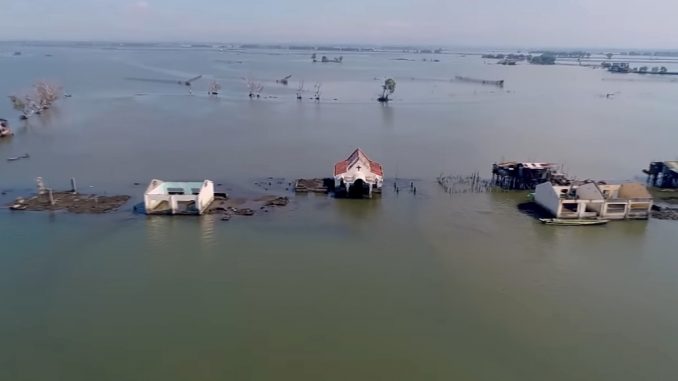
BULAKAN, Bulacan — In Sitio Pariahan, a coastal community along Manila Bay, the sea no longer stops at the shoreline.
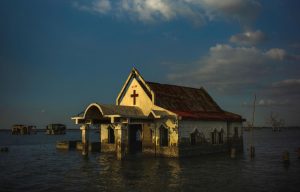
It reaches homes, roads, schools, and even the village church.
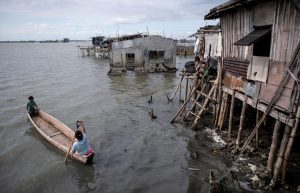
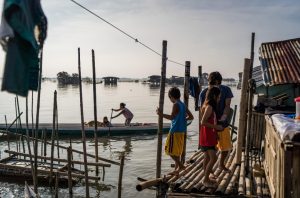
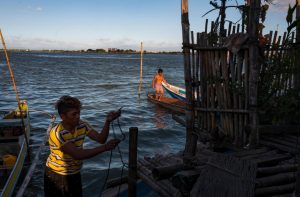
What was once a thriving fishing community is now known by many Filipinos as the “island without land” — a place where residents move by boat, houses stand on increasingly taller stilts, and memories of dry ground are slowly fading beneath the water.
A Village Fighting to Stay Above Water
For decades, families in Pariahan have adapted to a landscape that changes year after year.
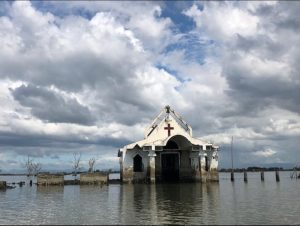
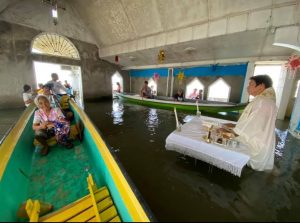
Residents have repeatedly elevated their homes as water levels rose. Areas that once hosted basketball games, religious celebrations, and community gatherings now lie underwater. The village court has disappeared beneath the tide, while the local chapel stands surrounded by water and marked by years of flooding.
Children who once walked to school now depend on boats. Fishermen navigate routes that were once footpaths.
For many longtime residents, the transformation has been gradual enough to witness but relentless enough to alter daily life forever.
More Than Rising Seas
At first glance, Pariahan’s plight appears to be a simple story of climate change and sea-level rise.
Scientists, however, say the bigger problem may be beneath the residents’ feet.
Studies and expert assessments have identified land subsidence—the sinking of the ground itself—as a major driver of the flooding crisis. Excessive groundwater extraction over many years has caused parts of Bulacan’s coastal plain to sink, allowing seawater from Manila Bay to move farther inland.
Researchers from the University of the Philippines found that several Bulacan municipalities recorded significant subsidence rates between 2014 and 2020, raising concerns that chronic flooding could worsen in the coming years.
The Storm That Changed Everything
Many residents trace the village’s rapid decline to 2011, when Typhoon Pedring (international name: Nesat) struck Luzon.
The powerful storm pushed massive waves into the community, destroying homes and infrastructure. Families watched houses get swept away, while the village school suffered severe damage. After the disaster, dozens of families left and never returned.
What remained was a community forced to adapt to a new reality—one where flooding was no longer an occasional disaster but a permanent condition.
A Warning for Other Communities
Pariahan’s story is no longer viewed as an isolated case.
Recent studies and international observers have warned that large portions of the Manila Bay region, including parts of Bulacan and neighboring provinces, are experiencing some of the world’s fastest rates of land subsidence. Communities across the region have reported roads being repeatedly elevated, houses sinking relative to street level, and increasingly frequent flooding.
Experts caution that sea-level rise and land subsidence can reinforce one another, creating a long-term challenge that cannot be solved through flood-control structures alone. Efforts to regulate groundwater extraction, improve water management, and strengthen climate adaptation measures are increasingly seen as critical to protecting vulnerable coastal communities.
The Human Cost
Despite the hardships, some residents remain unwilling to leave.
Fishing continues to provide livelihoods, and generations of family history are tied to the village. Yet every year, the water creeps a little higher.
For the families who still call Pariahan home, the struggle is no longer about preventing floods. It is about preserving a community that is slowly disappearing.
And as the waters rise around Manila Bay, Pariahan stands as a stark reminder of what can happen when sinking land and rising seas converge in one place.
 Bottom Line
More than a decade after national documentaries first brought attention to Sitio Pariahan’s struggle against rising waters, many residents continue to live in the same precarious conditions. While scientists have repeatedly warned about the combined threats of land subsidence and sea-level rise, the community’s story raises difficult questions about the pace and effectiveness of long-term government intervention. For some residents, the issue is no longer simply about environmental change but about whether vulnerable communities have received the support needed to adapt, relocate, or protect their livelihoods. Eleven years after the world first saw images of homes disappearing beneath the water, Pariahan remains both a symbol of climate vulnerability and a reminder that awareness alone does not always translate into lasting solutions.
SOURCES: GMA NEWS ONLINE – Rising seas threaten early end for sinking village in Bulakan, Bulacan
WEFORUM.ORG – This Philippines village is being swallowed by rising sea levels





The Earth Isn’t Rising — The Water Was: What Mid-Holocene Sea Levels Say About Earth’s Past