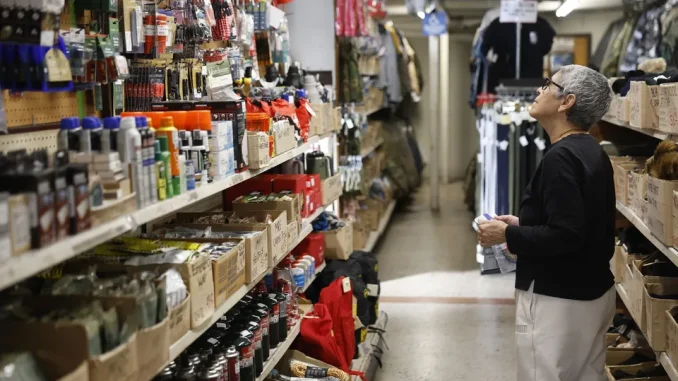
A woman shops for emergency supplies at The Surplus Store in Los Angeles on Nov. 18. Photographer: Justin Sullivan/Getty Images
Reported by:

Cherry Meigh Timbol
News Content Editor
Published November 24, 2026
Americans are increasingly purchasing emergency supplies, including bottled water, canned food, generators and propane, as concerns about technology disruptions, infrastructure vulnerabilities and potential emergencies drive a growing wave of so-called “doomsday prepping,” according to a Bloomberg report.
Some of the country’s largest retailers have reported increased demand for products commonly associated with disaster preparedness, suggesting that stockpiling is becoming more widespread among American consumers.
Walmart, Costco Wholesale and Tractor Supply Co. are among the retailers reporting stronger sales of emergency-related goods.
Walmart Chief Financial Officer John David Rainey said customers had been purchasing more propane, bottled water and camping equipment. Costco also reported increased demand for products such as rice, canned goods and bottled water.
Tractor Supply, meanwhile, reported higher sales of generators, liquid storage tanks and propane accessories. The company said purchases in these categories were growing faster than other product groups for the first time.
Technology Disruptions Fuel Public Anxiety
The growing interest in emergency preparedness has coincided with several high-profile technology and service disruptions affecting different sectors in the United States.
Incidents involving banking services, airline operations and major technology platforms have raised concerns among consumers about the reliability of systems that support everyday activities.
These developments have also contributed to speculation on social media about the possibility of widespread power outages and prolonged disruptions to essential services.
According to RBC Capital Markets analyst Nik Modi, a combination of government preparedness messaging and social media anxiety has helped bring doomsday prepping into mainstream consumer behavior.
Modi linked part of the trend to a Pentagon military-readiness initiative announced in September. The initiative was reportedly misinterpreted online as a warning that Americans should prepare for a nationwide blackout lasting 90 days.
However, the online claims have not been supported by credible evidence of an impending nationwide power outage.
Retailers Observe changes in Consumer Behaviot
The increased demand is providing retailers with an indication of how concerns about potential emergencies are influencing household spending.
Consumers are purchasing products that could help them maintain access to basic necessities during temporary disruptions, including food, drinking water, alternative power sources and fuel.
The trend has also attracted attention from financial analysts monitoring changes in consumer purchasing patterns.
Bloomberg reported that the increased sales have been observed across multiple retailers, suggesting that emergency preparedness is no longer limited to traditional survivalist communities.
Nevertheless, higher sales of preparedness products do not necessarily indicate that most Americans believe a major catastrophe is imminent.
Officials urge Americans Not to Panic
The growing concerns have also prompted public reassurance from senior US officials.
President Donald Trump dismissed the need for widespread panic, telling Fox News that Americans should relax and that he would inform the public if a serious problem emerged.
Vice President JD Vance also addressed questions about whether Americans should construct bunkers or stockpile food and water, saying that such measures were unnecessary in response to the recent concerns.
Government officials have maintained that the separate technology disruptions should not automatically be interpreted as evidence of a coordinated national emergency.
The distinction is important as misinformation and unverified predictions circulating online can influence public behavior and create unnecessary anxiety.
EMERGENCY PREPAREDNESS VERSUS PANIC BUYING
Although the recent stockpiling trend has been associated with fears of a possible catastrophe, emergency preparedness is also a recognized component of disaster risk management.
Keeping reasonable supplies of drinking water, nonperishable food, batteries and essential household items can help families manage temporary disruptions caused by severe weather, power failures and other emergencies.
However, experts and public officials distinguish practical preparedness from panic buying driven by unverified warnings.
The recent developments highlight how technology disruptions, public uncertainty and social media speculation can influence consumer decisions, even without evidence that a large-scale disaster is approaching.
As retailers continue to observe increased demand for emergency supplies, the extent to which the trend will persist remains uncertain.