A Muslim Texas nurse named “Ahlam” was fired after posting a TikTok video suggesting she would not treat patients if they watch Fox News.
Published July 4, 2026
A Texas nurse has been terminated after a social media video suggesting she would avoid treating patients watching Fox News triggered widespread backlash and renewed debate over whether political beliefs have any place in patient care.
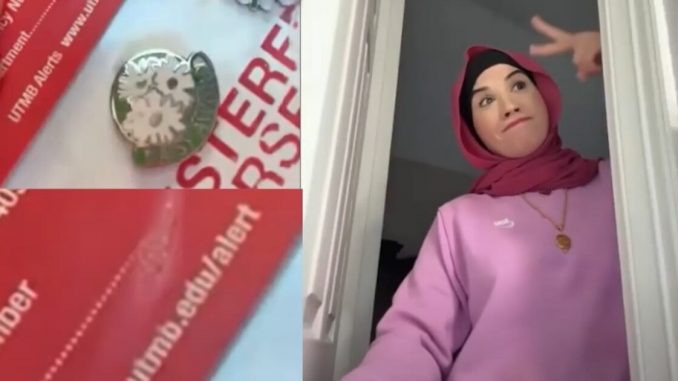
The incident involved a contract nurse at the University of Texas Medical Branch (UTMB) whose TikTok video showed her backing out of what appeared to be a patient’s room after noticing Fox News playing on the television. The video implied she would not treat patients who were watching the conservative news network, prompting criticism across social media and concerns about professional ethics.
The Viral Video
The nurse, identified online as “Nurse Ahlam,” posted a short video featuring the caption suggesting she would leave a patient’s room if Fox News was on television. Although some supporters argued the clip was intended as satire or political commentary, many viewers interpreted it as a declaration that political affiliation would influence her willingness to provide medical care.
The video gained national attention after being shared by the social media account Libs of TikTok, which questioned whether patients could trust they would receive equal treatment regardless of their political views.
UTMB Launches Investigation
Following the video’s circulation, UTMB announced that it had suspended the nurse’s access while conducting an investigation into the matter.
After completing its review, the university confirmed that the individual was no longer employed as a contract worker. UTMB emphasized that patient care must remain impartial and that healthcare professionals are expected to provide compassionate treatment to every patient regardless of personal beliefs, political affiliation, religion, race, or background.
Why the Incident Drew Strong Reactions
Medical ethics require physicians, nurses, and other healthcare professionals to treat patients without discrimination based on political opinions or personal beliefs.
Critics argued that even if the video was intended as humor, publicly suggesting selective treatment could undermine public confidence in healthcare institutions. Others maintained that healthcare workers occupy positions of public trust where even social media content can have professional consequences.
Supporters of the nurse contended that the clip was exaggerated for social media and did not necessarily reflect how she practiced nursing. Nevertheless, the controversy centered on how such statements could be perceived by patients who expect unbiased medical care.
Broader Questions About Social Media
The incident also highlights the growing scrutiny healthcare professionals face over their online activity.
Hospitals and medical institutions increasingly remind employees that posts made on personal social media accounts may still reflect on their employers and can affect public trust in the healthcare system. Comments perceived as discriminatory or suggesting unequal treatment may result in disciplinary action even when made outside the workplace.
 Final Thoughts:
Trust is the foundation of healthcare. When someone walks into a hospital, they should never have to question whether they will be treated differently because of their political views, religion, race, or personal beliefs. Regardless of where people stand politically, medical professionals carry a responsibility that rises above ideology—to care for every patient with fairness, compassion, and professionalism. In today’s age of viral social media, words and actions can quickly shape public confidence. Ultimately, preserving that trust is not just about following workplace policies; it’s about honoring the commitment to serve every life with equal dignity and respect.