Published January 25, 2025
Geneva / Tehran — Iran’s government has vehemently rejected a recent United Nations Human Rights Council resolution condemning its handling of nationwide protests and alleged “violent crackdown” on demonstrators, calling it politically motivated and an example of Western moralizing.
The resolution, adopted on Friday during a special session of the UN Human Rights Council in Geneva, was backed by 25 members of the council, including France, Japan and South Korea. It strongly condemned the use of excessive force by Iranian security forces against protesters and called on Tehran to curb extrajudicial killings, arbitrary arrests, enforced disappearances and other human‑rights violations.
Iran’s Response: Political and Hypocritical
Iran’s delegation blasted the resolution as biased and undermined by what Tehran described as Western double standards on human rights.
According to Iranian representatives, the council’s sponsors have never genuinely cared about human rights in Iran — or else they would not have imposed decades of crippling sanctions that Tehran says have devastated the Iranian population and contributed to unrest.
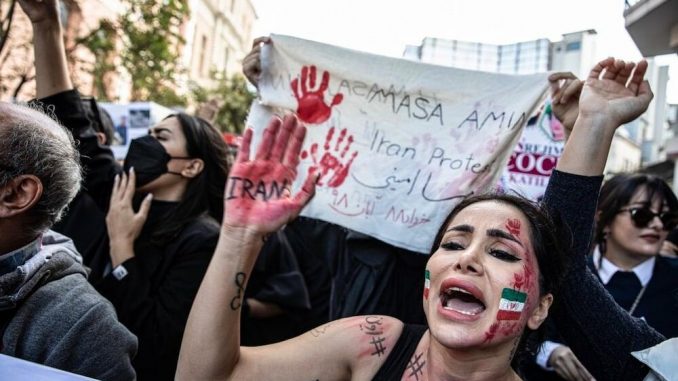
At the meeting, Iran’s envoy framed the protests not as a legitimate expression of public grievance but as violent acts fueled by “terrorists” and foreign influence, particularly from the United States, Israel and Western governments. Tehran reiterated its earlier claim that 3,117 people died in clashes — including security personnel — and that a majority of the fatalities were caused by those elements it labels “terrorists”.
One Iranian diplomat told the council:
“It was ironic that states whose history was stained with genocide and war crimes now attempted to lecture Iran on social governance and human rights.”
UN Human Rights Council’s Aims and Western Reaction
The United Nations Human Rights Council (UNHRC) adopted a resolution specifically addressing the Iranian government’s response to widespread protests that began in late December 2025. The council’s action came during a special session in Geneva, where a majority of member states — including many Western governments — backed measures to confront what they describe as serious and systematic human‑rights violations tied to the Iranian crackdown.
Primary Aims of the Resolution
The resolution adopted by the council sets out multiple key objectives aimed at addressing both the immediate situation and the broader pattern of alleged abuses:
-
Condemning excessive use of force: The council expressed “serious concern” about the violent repression by Iranian security forces against demonstrators, including credible reports of unlawful killings, mass arrests, and other violations of basic rights such as freedom of peaceful assembly and expression.
-
Extending international oversight: It renewed and extended the mandates of two main UN mechanisms — the Independent International Fact‑Finding Mission on the Islamic Republic of Iran and the UN Special Rapporteur on Iran’s human‑rights situation — to ensure sustained investigation, documentation, and reporting on alleged abuses.
-
Documenting and gathering evidence: Part of the council’s effort is focused on collecting evidence and establishing factual accounts that could be used to determine whether human‑rights violations or crimes under international law (potentially including crimes against humanity) took place. This includes documenting killings, cases of torture, arbitrary detentions, and patterns of repression.
-
Promoting accountability: Western sponsors of the resolution argue that accountability is essential not only to respond to past violations but also to deter future abuses. They contend that if domestic mechanisms are unwilling or unable to investigate impartially, international scrutiny and documentation help uphold international norms and provide pathways for justice.
Western Governments’ Response
Western states — including the United Kingdom, Germany, Iceland, and several EU members — framed the resolution as a necessary humanitarian and legal reaction to what they consider one of the most severe crackdowns on peaceful protest in Iran’s recent history. They emphasized the urgency of international oversight and called for Iran to cooperate with the extended fact‑finding efforts.
For many Western diplomats, the resolution reflects:
-
Concern for civilian lives: Citing thousands of reported deaths and vast numbers of arrests, Western governments argue the situation demands a unified response beyond rhetorical condemnation.
-
Rule of law and human rights protection: Supporters maintain that emphasizing legal standards helps protect civil liberties and sends a strong signal to governments that violent repression cannot be ignored by the global community.
-
Sustained documentation: Proponents stressed that extending the investigative mandates allows a longer‑term, systematic record that could support accountability mechanisms, including potential legal proceedings or future UN action.
Dissent and Broader Reactions
Not all UNHRC members agreed with the resolution’s approach. Countries such as China, Pakistan, Indonesia, and India voted against it, with several citing principles of non‑interference in domestic affairs or opposing “naming‑and‑shaming” resolutions as ineffective for advancing human rights. Countries that abstained — like South Africa and Brazil — expressed support for human‑rights principles but cautioned that such council actions should avoid being perceived as politicized or biased.
Critics of the resolution, including Tehran itself, argue that Western states selectively apply human‑rights mechanisms to suit geopolitical interests and disregard other issues — such as the humanitarian impact of sanctions or abuses by allied governments — alleging double standards in moralizing language.
 Implications
The rejection of the UN Human Rights Council resolution by Tehran carries multiple political, legal, and diplomatic implications, both regionally and globally:
1. Diplomatic Isolation vs. Strategic Signaling
Iran’s dismissal of the resolution reinforces its long-standing position of resistance against what it perceives as Western interference. This stance could further isolate Tehran diplomatically, particularly among Western and European states that prioritize human-rights accountability. At the same time, Iran may use the rejection to signal sovereignty and defiance to domestic audiences and regional allies, framing the narrative as a stand against Western “moralizing” and interference.
2. Potential Escalation of Sanctions and Pressure
While the UNHRC itself cannot impose sanctions, its resolutions can influence other UN bodies, Western governments, and international organizations to pursue targeted measures. Tehran’s rejection may prompt renewed discussions about sanctions, travel restrictions, or asset freezes on Iranian officials accused of human-rights violations. The move could harden positions in multilateral forums, limiting Tehran’s ability to engage with international institutions.
3. Impact on Iran’s Domestic Situation
Rejecting the resolution may embolden hardline factions within Iran, signaling that the government intends to maintain strict internal control over protests and dissent. Conversely, this stance may deepen public dissatisfaction, as citizens who perceive the regime as unaccountable could view international censure as validation of their grievances. Human-rights groups warn that continued crackdowns may fuel cycles of unrest.
4. Implications for International Human Rights Mechanisms
The incident underscores a persistent challenge for the UNHRC: enforcing human-rights standards against states that reject external oversight. Iran’s defiance may embolden other countries with similar domestic human-rights controversies to dismiss UN resolutions, weakening the perceived credibility and influence of the council. At the same time, the resolution reinforces the principle that human-rights monitoring is a global responsibility, keeping attention on alleged abuses even in cases of outright rejection.
5. Geopolitical Repercussions
Tehran’s framing of the resolution as Western hypocrisy highlights growing tensions between Iran and countries supporting the measure. It may further strain relations with the United States and Europe while strengthening Tehran’s alliances with countries critical of Western-led initiatives, such as China, Russia, and several non-aligned nations. Analysts suggest this dynamic could shift regional alliances and affect negotiations on nuclear and economic issues.
 Overall Takeaway:
Iran’s outright rejection of the UN Human Rights Council resolution underscores the deep divide between Tehran and many Western nations over human rights, accountability, and the limits of international oversight. By framing the resolution as politically motivated and an example of Western moralizing, Iran has reaffirmed its longstanding stance of sovereignty over internal affairs while signaling defiance to global criticism.
For the international community, the episode highlights the challenges of enforcing human-rights norms when states refuse to cooperate with monitoring mechanisms. While the resolution and extended investigative mandates keep scrutiny on Iran, Tehran’s dismissal may embolden other governments with poor human-rights records to similarly ignore international censure.
Domestically, the rejection may bolster hardline factions and strengthen the government’s narrative of resisting foreign interference, yet it also risks deepening public dissatisfaction and prolonging social unrest. Geopolitically, the confrontation reflects broader tensions between Iran and Western states, influencing alliances, negotiations, and global perceptions of human rights enforcement.
Ultimately, the situation remains a test of the UN’s capacity to balance accountability, diplomacy, and the principle of sovereignty, and whether international pressure can translate into meaningful improvements in the human-rights situation in Iran.
SOURCES: ZEROHEDGE – Tehran Rejects UN ‘Protest Killings’ Resolution, Blasts Western Moralizing
QATAR TRIBUNE – Iran rejects UN resolution condemning protest killings
IRAN PRESS – Iran Rejects UN Human Rights Council Resolution as “Political and Invalid”
BEFORE ITS NEWS – Tehran Rejects UN ‘Protest Killings’ Resolution, Blasts Western Moralizing