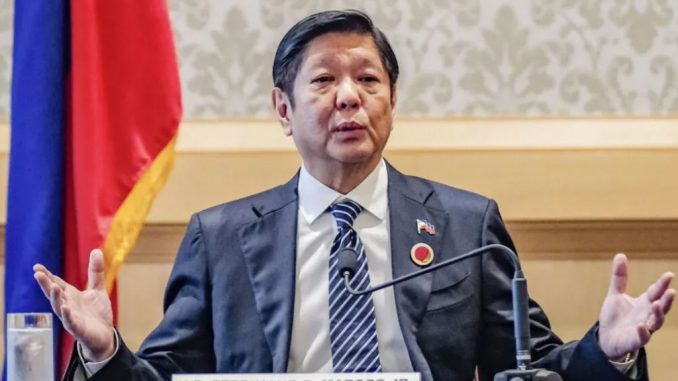
Philippine President Ferdinand Marcos Jr. signed Executive Order No. 110 this Tuesday, declaring a state of national energy emergency in light of the “imminent danger” that the Middle East conflict and the effective closure of the Strait of Hormuz represent for the availability and stability of the country’s energy supply.
Published March 25, 2026
Ferdinand Marcos Jr. has declared a state of national energy emergency, warning of an “imminent danger” to the country’s fuel supply as global oil disruptions intensify due to escalating conflict in the Middle East.
The declaration, issued through Executive Order No. 110, grants the government expanded authority to secure energy resources, stabilize supply chains, and mitigate the economic impact of rising fuel costs.
Fuel Supply Under Pressure
Officials say the Philippines—heavily dependent on imported oil—faces growing vulnerability as global supply routes tighten and prices surge. Current fuel reserves are estimated to last only around 40 to 45 days, raising concerns over potential shortages if disruptions continue.
The crisis is largely driven by instability in key oil-producing regions and critical shipping routes, particularly in the Middle East, which play a central role in global energy distribution.
Emergency Powers and Government Response
Under the emergency declaration:
- A central committee will oversee the distribution of fuel and essential goods
- Authorities are empowered to act against hoarding and price manipulation
- The government can fast-track fuel procurement, including advance payments
- Energy conservation measures and alternative sourcing strategies are being implemented
Officials are also exploring new supply channels, including coordination with international partners and even sourcing oil from previously restricted markets under special arrangements.
Economic and Public Impact
The surge in fuel prices is already affecting transportation, businesses, and household costs. Transport groups and consumer organizations have signaled protests, reflecting growing public frustration over the rising cost of living.
To ease the burden, the government has begun rolling out targeted assistance, including subsidies for transport workers and temporary measures to maintain public mobility.
A One-Year Emergency
The energy emergency is expected to remain in effect for up to one year, giving the administration time to stabilize supply and prevent broader economic disruption.
Despite the declaration, officials have urged the public not to panic, emphasizing that steps are being taken to ensure continued availability of fuel and essential services.
A Critical Test Ahead
The situation underscores the Philippines’ long-standing reliance on imported energy and its exposure to global shocks. As the crisis unfolds, the government faces increasing pressure to deliver not just short-term relief—but a more durable strategy to secure the country’s energy future.
🧩 The Core Analysis: A Crisis Exposing Structural Weakness
The declaration of a national energy emergency by Ferdinand Marcos Jr. is not just a response to global instability—it is a clear indication of how vulnerable the country has become to external shocks.
While the immediate trigger may be supply disruptions abroad, the deeper issue lies at home. An economy heavily dependent on imported energy leaves little room for resilience when global conditions tighten. When supply chains falter, the impact is swift and unavoidable.
Dependence Comes at a Cost
The Philippines’ reliance on foreign oil has long been a known risk, but crises like this turn that risk into reality. With limited domestic production and insufficient reserves, the country is forced into reactive measures—scrambling to secure supply rather than operating from a position of stability.
This kind of dependence narrows policy options. Instead of controlling outcomes, the government is left managing consequences shaped largely by external forces.
Emergency Powers Reflect Urgency
The sweeping authorities granted under the declaration highlight the seriousness of the situation. Measures such as centralized fuel distribution, anti-hoarding enforcement, and expedited procurement are typically reserved for moments when normal systems are no longer sufficient.
While necessary in the short term, these actions also reveal how quickly market stability can give way under pressure. When governments must step in at this scale, it signals that underlying systems were not built to absorb shocks effectively.
Economic Pressure Builds at Home
Rising fuel costs do not remain isolated—they ripple through transportation, food prices, and basic services. For ordinary citizens, the crisis translates into immediate financial strain.
Public frustration is not simply about higher prices; it reflects a broader concern about preparedness. When disruptions abroad quickly translate into hardship at home, it raises questions about long-term planning and national priorities.
A Wake-Up Call on Energy Strategy
This emergency brings into focus the need for a more durable approach to energy security:
- Strengthening domestic energy capacity
- Diversifying supply sources to reduce reliance on single regions
- Building strategic reserves that can cushion future shocks
- Encouraging efficiency and sustainability without compromising reliability
Without these structural adjustments, similar crises are likely to repeat.
🔗 The Synthesis: A Necessary Response, But a Deeper Challenge
The declaration of a national energy emergency by Ferdinand Marcos Jr. reflects both decisive action and a hard reality: when a nation is heavily exposed to external supply shocks, even short-term disruptions can quickly escalate into a national concern.
Across the reporting, the situation is not defined by a single event but by a convergence of pressures—global instability, tight fuel reserves, and a system that leaves little margin for error. The government’s response aims to stabilize conditions, but it also highlights how limited the options become when structural gaps are exposed.
Stabilization First, Strategy Second
The immediate priority is clear—secure supply, prevent hoarding, and keep essential services running. Emergency powers allow for faster decisions and tighter coordination, which are critical in preventing panic and maintaining order.
But stabilization alone does not resolve the underlying issue. It buys time. What matters next is how that time is used.
The Cost of Limited Flexibility
A system that relies heavily on imports operates with built-in constraints. When global markets tighten, domestic policy becomes reactive rather than proactive. This reduces the ability to shield citizens from price spikes and supply uncertainty.
The result is a cycle where each external disruption forces urgent intervention at home—an approach that is difficult to sustain over time.
Public Impact Shapes Political Reality
As fuel costs rise, the effects cascade across the economy. Transportation, food distribution, and daily expenses all become more expensive. This shifts the issue from a policy challenge to a lived experience for millions.
In that environment, expectations change. Citizens begin to look beyond short-term relief and toward long-term solutions that can prevent repeated disruptions.
A Defining Policy Moment
The emergency creates a turning point. It puts energy security at the center of national priorities and raises key questions:
- How can the country reduce exposure to external shocks?
- What balance should be struck between affordability and independence?
- How can supply stability be ensured without overreliance on emergency measures?
The answers will shape not just the current response, but the country’s long-term economic resilience.
🏁 The Final Word: A Test of Preparedness and Direction
SOURCES: THE GATEWAY HISPANIC – Philippines Declares National Energy Emergency: Ferdinand Marcos Jr. Activates Urgent Measures in Response to the Blockade of the Strait of Hormuz Caused by the Middle East Conflict
INQUIRER.NET – Marcos declares national energy emergency