Published July 10, 2026
A map released by New York City Mayor Zohran Mamdani’s administration highlighting the city’s immigrant neighborhoods has sparked criticism after it omitted several historically significant Italian, Irish, and Jewish communities, prompting accusations that it overlooks groups that played a major role in shaping New York City’s history.
The map, titled “New York City Immigrant Enclaves,” features approximately 30 neighborhoods representing communities with substantial foreign-born populations today, including Little Palestine, Koreatown, Little Pakistan, Little Yemen, Little Guyana, Little Dominican Republic, and Little Odessa. However, critics quickly pointed out that iconic neighborhoods such as Little Italy in Manhattan, Irish-American communities like Woodlawn in the Bronx, and several historic Jewish neighborhoods were not included.
 The Mayor’s map of New York City’s immigrant neighborhoods.New York City Tourism + Conventions
Critics Say Historic Communities Were Overlooked
The omission drew criticism from members of New York City’s Italian Caucus, community leaders, and elected officials.
The Italian Caucus issued a statement arguing that Italian-Americans are one of New York City’s foundational immigrant communities and that excluding neighborhoods such as Little Italy, Belmont in the Bronx, Bensonhurst, and Dyker Heights in Brooklyn ignores an important part of the city’s immigration history. They called on City Hall to work with historians and community organizations to revise future editions of the map.
Irish-American leaders also questioned why neighborhoods long associated with Irish immigrants, including Woodlawn and Sunnyside, were absent despite their historical significance. Meanwhile, some Jewish community representatives criticized the map for not recognizing neighborhoods with large Jewish populations, arguing that it failed to reflect the city’s full immigrant heritage.
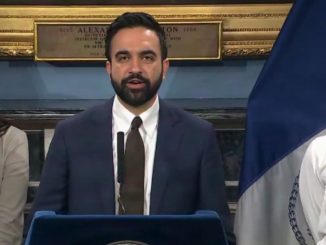
 Mamdani came under fire for leaving out Italian, Irish and Jewish immigrants.
City Hall Explains the Purpose of the Map
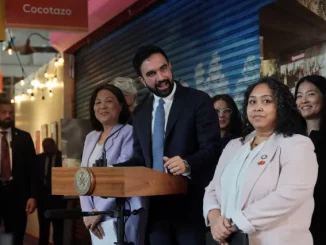
Mayor Mamdani’s administration rejected claims that the map was intended to erase any community.
A City Hall spokesperson explained that the project was designed to highlight neighborhoods that currently have substantial foreign-born populations from different regions and countries rather than document every historic immigrant community in New York City. Officials also noted that the immigrant enclave project began during the administration of former Mayor Eric Adams and that additional neighborhoods may be added in future updates.
The administration also clarified that the map was not intended to identify religious communities and emphasized that it was created primarily as a cultural guide rather than a comprehensive historical record.
Why Little Italy Matters
Little Italy remains one of New York City’s most recognizable immigrant neighborhoods.
Established during the late 19th century, it became home to thousands of Italian immigrants who helped shape the city’s culture, cuisine, businesses, religious institutions, and annual festivals. Although many Italian-American families have since moved to other boroughs and suburbs, Little Italy continues to serve as a symbol of New York’s immigration history and attracts millions of visitors each year. 6
Critics argue that excluding such neighborhoods creates an incomplete picture of New York City’s immigrant story, while supporters of the map contend that it focuses on present-day demographic patterns rather than historical settlement.
A Broader Debate About Representation
The controversy has evolved into a broader discussion about how cities should represent immigration and cultural identity.
Some historians argue that maps highlighting current immigrant populations serve an important purpose by reflecting today’s demographic realities. Others believe historical immigrant communities should remain visible because they played a foundational role in building New York City and continue to influence its identity.
The debate illustrates the challenge of balancing historical recognition with changing demographics in one of the world’s most diverse cities.
👥 Public / Political Reactions:
🏛️ Mayor Zohran Mamdani and New York City Hall
Mayor Zohran Mamdani’s administration defended the “New York City Immigrant Enclaves” map, saying it was intended to highlight neighborhoods with significant present-day foreign-born populations, not to serve as a complete historical record of every immigrant community in the city.
- City Hall stated that the project was originally launched under the previous administration and was designed as a cultural guide ahead of the 2026 FIFA World Cup.
- Officials emphasized that the map is not exhaustive and may be updated over time.
- The administration rejected claims that any ethnic or religious community was intentionally excluded.
➡️ Position: City Hall says the map reflects current immigrant enclaves rather than the full history of New York City’s immigration.
🇮🇹 Italian-American Leaders and NYC Italian Caucus
Italian-American organizations and members of the New York City Council strongly criticized the omission of Little Italy and other historic Italian-American neighborhoods.
- The NYC Council’s Italian Caucus called the exclusion “incomplete at best and insulting at worst.”
- Community leaders argued that neighborhoods such as Little Italy, Belmont, Bensonhurst, and Dyker Heights represent generations of immigrant contributions to New York City’s identity.
- Several organizations urged the mayor’s office to revise the map in consultation with historians and community groups.
➡️ Position: Italian-American leaders believe the map fails to recognize one of New York City’s foundational immigrant communities.
☘️ Irish-American and Jewish Community Representatives
Irish-American and Jewish leaders also questioned the map’s omissions.
- Critics noted that historically significant Irish neighborhoods, including Woodlawn in the Bronx, were not represented.
- Some Jewish organizations and commentators expressed concern that neighborhoods with deep Jewish immigrant history were also absent.
- They argued that recognizing today’s immigrant communities should not come at the expense of acknowledging those that helped build the city.
➡️ Position: Community representatives called for a more inclusive map that reflects both historical and contemporary immigrant communities.
👥 Public Reaction
Public reaction has been mixed, with debate centering on how New York should represent its immigrant heritage.
- Some residents supported the map’s focus on neighborhoods with large foreign-born populations today.
- Others argued that omitting iconic immigrant neighborhoods creates an incomplete picture of the city’s history.
- The controversy generated widespread discussion on social media and among local community organizations about historical recognition and cultural representation.
➡️ Position: Public opinion is divided between emphasizing present-day demographics and preserving historical recognition.
📚 Historians and Cultural Observers
Historians and cultural commentators offered differing perspectives on the controversy.
- Some experts noted that demographic patterns have changed significantly over the past century, making it reasonable to highlight current immigrant enclaves.
- Others argued that maps portraying New York’s immigrant identity should also acknowledge neighborhoods that played a defining role in successive waves of immigration.
- Many suggested that future editions could better balance historical legacy with present-day diversity.
➡️ Position: Many observers see the controversy as an opportunity to create a more comprehensive representation of New York City’s immigrant history.
⚠️ Resulting Effects:
The controversy surrounding New York City’s immigrant enclaves map has sparked a wider discussion about historical recognition, cultural representation, and how one of the world’s most diverse cities tells its immigration story. Although the map was intended to highlight present-day immigrant communities, its omissions have generated debate among elected officials, community organizations, historians, and residents.
1. Renewed Debate Over New York City’s Immigrant History
The map has prompted renewed public discussion about how New York’s immigrant heritage should be represented.
🗽 Critics argue that omitting historic neighborhoods such as Little Italy overlooks communities that helped shape the city’s identity.
📚 Historians have emphasized the importance of recognizing both historical and modern immigrant communities.
💬 The issue has generated widespread public conversation about cultural representation.
➡️ Result: Map controversy → renewed debate over New York City’s immigrant history.
2. Increased Pressure on City Hall
The backlash has placed additional pressure on Mayor Zohran Mamdani’s administration to address community concerns.
🏛️ Italian-American organizations and several elected officials have called for revisions to the map.
📄 Community leaders have urged City Hall to consult historians and cultural organizations before future updates.
🤝 Officials have indicated that additional neighborhoods could be considered in future versions.
➡️ Result: Public criticism → increased pressure to review and potentially revise the map.
3. Greater Attention to Cultural Representation
The controversy has expanded beyond a single map into a broader discussion about inclusion.
🌎 Many residents believe official city materials should reflect both current demographics and historical immigrant communities.
🏘️ The debate has highlighted the evolving nature of New York’s neighborhoods over generations.
📖 Cultural organizations have renewed efforts to educate the public about the city’s diverse immigrant history.
➡️ Result: Public debate → greater focus on inclusive cultural representation.
4. Political Attention to Identity and Community Relations
The issue has become part of a broader political conversation about identity and representation.
🗳️ Local elected officials from multiple communities have publicly commented on the controversy.
🤝 Community leaders are encouraging dialogue rather than division over how immigrant histories are recognized.
🏙️ The discussion may influence how future cultural and educational initiatives are developed by the city.
➡️ Result: Community concerns → increased political attention to cultural recognition.
5. Increased Public Interest in New York’s Neighborhoods
The controversy has encouraged many people to revisit the history of New York City’s immigrant communities.
📚 Interest has grown in neighborhoods such as Little Italy, Chinatown, Little Odessa, Koreatown, and other historic immigrant enclaves.
🗺️ The map has prompted discussions about how neighborhoods have changed through successive waves of immigration.
🎓 Educators and historians have used the debate to highlight New York City’s long history as a destination for immigrants from around the world.
➡️ Result: Public controversy → increased awareness of the city’s immigration history.
6. Ongoing Discussion About Future City Projects
The debate may influence how New York develops future cultural maps and public information projects.
📋 Officials may consider broader consultation with historians, cultural organizations, and community representatives.
🏛️ Future projects could seek to balance present-day demographic realities with historical significance.
🌍 The controversy may serve as a reference point for other cities creating similar cultural or immigration-related initiatives.
➡️ Result: Map controversy → potential changes to future public heritage and cultural projects.
🔮 Future Outlook:
The controversy surrounding New York City’s immigrant enclaves map is expected to continue generating discussion about how the city recognizes its diverse immigrant heritage. While City Hall has maintained that the map was designed to highlight present-day immigrant communities, the backlash may influence future revisions and broader conversations about cultural representation and historical recognition.
1. Possible Revisions to the Immigrant Map
City officials may consider updating the map in response to public feedback.
🗺️ Additional historically significant neighborhoods could be included in future editions.
🤝 Community organizations and historians may be consulted during the revision process.
📋 Officials have indicated that the map is not intended to be a final or exhaustive version.
➡️ Outlook: Public feedback → potential updates to the city’s immigrant enclaves map.
2. Continued Debate Over Historical Recognition
The discussion is likely to extend beyond the current controversy.
🏛️ Historians and cultural groups are expected to continue advocating for recognition of immigrant communities that helped shape New York City.
📚 Public conversations may increasingly focus on balancing historical significance with current demographic realities.
🌎 The debate could influence how cultural heritage is presented in future educational and tourism initiatives.
➡️ Outlook: Ongoing discussion → greater attention to New York City’s immigrant history.
3. Greater Community Engagement
The controversy may encourage stronger collaboration between City Hall and community organizations.
🤝 Italian-American, Irish-American, Jewish, and other cultural organizations may seek greater involvement in future city projects.
🏙️ Local leaders could organize forums and public discussions on cultural representation.
📖 Community groups are expected to continue promoting awareness of their historical contributions to New York.
➡️ Outlook: Public concern → increased engagement between city officials and community groups.
4. Broader Political Discussion on Identity and Representation
The issue may remain part of New York City’s political landscape.
🗳️ Elected officials may continue debating how public resources and cultural initiatives should represent the city’s diverse communities.
🏛️ Future policy discussions could address broader questions about heritage, inclusion, and historical preservation.
💬 The controversy may continue to generate discussion during future city council meetings and public events.
➡️ Outlook: Cultural debate → continued political attention to identity and representation.
5. Increased Public Interest in Immigration History
The controversy is likely to encourage more people to explore the history of New York City’s immigrant neighborhoods.
🗽 Historic communities such as Little Italy, Chinatown, Harlem, the Lower East Side, and other neighborhoods may receive renewed public attention.
📚 Museums, historical societies, and educators may use the discussion as an opportunity to highlight the city’s evolving immigrant story.
🌍 The debate reinforces New York City’s identity as one of the world’s most culturally diverse cities.
➡️ Outlook: Public controversy → greater awareness of New York’s multicultural heritage.
6. A Model for Future Cultural Projects
The response to the map may influence similar projects in New York and other cities.
📋 Governments may place greater emphasis on consulting historians, cultural experts, and community representatives before publishing heritage-related materials.
⚖️ Future projects may seek a better balance between recognizing present-day demographics and preserving historical context.
🌐 Other cities with diverse immigrant populations may view the controversy as a lesson in the importance of inclusive cultural representation.
➡️ Outlook: Lessons from the controversy → more collaborative and historically informed public projects.
🧩 Bottom Line:
The controversy surrounding New York City’s immigrant enclaves map illustrates the challenges of representing the history of one of the world’s most diverse cities. While Mayor Zohran Mamdani’s administration says the map was intended to highlight neighborhoods with significant present-day immigrant populations, critics argue that excluding historically important Italian, Irish, and Jewish communities leaves out key chapters of New York’s immigration story.
The debate has grown beyond a single map, raising broader questions about how governments should balance contemporary demographics with historical recognition. Supporters view the project as a reflection of New York’s current multicultural landscape, while opponents believe that longstanding immigrant communities deserve equal acknowledgment for their lasting contributions to the city’s identity.
➡️ Bottom Line: Whether the map is revised or not, the controversy has reignited conversations about immigration, cultural heritage, and historical representation. It also underscores the importance of ensuring that public projects accurately reflect both the evolving diversity of a city and the communities that helped build its foundation.
SOURCES: BREITBART – Mamdani ‘Immigrant Map’ Omits Irish, Italian, and Jewish Contributions to New York City
AOL – Mamdani torched for snubbing ethnic group that ‘built New York City’
POLITICO – Mamdani’s Mapgate
THE NEW YORK POST – Mayor Mamdani’s map of NYC immigrant neighborhoods sparks outrage for ignoring Little Italy