Reported by:

Cherry Meigh Timbol
News Content Editor
Published October 29, 2026
France’s recurring waves of unrest raise an important question about the country’s political stability, social divisions, and relationship between citizens and the state: why does France so often become a focal point for street protests while other European countries appear comparatively calm?
The contrast is striking, but it requires careful examination. Europe is not free of demonstrations, political tensions, or social discontent. Rather, unrest takes different forms across countries, shaped by their political institutions, economic conditions, histories, and approaches to public protest.
France’s experience illustrates how a dispute over government policy, living costs, policing, or labor conditions can escalate into a national confrontation. When demonstrations spread, transport networks are disrupted, businesses close, and clashes occur between protesters and police, the consequences extend beyond those directly involved. Ordinary citizens can find themselves caught between the right to protest and the need to maintain public order.
Why France Has Become the Center of Attention
The current unrest began with student demonstrations over deteriorating school conditions and staff shortages. It subsequently expanded to include concerns about living costs, wages, public services, and government policy. According to the Council on Foreign Relations, protests spread to more than 1,000 of France’s approximately 3,700 high schools during October.
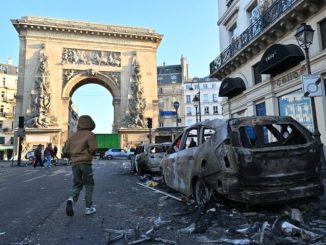
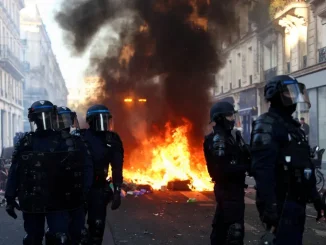
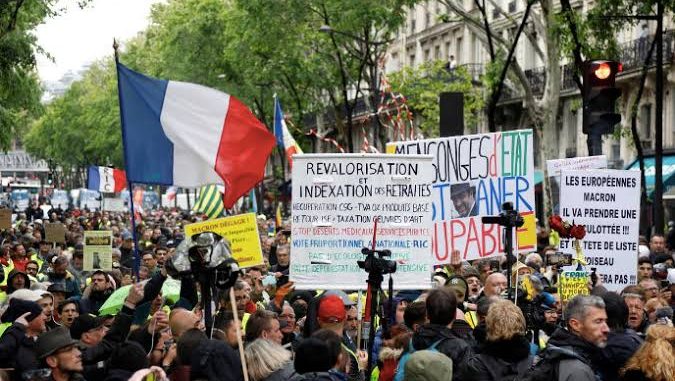
On October 24, France’s Interior Ministry estimated that 410,000 people demonstrated nationwide. Most demonstrations were peaceful, although violence broke out in several cities.
This distinction matters. A country experiencing mass demonstrations is not necessarily a country descending into chaos. The actions of violent groups should not be attributed to every student, worker, or citizen demanding change.
France also has a long history of mass demonstrations and labor mobilization. Public protest is an established part of its political culture, and disputes over pensions, wages, education, and government reforms can bring large numbers of people into the streets.
However, a strong protest tradition does not excuse arson, looting, or attacks on police and public institutions. Nor should the existence of violence be used to dismiss legitimate grievances.
Is the Rest of Europe Really Peaceful?
The suggestion that France is rioting while the rest of Europe remains peaceful is only partly accurate.
Across Europe, citizens are raising similar concerns about housing affordability, inflation, wages, public services, and the future facing younger generations. Spain has seen housing demonstrations and teacher strikes, while Portugal has experienced protests demanding higher wages and pensions. Italy and Albania have also witnessed demonstrations over economic and political grievances.
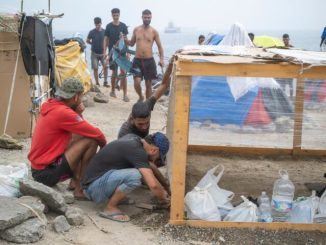
The difference is not necessarily that other European populations are more satisfied. In some countries, discontent has taken the form of peaceful marches, strikes, or encampments rather than widespread destructive confrontations.
That distinction deserves attention. Peaceful protest can exert pressure on governments without inflicting the same immediate damage on businesses, public infrastructure, and residents. But a peaceful demonstration does not mean a problem has been resolved, just as a violent riot does not prove that every underlying complaint is unjustified.
Europe’s apparent calm can also be misleading when attention focuses primarily on the most dramatic images from France.
The Political Cost of Unrest
France’s crisis presents a difficult challenge for its political leadership. The government must maintain public order while addressing the conditions that have brought students, workers, and other citizens into the streets.
A response based exclusively on policing may contain immediate disorder but leave the underlying causes untouched. Conversely, ignoring vandalism and attacks on public institutions risks undermining public safety and the rights of people who are not participating in the protests.
The government must also protect the right to peaceful assembly. Restrictions on demonstrations and curfews introduced after the unrest have faced legal challenges from lawyers and civil-liberties groups, highlighting the tension between public security and freedom of expression.
Politically, the unrest could deepen public dissatisfaction and give competing political movements an opportunity to argue that the existing leadership has failed. Yet political consequences should not be confused with proof that any particular party has the answers.
The central question is whether France’s leaders can restore confidence through credible action rather than temporary measures alone.
A Warning for Europe
France’s experience should not be treated as an isolated spectacle. The same pressures that have driven demonstrations elsewhere in Europe are visible in the French unrest: rising household expenses, concerns about public services, and uncertainty about future opportunities.
Young people have particular reasons to feel frustrated when education does not appear to offer a reliable path toward secure employment and affordable housing. Reuters reported on October 28 that youth-led demonstrations across Europe have been fueled by concerns about living costs, poor schools, limited job prospects, and the perception that political leaders are not listening.
These concerns are not exclusive to France. They reflect broader questions about whether European governments can sustain public confidence while responding to economic pressures and competing demands on public spending.
The answer cannot be to romanticize riots or to dismiss every protest as a threat to stability. Governments must distinguish between peaceful dissent and criminal violence, while protesters must recognize that destroying public property and endangering others can weaken the public support their causes need.
Conclusion
France’s unrest is a reminder that political stability cannot be measured simply by whether streets are quiet. A society may appear peaceful while frustration accumulates beneath the surface, and a society experiencing demonstrations may still possess functioning democratic institutions capable of addressing public grievances.
The real comparison between France and the rest of Europe is therefore not between a supposedly chaotic country and peaceful neighbors. It is between different ways of expressing discontent, different levels of confrontation, and different capacities to resolve disputes before they escalate.
France faces an immediate challenge in restoring public order without suppressing legitimate dissent. Other European governments face a related challenge: addressing economic insecurity, housing pressures, and declining confidence before frustration becomes more difficult to manage.
The lesson for Europe is clear: public order matters, but lasting stability requires public trust. Governments cannot demand confidence indefinitely without demonstrating that citizens’ concerns are being heard and addressed. Equally, citizens can demand accountability without accepting violence as the price of political change.