Published February 22, 2025
New findings from independent fiscal transparency data show that the State of California, under Governor Gavin Newsom, has allocated more than $100 million in taxpayer funds to nonprofit groups that organize and support protests and advocacy efforts, according to reporting by Townhall and associated sources.
State Funds Flow to Advocacy Groups
At the center of the controversy is the Coalition for Humane Immigrant Rights (CHIRLA) — a long‑standing California nonprofit focused on immigrant rights advocacy. Data cited by independent investigator Cam Higby suggests that CHIRLA alone received over $100 million in state funds for its work.
On its own website, CHIRLA describes its mission as supporting human rights and advancing full inclusion for immigrants through community organizing, education, legal defense and policy campaigns. The organization says it engages in grassroots outreach and advocacy across California and beyond.

 CALIFORNIA GOVERNMENT PAYING PROTESTORS OVER $100M
I have discovered that the state of California is using taxpayer funds to subsidize non-profit organizations whose core function is to organize protests.
CHIRLA (@CHIRLA) has taken over $100M alone in tax-payer funds… pic.twitter.com/tH85DVGGqB
— Cam Higby  (@camhigby) February 21, 2026
What the Funds Supported
The reporting points to several areas where state funds were directed:
-
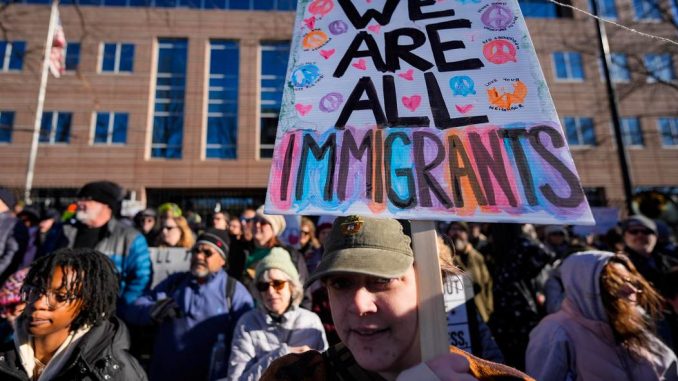
Grassroots mobilization and community organizing targeting issues such as immigrant rights and deportation defense.
-
Programs that assist and educate immigrants and refugees, including legal assistance and outreach.
-
Funding flows that critics argue may effectively subsidize protest activity and political advocacy.
The independent report asserts that CHIRLA and partner organizations made tens of thousands of “Get Out the Vote” (GOTV) contacts during recent elections and took credit for driving support for some state policies. If these activities involved direct use of public funds for political campaigning, legal experts say that could raise serious legal and ethical questions under state and federal law.
CALIFORNIA GOVERNMENT PAYING PROTESTORS OVER $100M
On their website, CHIRLA ADMITS that they engage in electioneering through GOTV and takes direct credit for Newsom’s $175M COVID relief aid.
If federal or state funds were used for electioneering, this may be a SERIOUS… pic.twitter.com/8mLIiK0oyY
— Cam Higby (@camhigby) February 21, 2026
Supporters Respond
In statements tied to their own materials, CHIRLA and similar groups say they provide essential services and advocacy for vulnerable immigrant communities, including legal support and protection of civil rights. They argue their work complements public services and helps ensure access to justice and inclusion for non‑citizens and marginalized residents.
Broader Context in California
California has become a flashpoint for debates over protest activities and government spending. In recent years, large demonstrations related to immigration policy, labor rights and other issues have drawn national attention, especially in cities such as Los Angeles and San Francisco.
Meanwhile, critics of the Newsom administration argue that taxpayer dollars should not subsidize entities engaged in politically charged activism, especially when those activities influence elections or public policy debates.
Legal and Political Questions Ahead
The question of whether public funds can or should support organizations that engage in advocacy and protest remains unresolved. California law places restrictions on the use of state money for partisan political activity, but interpretations of how those standards apply to broad nonprofit advocacy programs vary.
Lawmakers and watchdog groups have signaled they may pursue greater transparency and oversight of government contracts with advocacy organizations, especially if investigations show public money was used for explicit political purposes.
 Implications of California reportedly paying over $100 million to protest‑related nonprofit groups like CHIRLA, based on the Townhall report and similar sources:
1. Political Implications
-
Perception of partisanship: Critics argue that taxpayer money funding advocacy groups that actively organize protests could appear to support one political viewpoint over another, especially if groups engage in politically charged campaigns.
-
Influence on elections and policy: If funded groups mobilize voters or promote specific legislation, opponents may claim government funds are indirectly shaping electoral outcomes, raising ethical and legal concerns.
-
Polarization: Stories like this can fuel partisan narratives, with some arguing the state is subsidizing activism, while supporters claim it’s funding essential civic engagement.
2. Legal Implications
-
Use of public funds: California law prohibits state funds from being used for partisan political activity. If government grants were used to support lobbying or electoral influence, this could prompt legal challenges or audits.
-
Transparency and accountability: Agencies distributing funds may face increased pressure to disclose spending details and justify how grants align with statutory purposes.
-
Potential litigation: Advocacy groups could be sued or investigated if they cross the line between nonprofit community support and political campaigning using public money.
3. Social and Public Trust Implications
-
Erosion of trust: Taxpayers may feel their money is being used for activism instead of core public services, potentially eroding trust in government.
-
Public debate on civic engagement funding: The case could spark wider discussions on how much government should fund nonprofits involved in advocacy, protest, or community organizing.
-
Community impact: Supporters argue that these funds provide legal aid, education, and social services for vulnerable populations, meaning cutting funds could harm immigrant and marginalized communities.
4. Financial Implications
-
Budget scrutiny: Over $100 million is a significant expenditure in the context of California’s budget, which may trigger legislative reviews or calls to redirect funds elsewhere.
-
Grant oversight: State agencies may implement stricter rules for grant applications, requiring detailed accounting for how money is used, especially regarding political activity.
5. Broader National Implications
-
Precedent for other states: Other states could look at this case as a model or cautionary tale regarding funding advocacy nonprofits.
-
Media narrative shaping: National media may use this to frame California as overly politically active or permissive in taxpayer spending, potentially influencing federal discourse on state funding of nonprofits.
 Overall Takeaway:
The reported $100 million in California taxpayer funds flowing to advocacy organizations that engage in protests and immigrant rights campaigns has ignited a complex debate about government spending, civic engagement, and political neutrality. On one hand, supporters of these nonprofits emphasize that the funding enables vital services such as legal aid for immigrants, education programs, and community organizing that empowers marginalized populations. These groups argue their work strengthens civic participation and protects vulnerable residents from systemic inequities.
On the other hand, critics contend that channeling such large sums to organizations that actively organize protests risks creating the appearance of state-sponsored activism, raising ethical questions about partisan influence, voter mobilization, and the use of public funds in politically charged activities. Even if no laws are technically broken, the perception alone can erode public trust in government institutions, prompting calls for greater oversight and transparency in how taxpayer money is allocated.
The broader implications extend beyond California. This situation may serve as a precedent for other states, sparking national conversations about the proper role of government in funding advocacy, protest, and civic engagement programs. Lawmakers, watchdogs, and voters are likely to demand clearer accountability mechanisms, ensuring that public money supports community services without crossing into political advocacy.
Ultimately, the controversy underscores the delicate balance policymakers must navigate: supporting nonprofit initiatives that serve the public good while maintaining legal, ethical, and fiscal boundaries. How California addresses this issue—through audits, legislative scrutiny, or changes in grant policy—could shape the standards for public funding of activist organizations across the country and redefine the conversation about the role of government in civic life.
SOURCES: TOWNHALL – It’s True: Gavin Newsom’s California Government Has Paid Protestors Over $100 Million
WCBM NEWS TALK – Gavin Newsom’s California Government Has Paid Protestors Over $100 Million