Published July 1, 2026
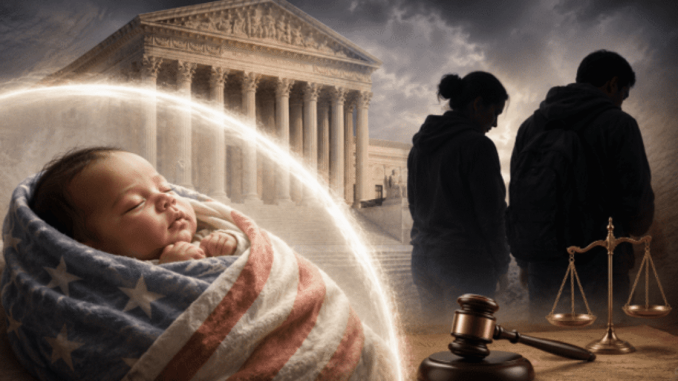
The debate over birthright citizenship has once again become one of the most contentious issues in American politics, raising fundamental questions about the U.S. Constitution, immigration policy, and the responsibilities of parents who enter the country without legal authorization.
A recent commentary by Joe Hoft argues that birthright citizenship should not shield parents from immigration enforcement. The central claim is that while children born in the United States may acquire constitutional rights, those rights do not automatically exempt non-citizen parents from deportation or other immigration proceedings.
Supporters of this view contend that immigration laws apply to adults regardless of whether they have U.S.-born children. They argue that a child’s citizenship should not serve as legal immunity for parents who violated immigration laws. Under current U.S. immigration law, a child born in the United States generally cannot sponsor a parent for permanent legal status until reaching the age of 21, and even then, the process is subject to numerous legal requirements.
The discussion comes amid renewed national attention to birthright citizenship. On June 30, 2026, the U.S. Supreme Court ruled 6–3 that the Fourteenth Amendment continues to guarantee citizenship to nearly all children born on U.S. soil, rejecting efforts to limit birthright citizenship through executive action. The Court reaffirmed longstanding constitutional precedent dating back more than a century.
Supporters of birthright citizenship argue that the Citizenship Clause of the Fourteenth Amendment provides a clear constitutional guarantee that prevents discrimination based on a child’s parents or immigration status. They warn that changing this principle could create legal uncertainty and potentially leave some children without citizenship.
Critics, however, maintain that the current system can encourage illegal immigration and that Congress should revisit immigration laws to address concerns about border security and citizenship policy. While the Supreme Court rejected executive efforts to restrict birthright citizenship, political leaders continue to debate whether legislative or constitutional changes should be pursued.
The controversy reflects a broader national conversation balancing constitutional protections with immigration enforcement. Legal experts note that birthright citizenship and immigration status are separate legal issues: a child may be a U.S. citizen while the parents remain subject to immigration law, with any enforcement actions evaluated under existing statutes and due-process protections.
As immigration remains a defining political issue in the United States, the discussion surrounding birthright citizenship is likely to continue in Congress, the courts, and public discourse. Whatever future reforms may emerge, they will continue to test the balance between constitutional guarantees, national sovereignty, and the human realities facing immigrant families.
 Public / Political Reactions:
🇺🇸 The White House and Supporters of Immigration Enforcement
Supporters of stricter immigration enforcement argue that birthright citizenship should not shield undocumented parents from legal consequences.
- They maintain that a child’s U.S. citizenship does not automatically grant legal status or immunity from deportation to non-citizen parents.
- Advocates support stronger border security and enforcement of existing immigration laws.
- Some policymakers continue to call for reforms to address what they view as loopholes in the immigration system.
➡️ Position: Birthright citizenship should remain legally separate from immigration enforcement involving parents.
⚖️ Legal Experts and Constitutional Scholars
Constitutional experts emphasize that birthright citizenship is rooted in the Fourteenth Amendment and longstanding legal precedent.
- Legal scholars note that children born in the United States generally acquire U.S. citizenship regardless of their parents’ immigration status.
- Experts stress that parental immigration cases are governed by separate immigration laws and due process.
- Many caution that altering birthright citizenship would likely require significant legal or constitutional changes.
➡️ Position: Existing constitutional protections remain in force, while immigration enforcement and citizenship are distinct legal matters.
🏛️ Immigrant Rights and Civil Liberties Organizations
Advocacy groups continue to defend birthright citizenship as a fundamental constitutional guarantee.
- Organizations argue that children should not lose constitutional rights because of their parents’ immigration status.
- Many support comprehensive immigration reform while preserving birthright citizenship.
- Advocates also emphasize protecting family unity and ensuring due process in immigration proceedings.
➡️ Position: Preserve birthright citizenship while pursuing balanced immigration reforms that respect constitutional rights.
👥 Public Response
The issue remains one of the most debated topics in U.S. politics.
- Many Americans support stronger immigration enforcement and border security.
- Others believe birthright citizenship is a core constitutional principle that should remain unchanged.
- Public debate continues over how to balance immigration control, constitutional protections, and humanitarian considerations.
➡️ Position: Public opinion remains divided over immigration policy, but the debate continues to shape national political discourse.
🌍 Broader International Discussion
The U.S. debate has attracted attention from legal experts and policymakers around the world.
- Some countries grant citizenship by birth, while others rely primarily on citizenship through parentage.
- International observers continue to monitor developments in U.S. immigration and constitutional law.
- The discussion has contributed to broader conversations about citizenship, migration, and national sovereignty.
➡️ Position: The birthright citizenship debate continues to influence international discussions on immigration policy and constitutional governance.
 Resulting Effects:
The renewed debate over birthright citizenship has intensified discussions on immigration policy, constitutional rights, and border security in the United States. While birthright citizenship remains protected under current constitutional interpretation, the issue continues to shape legal challenges, political discourse, and proposals for immigration reform.
1. Renewed National Debate on Immigration Policy
The issue has become a focal point in discussions on border security and immigration reform.
🗣️ Lawmakers continue to debate the relationship between citizenship and immigration enforcement.
🏛️ Political leaders have proposed differing approaches to addressing unauthorized immigration.
📢 The issue remains prominent in national policy discussions.
➡️ Result: Birthright citizenship debate → renewed focus on U.S. immigration policy.
2. Increased Legal and Constitutional Scrutiny
The discussion has reinforced attention on constitutional interpretation.
⚖️ Legal experts continue to examine the scope of the Fourteenth Amendment’s Citizenship Clause.
📜 Courts are expected to remain central in resolving future legal challenges.
👨⚖️ Constitutional scholars continue to debate potential reforms and their legal implications.
➡️ Result: Constitutional questions → heightened legal scrutiny and judicial review.
3. Continued Public and Political Polarization
The issue has deepened divisions among policymakers and the public.
🗳️ Supporters of stricter immigration enforcement advocate for policy changes.
🤝 Opponents argue that birthright citizenship is a fundamental constitutional guarantee.
📱 Public discussion continues across political, legal, and social platforms.
➡️ Result: Immigration debate → continued political and public polarization.
4. Greater Attention to Mixed-Status Families
The debate has highlighted the legal complexities faced by families with differing immigration statuses.
👨👩👧 Advocacy groups continue to emphasize family unity and due process.
📋 Immigration attorneys report ongoing concerns about legal uncertainty for affected families.
💬 Policymakers continue to discuss reforms affecting mixed-status households.
➡️ Result: Immigration enforcement debates → increased focus on the challenges facing mixed-status families.
5. Increased Interest in Immigration Reform
The discussion has renewed calls for broader legislative action.
📌 Some lawmakers support stronger border security and enforcement measures.
⚖️ Others advocate comprehensive immigration reform while preserving constitutional protections.
🏛️ Congress is expected to continue debating immigration-related legislation.
➡️ Result: Ongoing controversy → renewed momentum for immigration policy discussions.
6. Sustained National and International Attention
The issue continues to attract widespread interest beyond the United States.
🌍 Governments, legal experts, and international observers are monitoring developments.
📰 Media coverage continues to examine the legal and political implications of the debate.
📖 The discussion remains a significant topic in constitutional and immigration policy.
➡️ Result: Birthright citizenship debate → continued national and international attention to U.S. immigration and constitutional law.
 Future Outlook:
The debate over birthright citizenship is expected to remain a major legal and political issue in the United States. Future developments will likely depend on court rulings, congressional action, and the priorities of future administrations. Regardless of the outcome, the issue is expected to continue shaping immigration policy and constitutional discussions.
1. Legal Challenges Are Likely to Continue
The courts are expected to remain central in resolving disputes over birthright citizenship.
⚖️ Future lawsuits may continue to challenge or defend existing interpretations of the Fourteenth Amendment.
📜 Federal courts are likely to review any new executive or legislative actions affecting citizenship.
👨⚖️ Constitutional scholars expect continued judicial scrutiny of immigration-related policies.
➡️ Outlook: Ongoing legal disputes → continued court involvement in defining constitutional protections.
2. Immigration Reform Will Remain a Congressional Priority
Lawmakers are expected to continue debating broader immigration policies.
🏛️ Congress may consider proposals addressing border security, immigration enforcement, and legal pathways.
📋 Policymakers are likely to pursue differing approaches based on political priorities.
🤝 Bipartisan agreement may remain difficult on comprehensive immigration reform.
➡️ Outlook: Continuing policy debate → sustained congressional focus on immigration reform.
3. Public Debate Is Expected to Persist
Birthright citizenship will likely remain a prominent political issue.
🗳️ Political leaders are expected to continue using immigration as a key campaign issue.
📱 Public discussions will likely remain active across media and social platforms.
📰 National attention is expected to increase during election cycles and major court decisions.
➡️ Outlook: Ongoing political divisions → continued public debate over immigration and citizenship.
4. Greater Focus on Constitutional Interpretation
Legal experts are expected to continue examining the scope of the Citizenship Clause.
📖 Scholars will likely analyze future court decisions and legislative proposals.
⚖️ Any significant policy changes may face constitutional review.
🏛️ The Fourteenth Amendment is expected to remain central to the debate.
➡️ Outlook: Constitutional questions → continued legal analysis and interpretation.
5. Continued Attention to Mixed-Status Families
Future policy discussions are likely to consider the impact on immigrant families.
👨👩👧 Advocacy groups are expected to continue promoting family unity and due process.
📋 Immigration attorneys will likely monitor changes affecting mixed-status households.
🤝 Policymakers may evaluate how reforms affect both citizens and non-citizens.
➡️ Outlook: Immigration policy changes → ongoing attention to family and legal considerations.
6. Broader Debate Over U.S. Immigration Policy Will Continue
Birthright citizenship is expected to remain part of a larger national conversation.
🌍 Discussions will likely continue on balancing border security, constitutional rights, and immigration enforcement.
📢 Policymakers, legal experts, and advocacy groups are expected to remain actively engaged.
🕊️ Future reforms will likely seek to address immigration challenges while respecting constitutional principles.
➡️ Outlook: Continuing national debate → ongoing efforts to shape the future of U.S. immigration policy and constitutional governance.
 Bottom Line:
The debate over birthright citizenship extends beyond immigration policy to fundamental questions about constitutional rights, national sovereignty, and the rule of law. While current legal precedent recognizes citizenship for most children born on U.S. soil, immigration enforcement involving parents remains a separate legal matter. As policymakers, courts, and the public continue to debate possible reforms, the challenge will be balancing border security, constitutional protections, and humanitarian considerations. The outcome of future legal and legislative efforts could have lasting implications for U.S. immigration policy, citizenship rights, and the nation’s constitutional framework.
SOURCES: JOEHOFT – Birthright Citizenship Is Not Parental Immunity