On the eve of the second day of talks, Russia launched a barrage of drones and missiles on Ukraine, cutting off millions from electricity in subzero temperatures.
Published January 24, 2025
ABU DHABI / KYIV — On Saturday, as high‑level peace negotiations between Ukraine, Russia, and the United States continued in Abu Dhabi, Russia launched an intense wave of missile and drone strikes across multiple Ukrainian cities — a barrage Kyiv says targeted not just civilians and infrastructure but also the credibility of diplomacy itself.
Large‑Scale Attack at a Critical Moment
According to Ukrainian officials, the overnight assault involved hundreds of attack drones and scores of missiles, hitting major population centers and essential energy facilities. The strikes came concurrently with the second day of U.S.‑brokered peace talks involving all three sides.
Foreign Minister Andriy Sybiha condemned the timing, saying Russian President Vladimir Putin ordered the offensive “precisely at the time when delegations are meeting in Abu Dhabi to advance the peace process” — a claim underscoring Kyiv’s view that the attacks were meant to undermine diplomatic efforts. “His missiles hit not only our people, but also the negotiating table,” Sybiha wrote on social media.
Human Impact and Infrastructure Damage
The strikes inflicted both human and material suffering:
-
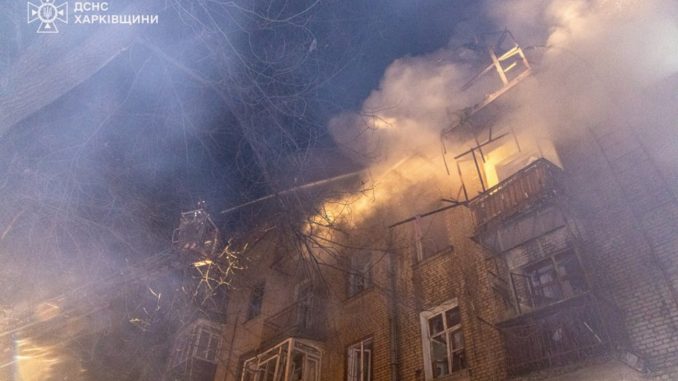
At least one civilian was killed, and dozens were injured in cities including Kyiv and Kharkiv.
-
Residential areas, hospitals, a maternity ward, and a university dormitory reportedly sustained damage.
-
Extensive damage to energy infrastructure left hundreds of thousands without power amid freezing winter temperatures, complicating life for ordinary Ukrainians.
Kyiv’s mayor and emergency services described fires and service interruptions triggered by debris from drones and missiles. Officials highlighted the added strain on emergency responders and utilities struggling to maintain heat and water during the severe cold.
Peace Talks Continue Despite the Attacks
The trilateral talks, part of the first direct diplomatic engagement involving Russia, Ukraine, and the U.S. since the war began almost four years ago, proceeded through the tensions. Delegates discussed the framework for ending the war, although no final deal was announced on Saturday. Both sides agreed to regroup and potentially reconvene soon.
The negotiations focus on deeply divisive issues such as territorial control in eastern Ukraine — especially the Donbas region — where Russia insists on influence while Ukraine rejects any surrender of territory.
International Reaction
International responses varied, with Western allies expressing concern over the destructive strikes and their timing. Ukraine’s leadership used the moment to call for stronger air defense support and reiterated calls for sustained international backing.
Despite the setback, mediators described parts of the talks as “constructive,” and diplomats signaled willingness to pursue further engagement.
 Implications
1. Peace Talks Weakened, Trust Further Eroded
The timing of the strikes seriously damages confidence in negotiations. Launching large-scale attacks while talks are underway reinforces Kyiv’s argument that Moscow is negotiating under coercion, not good faith. This makes future agreements harder to reach and easier to collapse.
2. Diplomacy Used as Cover for Military Pressure
The strikes suggest Russia may be using negotiations tactically — maintaining battlefield pressure to extract concessions. This approach raises doubts among mediators and could force the U.S. and allies to reassess whether talks are being exploited rather than genuinely pursued.
3. Civilian Cost Becomes a Diplomatic Issue
With homes, hospitals, and energy infrastructure hit, civilian suffering is no longer just a humanitarian concern but a central diplomatic one. Ukraine is likely to push harder for accountability, war-crime documentation, and international condemnation within negotiation frameworks.
4. Increased Western Support Likely
The attacks strengthen Ukraine’s case for:
-
More advanced air-defense systems
-
Faster military aid delivery
-
Continued or expanded sanctions
Rather than pushing Kyiv toward compromise, the strikes may harden Western resolve.
5. Energy Security as a Pressure Tool
Targeting energy infrastructure during winter highlights Russia’s continued use of energy warfare. This raises alarms across Europe and reinforces the need for long-term energy diversification away from Russian leverage.
6. Negotiations Shift From “Ending War” to “Managing Conflict”
If attacks continue alongside talks, diplomacy risks becoming about containing escalation rather than achieving peace. This could lead to prolonged, frozen-conflict scenarios instead of a comprehensive settlement.
7. Domestic and Global Messaging Impact
For Ukraine, the strikes reinforce domestic unity and resistance. Globally, they shape the narrative that Russia prioritizes military dominance over compromise — influencing public opinion, alliance cohesion, and future diplomatic positioning.
 Overall Takeaway:
The latest wave of massive Russian strikes underscores the central contradiction shaping the war: diplomacy and destruction moving in parallel. By launching large-scale attacks while peace talks were underway, Moscow sent a signal that military pressure remains its primary tool, even as negotiations continue on paper.
For Ukraine, the strikes reaffirm long-standing concerns about negotiating under fire and strengthen calls for sustained international support rather than rushed compromises. For mediators, the attacks complicate efforts to build trust and raise questions about whether meaningful progress toward peace is possible without a demonstrable reduction in violence.
As talks continue, the events of today highlight a sobering reality — peace efforts cannot advance in isolation from the battlefield. Until negotiations are matched by restraint on the ground, Ukraine’s civilians will continue to bear the cost, and the prospect of a durable settlement will remain uncertain.
SOURCES: THE MOSCOW TIMES – Ukraine, Russia, U.S. Agree to More Talks Next Week in UAE
REUTERS – US-brokered peace talks break off without deal after overnight Russian bombardment of Ukraine
THE A NEWS – Ukraine says Russian strikes hit ‘negotiation table’