
Published March 29, 2026
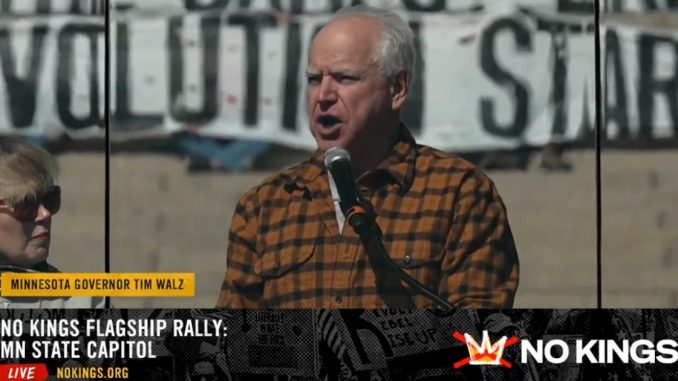
Minnesota Governor Tim Walz ignited a political firestorm over the weekend after delivering a sharply worded speech targeting Donald Trump while vowing strong support for Somali Minnesotans during a massive protest event.
The remarks came during the high-profile No Kings rally, part of a nationwide wave of demonstrations criticizing federal leadership and immigration enforcement policies.
A Fiery Speech That Drew National Attention
Speaking before a large crowd in St. Paul, Walz accused Trump of deepening divisions across the country and targeting immigrant communities through policy and rhetoric.
“We don’t bow to kings,” Walz said, according to clips circulating online. “We stand with our neighbors.”
While the speech covered a range of national issues, one of the most talked-about moments came when Walz emphasized his administration’s commitment to Minnesota’s Somali population—one of the largest in the United States.
“We Stand With You”: Support for Somali Community
Walz made it clear that his administration intends to continue backing Somali Minnesotans amid ongoing national debates over immigration.
Minnesota is home to tens of thousands of Somali Americans, many of whom settled in the state as refugees over the past decades. The community has become a significant cultural and political presence, particularly in the Minneapolis–St. Paul area.
By highlighting this group directly, Walz signaled that his policies—and political messaging—are closely tied to protecting immigrant communities in his state.
What Is the “No Kings” Movement?
The No Kings rally is part of a broader protest movement that has spread across the United States in recent months.
Organizers describe the movement as a response to what they view as “authoritarian-style leadership,” particularly in relation to federal immigration actions and executive authority. Demonstrations have taken place in thousands of locations, drawing large crowds and widespread media attention.
Critics, however, argue that the movement is politically motivated and designed to undermine federal authority.
Long-Running Clash With Trump
The latest remarks are just the newest chapter in an ongoing political feud between Walz and Trump.
In recent months, tensions have escalated over:
- Federal immigration enforcement operations
- The role of state governments in resisting federal directives
- Allegations of mismanagement in Minnesota state programs
Trump allies have repeatedly criticized Walz, accusing him of failing to maintain oversight and prioritizing political messaging over governance. Walz, in turn, has pushed back, accusing federal leadership of unfairly targeting immigrant communities and inflaming divisions.
Fact Check: What Did Walz Actually Say?
Some headlines and online commentary have characterized Walz’s remarks as a “pledge of allegiance” to Somali Minnesotans.
However, based on available speech excerpts, Walz did not use that exact phrase. Instead, he emphasized solidarity and support—language commonly used by politicians addressing specific communities.
The distinction has become a key point of debate, with critics arguing the message still reflects political favoritism, while supporters say it is standard rhetoric aimed at inclusivity.
Divided Reactions Pour In
Reaction to the speech has been swift and sharply divided.
Supporters praised Walz for:
- Standing up for immigrant communities
- Challenging federal policies they oppose
- Promoting inclusivity and diversity
Critics argued that:
- The speech deepens political and cultural divisions
- It prioritizes identity politics over broader concerns
- It risks alienating other groups of voters
The controversy quickly spread online, with clips of the speech gaining traction across social media platforms.
🧩 Reading Between the Lines:
Governor Tim Walz’s speech wasn’t just about what was said—it was about what was emphasized, what was implied, and what it signals moving forward. Beneath the applause lines and political rhetoric, several key themes stand out:
- A Clear Signal of Priorities
By highlighting Somali Minnesotans directly, Walz appears to be making a deliberate statement about which communities his administration is focused on defending amid ongoing national debates. - Targeting a National Rival
The pointed criticism of Donald Trump suggests this was more than a local address—it reinforces an ongoing political clash that extends beyond Minnesota. - Message Framed as Unity—Viewed Differently by Critics
While the speech emphasized inclusion and support, some may interpret the focus on specific groups as selective messaging rather than a broad, unifying approach. - Positioning for a Larger Stage
The tone and framing indicate that Walz may be speaking not just to his state, but to a wider national audience as debates over immigration and leadership intensify. - A Defining Narrative Moving Forward
The speech helps shape a broader storyline—one centered on identity, governance, and the role of state leaders in pushing back against federal influence.
🔗 The Stakes:
What’s at play goes far beyond a single speech by Tim Walz. The implications touch on leadership priorities, national cohesion, and the direction of public policy at a time of deep division.
- Questions About Equal Representation
When leaders highlight specific communities, it raises concerns about whether all citizens are being represented equally—or if some are being prioritized over others. - State vs. Federal Authority
The continued pushback against Donald Trump underscores a growing tension between state leadership and federal policy, particularly on immigration enforcement and national security. - Impact on National Unity
Messaging that resonates strongly with one group may risk alienating others, adding to an already fragmented political and cultural landscape. - Setting a Precedent for Leadership
How leaders choose to frame their support—and who they emphasize—can shape expectations for governance, both at the state and national level. - Fueling an Already Heated Debate
Immigration, identity, and government priorities remain some of the most contentious issues in the country. Speeches like this don’t just reflect that tension—they can intensify it.
🏁 The Bottom Line:
At its core, Governor Tim Walz’s speech was about signaling priorities, drawing lines, and shaping political allegiances. By emphasizing support for specific communities while openly criticizing Donald Trump, the address highlights the widening gap between state leadership and federal authority, as well as the tensions between targeted policy advocacy and broader national unity. For many, it raises a simple question: should leadership focus on selective messaging that appeals to certain groups, or maintain a balanced approach that prioritizes fairness and equal consideration for all constituents? The answer will likely define not only Walz’s legacy in Minnesota but also the broader conversation about governance, accountability, and the responsibilities of leaders in a divided nation.
SOURCES: FOX NEWS – Walz calls Trump ‘wannabe dictator’ in ‘No Kings’ speech
THE GATEWAY PUNDIT – Tim Walz Trashes Trump, Pledges His Allegiance to Somali Minnesotans in Shocking No Kings Speech (VIDEO)




