

The Silent Migration Crisis: Why Millions Are Leaving Home Even Without War

Reported by:

Cherry Meigh Timbol
News Content Editor
Published August 2 , 2026

For decades, images of refugees fleeing bombs and conflict have defined the global migration crisis. But today, a different story is unfolding—one that receives far less attention.

Across Africa, Asia, Latin America, and parts of Europe, millions of people are leaving their homes not because they are escaping war, but because they see no future where they live. Poverty, unemployment, rising food prices, climate disasters, political instability, and shrinking economic opportunities are becoming some of the world’s most powerful drivers of migration. Experts say this quieter form of migration is reshaping societies, economies, and politics across continents.

A Different Kind of Migration

When many people hear the word “migrant,” they often think of refugees escaping armed conflict. However, international organizations distinguish between forced displacement—people fleeing war or persecution—and economic migration, where individuals move primarily in search of employment, education, safety from extreme poverty, or better living conditions. In reality, the reasons often overlap, making migration far more complex than a single label suggests.

According to the International Organization for Migration (IOM), migration has become one of the defining global issues of the 21st century. The number of international migrants has steadily increased over the past two decades as globalization, demographic change, economic inequality, and environmental pressures reshape human mobility.

Meanwhile, the UN Refugee Agency (UNHCR) reports that global forced displacement remains at historically high levels, driven by conflicts in countries such as Sudan, Ukraine, Myanmar, and others. Yet millions of additional migrants crossing borders each year are motivated primarily by economic and environmental pressures rather than war.

Migrants rescued from water during English Channel crossing attempt in France
Migrants fight to stay on a dinghy attempting to sail into the English Channel from Gravelines, FranceCredit: Getty
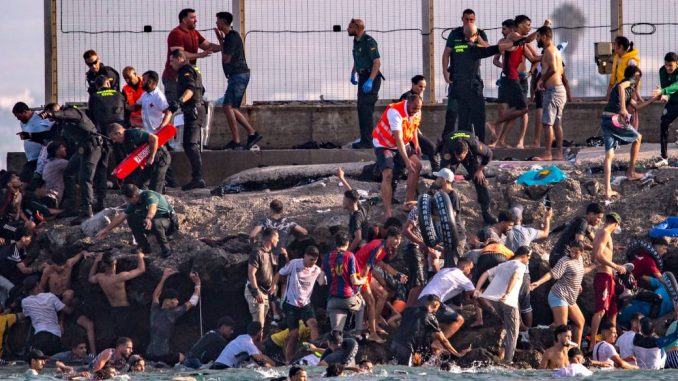
Migrants gather in Fnideq to cross to the Spanish enclave of Ceuta
Migrants gather around a torched vehicle while waiting for a chance to cross to the Spanish enclave of CeutaCredit: Reuters

Why People Leave Without War

For many families, migration is not about chasing wealth—it is about survival.

1. Economic Hardship

High unemployment, low wages, and rising living costs have become major reasons people leave their home countries. Young adults often struggle to find stable employment despite completing their education, leading many to seek opportunities abroad.

Recent migration into Spain’s North African enclave of Ceuta illustrates this trend. Many Moroccan migrants cited limited job opportunities and financial hardship rather than armed conflict as key reasons for risking dangerous sea crossings into Europe.

2. Political Instability

Even where there is no active war, corruption, weak institutions, crime, and political uncertainty can make daily life increasingly difficult.

People may decide to migrate because they no longer believe economic or social conditions will improve, especially when combined with limited public services and few employment prospects.

3. Demographic Pressures

Many developing countries have rapidly growing young populations, while wealthier nations face aging populations and labor shortages.

This mismatch creates powerful migration flows as workers seek opportunities in countries that need additional labor, although legal pathways often remain limited.

Migration Is Reshaping the World

Migration is influencing nearly every aspect of modern society.

Countries receiving migrants benefit from additional workers in sectors such as healthcare, agriculture, construction, manufacturing, and technology. Many economies rely heavily on migrant labor to address workforce shortages.

Countries of origin, meanwhile, often receive billions of dollars annually through remittances—money sent home by citizens working abroad. These funds help families pay for education, healthcare, housing, and daily living expenses, making migration an important economic lifeline in many developing nations.

Migrants arrive in Lampedusa
Migrants stand behind a fence as they are gathered by Greek coast guard officers after disembarking from a cargo ship, in the port of Lavrio, south of AthensCredit: AFP
Illustration of a map showing migrant routes into Europe with a photo of migrants in the water in the corner.

A Political Flashpoint

While migration contributes to economic growth, it has also become one of the world’s most divisive political issues.

Governments across Europe, North America, and elsewhere continue debating how to balance humanitarian responsibilities with border security, asylum systems, labor needs, and public concerns over immigration.

Recent events in Ceuta, along with continued migration across the Mediterranean and English Channel, illustrate the growing political sensitivity surrounding irregular migration and border management.

The Human Cost

Migration often involves extraordinary risks.

Thousands of people attempt dangerous sea crossings each year, travel through deserts, or rely on criminal smuggling networks in hopes of reaching safer or more prosperous destinations.

Many never arrive.

Those who do frequently face uncertainty, lengthy asylum procedures, family separation, language barriers, discrimination, or exploitation. Yet despite these challenges, many continue making the journey because they believe remaining at home offers even fewer opportunities.

Migrants rescued from water during English Channel crossing attempt in France
Migrants fight to stay on a dinghy attempting to sail into the English Channel from Gravelines, FranceCredit: Getty
Migrants gather in Fnideq to cross to the Spanish enclave of Ceuta
Migrants gather around a torched vehicle while waiting for a chance to cross to the Spanish enclave of CeutaCredit: Reuters

Looking Beyond the Headlines

Migration is often portrayed as a border issue. In reality, it begins long before anyone reaches a frontier.

It begins when jobs disappear, crops fail, schools cannot provide opportunities, wages fail to keep pace with inflation, or young people conclude that their future lies somewhere else.

Understanding migration therefore requires looking beyond border fences and political debates toward the economic, environmental, and social conditions that drive people to leave.

A Global Challenge Requiring Global Solutions

International organizations argue that managing migration effectively requires more than stronger border controls. Long-term strategies include expanding legal migration pathways, investing in education and employment, supporting climate adaptation, combating human trafficking, and promoting sustainable economic development in countries of origin.

Migration is likely to remain one of the defining global issues for decades to come. As conflicts persist, climate change accelerates, and economic inequality continues, millions of people will keep searching for security, opportunity, and hope beyond the borders of their home countries.

For many, migration is not simply a choice.

It is the only future they believe remains.


👥 Public / Political Reactions:

The growing trend of migration driven by economic hardship, climate change, and limited opportunities has sparked intense debate among governments, international organizations, humanitarian groups, and the public. While many agree that migration is a global challenge requiring international cooperation, opinions differ sharply on how countries should balance border security, humanitarian obligations, and economic needs.

🌍 United Nations and International Organizations
The United Nations (UN), International Organization for Migration (IOM), and UN Refugee Agency (UNHCR) have emphasized that migration is a complex global phenomenon driven by a combination of conflict, poverty, economic inequality, climate change, and demographic trends. These organizations continue advocating for safe, orderly, and regular migration while encouraging countries to address the root causes that compel people to leave their homes. They also stress the importance of protecting the rights and dignity of migrants and refugees regardless of their legal status.

🇪🇺 European Union
European governments continue to face growing political pressure to strengthen border security while maintaining commitments under international humanitarian and asylum laws. Some EU member states support tougher migration controls and faster deportation procedures for individuals without legal grounds to remain, while others emphasize greater solidarity, humanitarian protection, and cooperation with countries of origin to reduce migration pressures.

🇺🇸 United States
Migration remains one of the most debated political issues in the United States. Successive administrations have focused on strengthening border security, combating human smuggling, and reforming immigration policies, while also facing calls from humanitarian organizations to expand legal migration pathways and improve protections for asylum seekers. The issue continues to shape domestic politics and foreign policy throughout the Americas.

🌍 Countries of Origin
Governments in many developing nations acknowledge that unemployment, poverty, limited economic opportunities, and climate-related challenges contribute to outward migration. Some countries have introduced programs aimed at creating jobs, attracting investment, and reducing the economic pressures that encourage citizens to seek opportunities abroad. At the same time, many also recognize the economic importance of remittances sent home by citizens working overseas.

🤝 Humanitarian and Human Rights Organizations
Organizations such as the International Rescue Committee (IRC), Médecins Sans Frontières (Doctors Without Borders), and other humanitarian groups continue calling for greater protection of migrants, expanded legal migration options, and stronger international cooperation against human trafficking and migrant exploitation. They argue that people should not be forced to risk dangerous journeys because of poverty, persecution, or environmental disasters.

👥 Public Opinion
Public attitudes toward migration remain deeply divided across many countries. Supporters highlight migrants’ contributions to economic growth, labor markets, innovation, and cultural diversity, while critics express concerns about border security, public services, employment competition, and integration. As migration continues to rise globally, governments face increasing pressure to develop policies that balance national security, economic needs, and humanitarian responsibilities.


⚠️ Resulting Effects:

The steady rise in migration driven by economic hardship, climate change, and limited opportunities is reshaping societies, economies, and politics around the world. While migration provides opportunities for many individuals and helps address labor shortages in some countries, it also presents significant humanitarian, economic, and policy challenges that governments continue to navigate.

🌍 1. Global Migration Has Continued to Increase
More people are crossing international borders in search of employment, education, safety, and better living conditions. Economic inequality, demographic changes, climate-related disasters, and political instability continue to drive migration across multiple regions.

📈 Effect: Migration has become one of the defining global trends of the 21st century, influencing international relations, labor markets, and population growth.

💼 2. Labor Markets Are Being Reshaped
Many developed countries facing aging populations rely on migrant workers to fill labor shortages in healthcare, agriculture, construction, manufacturing, transportation, hospitality, and technology.

🏗️ Effect: Migrants help sustain key industries and economic growth, while countries continue balancing workforce needs with immigration policies.

💰 3. Remittances Continue Supporting Millions of Families
Migrants working abroad send billions of dollars back to their home countries each year, helping families pay for food, housing, education, healthcare, and small businesses.

💵 Effect: Remittances have become a vital source of income for many developing economies, contributing to poverty reduction and local economic stability.

🚨 4. Humanitarian Challenges Have Intensified
Many migrants undertake dangerous journeys across seas, deserts, and remote border regions, exposing themselves to human trafficking, exploitation, violence, and life-threatening conditions.

⚠️ Effect: Governments and humanitarian organizations continue facing increasing pressure to improve search-and-rescue operations, strengthen migrant protections, and combat transnational smuggling networks.

🏛️ 5. Migration Has Become a Major Political Issue
Immigration policies remain among the most debated topics in many countries, influencing elections, border security strategies, asylum systems, and diplomatic relations.

🗳️ Effect: Governments continue reviewing immigration laws and border management policies while seeking to balance economic needs, national security, and humanitarian responsibilities.

🌐 6. The Need for International Cooperation Has Increased
Because migration often involves multiple countries, governments are working more closely on border management, legal migration pathways, refugee protection, anti-trafficking efforts, and economic development initiatives.

🤝 Effect: Long-term solutions are likely to depend on coordinated international policies that address both migration management and the underlying economic, environmental, and social factors driving people to leave their homes.


🔮 Future Outlook:

The global migration crisis is expected to remain one of the defining challenges of the coming decades as economic inequality, climate change, demographic shifts, and political instability continue influencing where and why people move. While governments are increasing border controls and migration regulations, experts warn that migration pressures will continue unless the underlying causes forcing people to leave their homes are addressed.

🌍 1. Migration Pressures Are Expected to Continue Rising
Economic disparities between developed and developing countries, combined with limited job opportunities and rising living costs, are likely to continue encouraging people to seek better futures abroad.

📈 Outlook: International migration is expected to remain a major global trend, with millions continuing to move in search of employment, education, and improved living conditions.

🇪🇺 2. Countries Will Face Pressure to Balance Security and Humanitarian Needs
Governments in Europe, North America, and other destination regions are expected to continue strengthening border controls while facing demands to protect migrants and provide legal pathways for those seeking opportunities.

🛂 Outlook: Migration policies will likely become more politically significant, with debates continuing over border enforcement, asylum systems, labor needs, and integration.

💼 3. Demand for Migrant Workers Will Continue Growing
Aging populations in many developed economies are expected to increase demand for foreign workers in healthcare, agriculture, construction, technology, and other industries.

🏗️ Outlook: Countries may expand legal migration programs to address labor shortages while attempting to prevent irregular migration and exploitation.

🌍 4. Developing Countries Will Need Greater Economic Investment
Experts argue that reducing migration pressures requires addressing the reasons people leave, including unemployment, poverty, weak infrastructure, and limited educational opportunities.

📊 Outlook: Greater investment in job creation, education, healthcare, and sustainable development may become central to long-term strategies aimed at reducing forced and irregular migration.

🤝 5. International Cooperation Will Become Increasingly Important
Migration cannot be managed by individual countries alone because it involves countries of origin, transit nations, and destination states.

🕊️ Outlook: Future migration policies are likely to depend on stronger international agreements involving border management, humanitarian protection, climate adaptation, and economic partnerships.

🧭 6. Migration Will Remain a Defining Global Issue
As the world faces continued inequality, environmental challenges, and demographic changes, migration will continue shaping politics, economies, and societies.

🌐 Outlook: The future of migration will depend not only on how countries control their borders, but also on whether the global community can address the deeper conditions that make millions of people believe leaving home is their best chance for survival and success.


🧩 Bottom Line:

The global migration crisis is no longer only a story about people crossing borders—it is a reflection of deeper challenges affecting the world, including economic inequality, climate change, political instability, and unequal access to opportunities. Millions of people are leaving their homes each year not because they want to abandon their communities, but because they believe migration offers a better chance for safety, stability, and a future for their families.

🏛️ Governments around the world face the difficult task of balancing border security, economic needs, and humanitarian responsibilities. While many nations are strengthening immigration controls, experts warn that migration pressures will continue unless the root causes driving people to leave are addressed.

⚖️ Humanitarian organizations and international agencies argue that migration should be managed through cooperation rather than isolation. They emphasize expanding legal migration pathways, protecting vulnerable migrants, combating human trafficking, and investing in countries where poverty, unemployment, and climate pressures are forcing people to seek opportunities elsewhere.

💼 For destination countries, migration presents both challenges and opportunities. Migrants can help fill labor shortages, support economic growth, and contribute to innovation, while governments must also address concerns about infrastructure, public services, integration, and social cohesion.

🌍 The consequences extend far beyond individual borders. Migration will continue influencing global politics, economies, labor markets, and international relations as climate change and inequality reshape where people can live and work.

➡️ Bottom Line: The migration crisis is ultimately a symptom of a world where opportunity, security, and stability are unevenly distributed. The future will depend not only on how countries manage their borders, but on whether the global community can address the conditions that force millions of people to leave home in search of a better life.


SOURCES: THE UK SUN – GAPS IN THE ARMOUR  Europe’s migrant weak spots from Channel to tiny enclaves and vast TUNNELS – as THOUSANDS storm Spanish beach


 

Buy Me a Coffee

About MeighTimbol 2123 Articles
A News Content Editor and News writer focused on U.S. politics, international affairs, breaking news, geopolitics, and major global developments. Her work examines emerging events, political decisions, and issues affecting communities in the United States and around the world. Through clear and engaging reporting, she aims to help readers understand not only what happened, but why it matters.
0 0 votes
Article Rating
Subscribe
Notify of
1 Comment
Oldest
Newest Most Voted
Newsfe_Admin
Admin
21 days ago

There’s no “climate change” causing criminals to run to other countries. That is well-organized human trafficking in the US for votes and in Europe so that fat, old ladies don’t have to travel all the way to Gambia for sex.