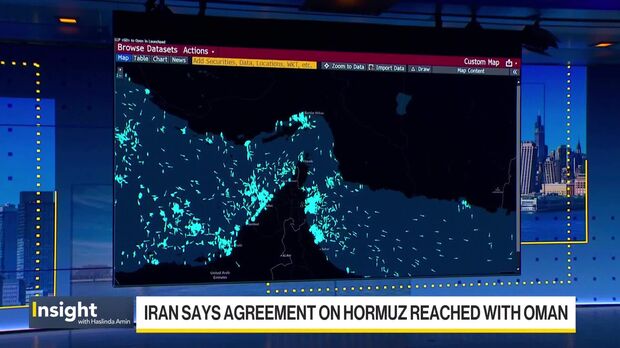
Iran said it had reached an agreement with Oman on a proposed route for shipping through the Strait of Hormuz, a potential step toward a reopening of the critical waterway for energy supplies. Bloomberg’s Abeer Abu Omar has the latest.Source: Bloomberg
Reported by:

Cherry Meigh Timbol
News Content Editor
Published August 8 , 2026
Middle East — Iran is seeking to block U.S. vessels from transiting the strategically vital Strait of Hormuz as negotiations with Oman move forward, raising tensions in an already fragile regional situation.
Tehran is reportedly using the ongoing talks to push for greater control over the waterway, aiming to secure concessions related to sanctions and maritime authority. The proposal includes restricting access for U.S. ships, a move that could significantly impact global trade and security dynamics.
⚓ Push for Control of a Critical Waterway
The Strait of Hormuz is one of the world’s most important shipping routes, with a large portion of global oil supply passing through it daily. Iran’s geographic position gives it strong influence over the area, which it is now leveraging in negotiations.
Experts say any attempt to limit access for U.S. vessels could escalate tensions and disrupt international shipping, raising concerns among global powers.
🤝 Oman-Mediated Talks Show Progress
Oman is playing a key role as a mediator between Iran and the United States. Discussions have shown signs of progress, particularly around ensuring the continued flow of commercial shipping through the strait.
However, major disagreements remain, especially regarding Iran’s demand to impose restrictions on certain foreign vessels.
💥 Rising Tensions and Regional Risks
The situation follows months of heightened tensions in the region, including incidents involving ships and military activity in nearby waters. These developments have increased pressure on both sides to reach an agreement while avoiding further escalation.
Analysts warn that failure to reach a deal could lead to renewed confrontations and instability across the Gulf.
🌍 Global Implications
Any disruption in the Strait of Hormuz would have worldwide consequences, including:
- Increased oil prices
- Delays in global shipping
- Greater geopolitical instability
Countries around the world are closely monitoring the situation due to its potential economic and security impact.
👥 Public / Political Reactions:
🇮🇷 Iranian Government Officials
Iranian leaders have defended their stance regarding the Strait of Hormuz, framing it as a matter of sovereignty and strategic security.
- Officials stressed Iran’s right to control access to nearby waters.
- Statements linked restrictions to broader security concerns and foreign presence in the region.
- Leaders signaled willingness to negotiate, but only under favorable terms.
➡️ Position: Iran supports leveraging its geographic position to secure political and security concessions.
🇺🇸 U.S. Government Officials
U.S. leaders have strongly opposed any attempt to restrict access to the strait.
- Officials emphasized the importance of maintaining freedom of navigation.
- Warnings were issued against actions that could disrupt global trade.
- Policymakers signaled readiness to respond if U.S. vessels are blocked.
➡️ Position: The U.S. rejects restrictions and supports open international waterways.
🇴🇲 Omani Leadership
Oman continues to play a neutral diplomatic role in the situation.
- Leaders are facilitating dialogue between Iran and the U.S.
- Officials called for calm and constructive negotiations.
- Oman emphasized stability and safe passage for all commercial traffic.
➡️ Position: Oman promotes mediation and peaceful resolution.
🌍 Regional Powers
Countries in the Middle East are closely watching the developments.
- Gulf states expressed concern over rising tensions near key trade routes.
- Some nations support maintaining open shipping lanes.
- Others warn that escalation could threaten regional security.
➡️ Position: Regional actors are cautious, balancing security concerns with economic interests.
🌐 International Community
Global stakeholders have raised alarms over potential disruptions.
- International organizations called for restraint and diplomacy.
- Western allies stressed protecting global supply chains.
- Concerns were raised about economic and security consequences.
➡️ Position: The international community urges de-escalation and stability.
🧠 Analysts and Experts
Experts have highlighted the strategic implications of the situation.
- Analysts warn of risks to global oil supply and trade.
- Discussions focus on Iran’s leverage over the strait.
- Concerns include possible military escalation if talks fail.
➡️ Position: Experts caution that tensions could escalate without compromise.
👥 Public Response
Public reaction reflects concern over economic and security impacts.
- Many worry about rising fuel prices and global instability.
- Online discussions show mixed views on both sides’ actions.
- Calls for peaceful resolution and avoidance of conflict are growing.
➡️ Position: The public is concerned and favors stability over confrontation.
🏛️ Broader Political Impact
The situation may reshape regional and global dynamics.
- Increased pressure on governments to secure energy routes.
- Potential shifts in alliances and strategic positioning.
- Renewed focus on diplomacy and conflict prevention.
➡️ Position: The issue could influence long-term geopolitical strategies.
⚠️ Resulting Effects:
The developments surrounding Iran’s push to restrict access to the Strait of Hormuz are already creating significant geopolitical, economic, and security consequences. As tensions rise, the impact is being felt across global trade, regional stability, and diplomatic relations.
1. Escalation of Maritime Tensions
The situation has increased friction in one of the world’s most sensitive waterways.
💥 Naval presence and monitoring activities are intensifying.
⚓ Risk of confrontation between forces is rising.
➡️ Result: Strategic pressure → heightened maritime tensions.
2. Threats to Global Oil Supply
Uncertainty in the strait is affecting energy markets.
⛽ Concerns over potential supply disruptions are growing.
📈 Oil prices may become more volatile.
➡️ Result: Instability in Hormuz → global energy market fluctuations.
3. Disruption of International Shipping
Commercial shipping routes face increasing risk.
🚢 Delays and rerouting of vessels may occur.
📦 Higher insurance and transport costs are expected.
➡️ Result: Security concerns → trade and logistics disruptions.
4. Increased Regional Tensions
The issue is contributing to broader Middle East instability.
🌍 Regional actors are becoming more alert and involved.
⚠️ Risk of escalation beyond the immediate area is rising.
➡️ Result: Local dispute → wider geopolitical strain.
—
5. Diplomatic Strain Between Iran and the U.S.
Negotiations remain fragile amid competing demands.
🗣️ Disagreements over conditions continue.
📉 Trust between parties is limited.
➡️ Result: Conflicting positions → strained diplomatic relations.
6. Pressure on Mediation Efforts
Oman’s role as mediator is becoming more challenging.
🤝 Talks are ongoing but face major obstacles.
⏳ Delays in reaching an agreement are likely.
➡️ Result: Rising tensions → complicated negotiations.
7. Economic Ripple Effects
The situation is impacting global and regional economies.
💸 Increased costs in energy and transportation sectors.
📉 Potential slowdown in trade-dependent economies.
➡️ Result: Ongoing uncertainty → economic pressure worldwide.
🔮 Future Outlook:
The standoff involving Iran, the United States, and negotiations mediated by Oman points to a tense and uncertain period ahead. Strategic interests, energy security, and geopolitical rivalries will shape how the situation develops in the coming months.
1. Prolonged Strategic Tensions
Disagreements over control and access to the Strait of Hormuz are likely to persist.
⚔️ Both sides may continue asserting their positions.
📍 Ongoing naval presence could remain high in the region.
➡️ Outlook: Continued standoff → sustained geopolitical tension.
2. Risk of Regional Escalation
The situation could expand beyond a diplomatic dispute.
🌍 Regional actors may increase involvement or support.
🚢 Nearby waterways could face heightened security risks.
➡️ Outlook: Maritime dispute → broader regional instability.
3. Volatility in Global Energy Markets
Energy markets will remain sensitive to developments.
⛽ Oil prices may fluctuate based on tensions or agreements.
📉 Supply concerns could influence global economies.
➡️ Outlook: Ongoing uncertainty → unstable energy outlook.
4. Continued Diplomatic Efforts
Negotiations are expected to remain active despite challenges.
🤝 Oman may continue mediating between both sides.
🕊️ International actors could push for compromise solutions.
➡️ Outlook: Persistent tensions → ongoing diplomatic engagement.
5. Increased Military Readiness
Security forces may remain on alert in the region.
🪖 Naval deployments and surveillance could increase.
⚠️ Risk of miscalculation or confrontation remains.
➡️ Outlook: Heightened alert → potential flashpoints.
6. Economic and Trade Uncertainty
Global trade routes may face continued risk.
💸 Shipping and insurance costs could stay elevated.
📦 Trade disruptions may affect multiple regions.
➡️ Outlook: Strategic uncertainty → economic pressure.
7. Uncertain Path to Resolution
A clear and lasting agreement remains difficult to achieve.
⚖️ Key differences between parties persist.
🧠 Long-term stability will require compromise and sustained diplomacy.
➡️ Outlook: Complex negotiations → uncertain resolution.
🧩 Bottom Line:
The ongoing tensions surrounding the Strait of Hormuz underscore the fragile balance between diplomacy and confrontation in a strategically critical region. Despite active negotiations and mediation efforts, the situation remains volatile with no immediate resolution in sight.
🏛️ For national leadership, the developments highlight the need to carefully balance strategic interests with diplomatic engagement to avoid further escalation.
🛡️ For regional and international actors, continued tensions signal the importance of maintaining security cooperation while supporting peaceful negotiations.
🌍 For the broader international community, the situation reflects ongoing geopolitical strain with potential impacts on global energy security and trade stability.
👥 For civilians and global consumers, uncertainty in the region may translate into economic effects, including fluctuating fuel prices and broader market instability.
➡️ Bottom Line: As negotiations continue alongside rising tensions, a stable and lasting resolution will depend on effective diplomacy—without it, uncertainty and risk are likely to persist.
SOURCES: THE TIMES OF INDIA – Iran wants to bar US, Israeli ships from Hormuz in deal
BLOOMBERG – Iran Wants to Bar US, Israeli Ships From Hormuz in Peace Accord