
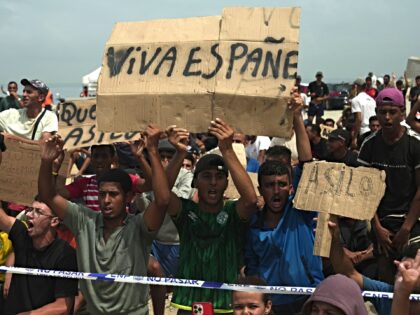
Hundreds of illegal migrants that stormed Ceuta staged a protest Sunday demanding the Spanish government grant them immediate asylum benefits including – but not limited to – food, shelter, medical treatment, and freedom of movement to mainland Spain and beyond to the rest of Europe.
Reported by:

Cherry Meigh Timbol
News Content Editor
Published August 17, 2026
CEUTA, Spain — Hundreds of migrants who entered Spain’s North African enclave of Ceuta in a massive border surge have staged a public protest, demanding asylum and access to basic services while authorities struggle to cope with thousands of people still stranded in the territory.
The demonstration took place Sunday at El Trampolín beach, where migrants gathered with Spanish flags and signs calling for asylum and opposing any return to Morocco. Protesters said they were living in harsh conditions and wanted Spanish authorities to provide a clear solution to their uncertain status.
The protest comes roughly two weeks after an extraordinary mass crossing in which more than 72,000 people entered Ceuta, a Spanish territory with a population of roughly 80,000. Most subsequently returned to Morocco, but estimates indicate that between 5,000 and 8,000 migrants remain in the enclave.
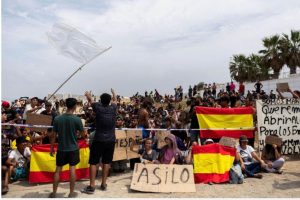 Migrants hold Spanish flags and signs calling for asylum as they gather in Ceuta, Spain, August 16, 2026.
Migrants Demand Asylum, Food and Shelter
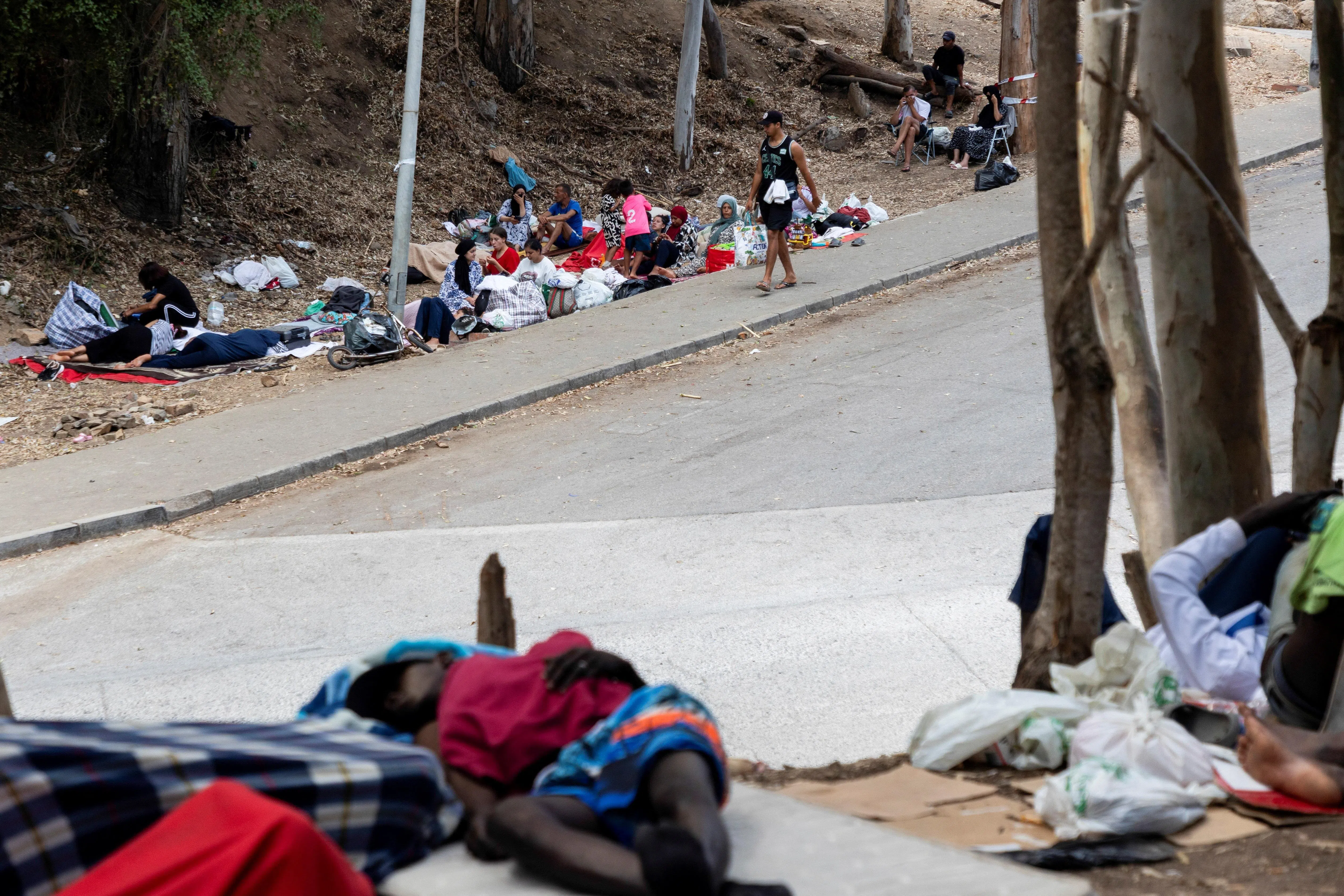
Migrants gathered on the beach said they were sleeping outdoors and facing shortages of basic necessities.
According to reports, many have established makeshift shelters around El Trampolín and other areas of the city while waiting for information about their future. Protesters carried messages including “We don’t want to go back to Morocco” and “We are also human.”
Breitbart reported that demonstrators were demanding immediate assistance that could include food, shelter and medical treatment, as well as freedom to travel to mainland Spain and potentially onward into Europe.
The demands have placed Madrid in a difficult position: humanitarian organizations and migrants are calling for protection and assistance, while Spanish authorities maintain that irregular entry does not automatically provide migrants with the right to remain in Ceuta or travel freely to mainland Spain.
Spain Says Most Irregular Entrants Cannot Stay
Spanish Interior Minister Fernando Grande-Marlaska has said migrants who entered irregularly will generally not be permitted to remain in Ceuta, travel to mainland Spain or obtain legal status, except in exceptional cases involving extreme vulnerability.
That position puts thousands of migrants in a prolonged state of uncertainty.
Ceuta’s geographical position makes the situation particularly sensitive. The enclave is Spanish territory but sits on Africa’s northern coast, separated from Morocco by a heavily fortified border. Any large influx can rapidly overwhelm the territory’s limited infrastructure.
Services Under Heavy Pressure
The crisis is also putting pressure on Ceuta’s healthcare system and other public services.
Local medical officials have warned of exhaustion among healthcare workers and reported cases of infectious illnesses and injuries. Spain’s Health Minister Mónica García acknowledged that services were under pressure but rejected descriptions of a complete medical collapse.
García also pushed back against claims linking migrants generally with disease or criminality, saying that doing so unfairly stigmatizes migrants. At the same time, she acknowledged that overcrowding presents a genuine public-health risk.
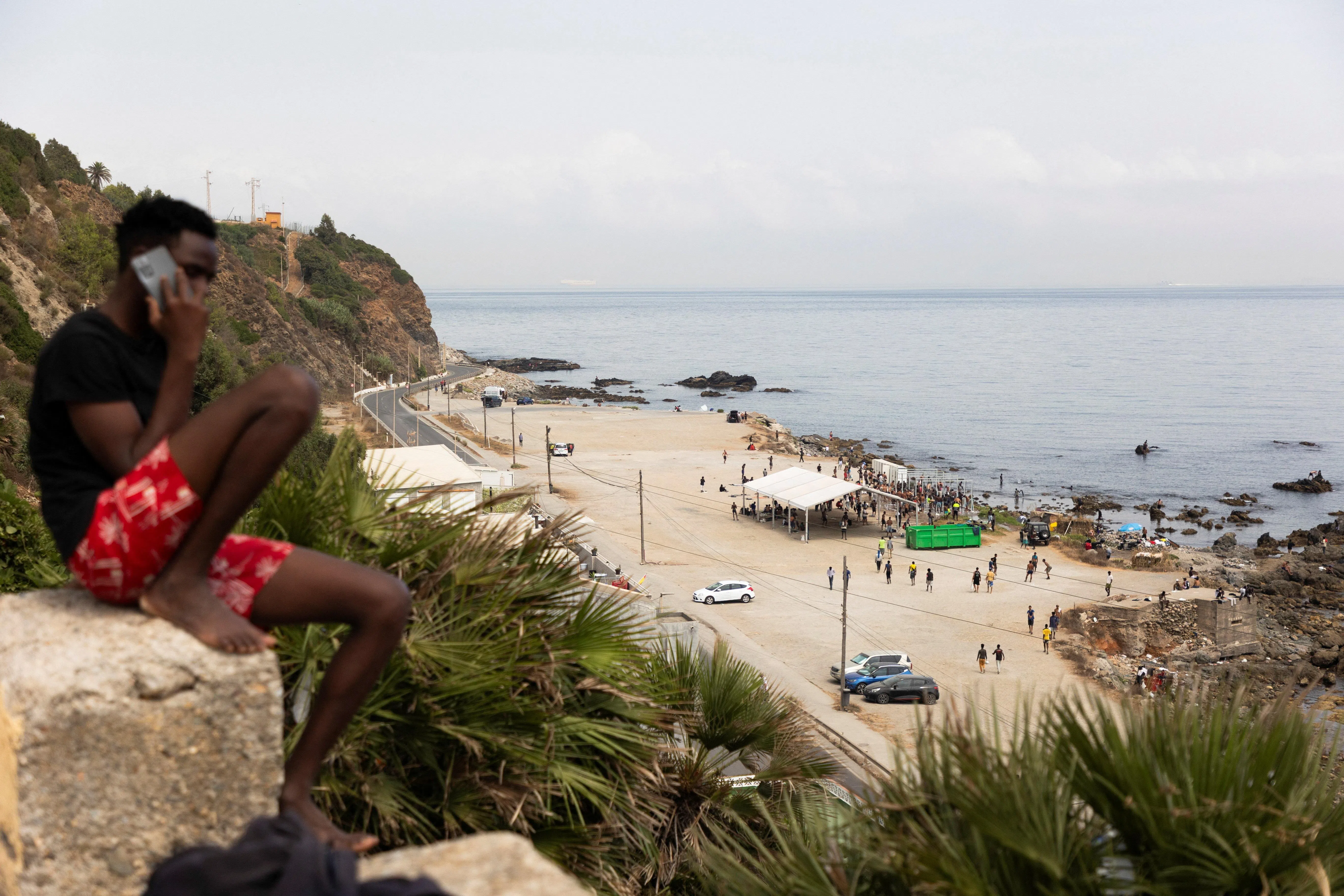
The Arab Weekly similarly reported that Ceuta’s resources have been stretched by the influx, with many migrants living in precarious conditions on the beach or around the city’s outskirts.
A Crisis That Goes Beyond Ceuta
The latest protest is part of a much broader migration and border-control crisis between Spain and Morocco.
The original July surge was followed by renewed fears of another mass crossing in August. Spain increased police and military deployments around Ceuta after messages circulated online encouraging migrants to attempt another border rush. Morocco also intensified security operations to prevent people from reaching the enclave.
Nearly 300 people were reportedly arrested by Moroccan authorities during a more recent attempt to reach Ceuta, demonstrating that the pressure on the border has not disappeared.
The episode has also generated political questions about whether Spanish authorities were adequately prepared. Border-worker unions told Reuters that they had issued multiple warnings before the July mass crossing and argued that authorities failed to respond quickly enough.
Humanitarian Crisis Meets Immigration Enforcement
Ceuta now finds itself at the intersection of two competing pressures.
On one side are migrants who say returning to Morocco is not an option and who are demanding asylum, shelter and a pathway into Europe. Some interviewed by Reuters described poverty, conflict or persecution in their home countries as reasons for undertaking dangerous journeys to Spain.
On the other side, Spanish authorities face the challenge of maintaining control over the country’s external border and preventing a mass influx from becoming an established route into the European Union.
The question is particularly sensitive because allowing large numbers of irregular entrants to move freely into mainland Spain could create additional pressure on an already politically contentious European migration system.
SOURCES: BREITBART NEWS – Ceuta Crisis: Hundreds of Illegal Migrants Demand Asylum Benefits
THE ARAB WEEKLY – Ceuta migrants demand asylum as overcrowding strains services
THE STRAITS TIMES – In Spain’s Ceuta enclave, hundreds of migrants stage protest, demanding asylum




