Reported by:

Cherry Meigh Timbol
News Content Editor
Published August 27, 2026
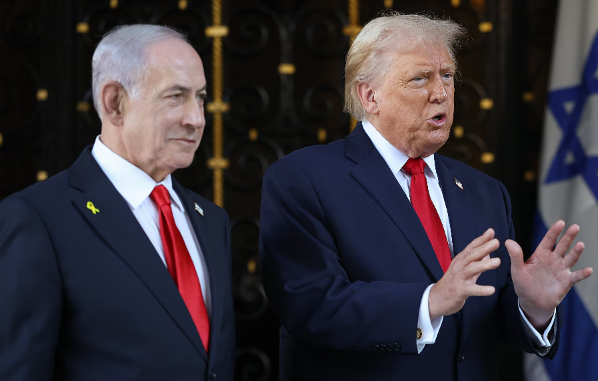
Israeli Prime Minister Benjamin Netanyahu has delivered a blunt warning against diplomacy with Iran, saying he doubts that any meaningful agreement can be reached with the regime in Tehran while urging U.S. President Donald Trump to intensify economic pressure.
Speaking about his recent discussions with Trump, Netanyahu said the two leaders considered three possible approaches toward Iran: pursuing a diplomatic agreement, taking military action, or tightening economic pressure. Netanyahu said he favored increasing the pressure rather than trusting Tehran to honor a deal.
Netanyahu: No Deal With Iran
Netanyahu said he remains deeply skeptical that negotiations can produce a lasting agreement with Iran.
He described Iran’s rulers in highly inflammatory terms and argued that the regime has repeatedly demonstrated that it cannot be trusted to make or honor commitments.
His remarks came as Washington prepares additional sanctions designed to intensify pressure on Iran and on foreign companies and countries that continue helping Tehran evade existing restrictions.
For Israel, the dispute is not simply about Iran’s economy. Netanyahu has repeatedly argued that Iran’s military capabilities, nuclear ambitions and support for regional militant organizations represent a fundamental threat to Israeli security.
Trump Escalates the Economic Pressure
The Trump administration is now relying heavily on economic warfare rather than immediately launching another major military offensive.
Washington has described the campaign as an effort to cripple Iran’s economy and force Tehran back toward negotiations on U.S. terms. The latest measures include expanded sanctions aimed at Iran’s economic network and foreign entities that continue doing business with Tehran.
Netanyahu welcomed the tougher approach, saying the new American measures would effectively tighten the pressure surrounding Iran.
The Israeli leader’s comments suggest that Jerusalem sees economic isolation as a potentially powerful tool for weakening Tehran without immediately returning to full-scale military confrontation.
Three Options on the Table
According to Netanyahu, his discussions with Trump centered around three possible paths:
1. A diplomatic agreement
The United States could attempt to negotiate an agreement with Tehran.
2. Military action
Washington and its allies could consider renewed military operations if diplomacy fails.
3. Intensified economic pressure
The United States could tighten sanctions and attempt to further isolate Iran financially.
Netanyahu indicated that he favored the third option, arguing that Iran should face increasing pressure before any concessions are considered.
Iran Pushes Back
Tehran has rejected the American pressure campaign and characterized the sanctions as economic warfare.
Iranian officials have continued to demand an end to the U.S.-led pressure campaign and the wider restrictions imposed on its economy.
The standoff is particularly dangerous because the dispute extends beyond sanctions. The Strait of Hormuz, one of the world’s most important energy corridors, has become a central point of confrontation.
Iran’s Islamic Revolutionary Guard Corps has warned that the strategic waterway will not be reopened under conditions Tehran considers unacceptable.
The Strait of Hormuz Threat
Any prolonged confrontation around Hormuz could have consequences far beyond the Middle East.
The waterway carries a substantial portion of global oil shipments, meaning renewed disruption could send energy prices higher and place additional pressure on already fragile international markets.
Iran has previously threatened to use its geographic position around the Persian Gulf as leverage against Washington and its allies.
That makes the current sanctions campaign particularly risky: the harder Washington squeezes Tehran, the greater the possibility that Iran could attempt to retaliate through the region’s energy and shipping infrastructure.
No Easy Exit
The confrontation comes after months of military and economic pressure against Iran.
A Reuters assessment published Thursday said the broader conflict has entered a costly stalemate, with Washington increasingly shifting from military pressure toward economic measures while Tehran remains unwilling to capitulate.
That leaves both sides facing difficult choices.
Washington wants Iran to make major concessions. Tehran wants the pressure and blockade lifted. Israel wants Iran’s military and strategic capabilities permanently weakened.
Those objectives remain fundamentally incompatible.
A Dangerous Middle East Standoff
The diplomatic impasse also comes as regional governments attempt to prevent the conflict from spreading.
Qatar and Pakistan have been involved in efforts to find diplomatic avenues for reducing tensions, while other Gulf states are attempting to protect their economies and shipping routes from further escalation.
Yet Netanyahu’s latest remarks indicate that Israel remains deeply skeptical of diplomacy with Tehran.
For Jerusalem, the fundamental question is whether Iran can ever be trusted to abandon the capabilities Israel considers an existential threat.
Netanyahu’s answer appears increasingly clear: pressure first, negotiations only from a position of strength.
What the video is about
The central issue is the Trump administration’s decision to launch a much tougher economic pressure campaign against Iran. The phrase “Economic D-Day” refers to the scale of the sanctions and financial measures being used to squeeze Tehran.
The video reports that Iran is threatening a severe retaliation if Washington proceeds with the new measures. This isn’t simply about ordinary trade sanctions—the strategy is aimed at Iran’s financial system, oil revenues and international economic connections.
Why Iran is threatening retaliation
Iran has historically relied heavily on oil exports and access to international financial networks. A major expansion of sanctions could make it considerably harder for Tehran to generate revenue and conduct international transactions.
The video therefore presents the situation as a dangerous escalation:
U.S. pressure → Iranian economic pressure → Iranian retaliation threats → potential escalation in the Middle East.
Recent coverage also describes Treasury Secretary Scott Bessent announcing an intensified campaign against Iran’s financial network, with Iranian officials warning of an “extreme” or “seismic” response.
🧩 Bottom Line:
Benjamin Netanyahu’s message to Donald Trump represents a hardening position at a moment when Washington is trying to force Iran back toward negotiations.
Rather than offering Tehran relief, Netanyahu is urging the United States to tighten the economic noose and maintain maximum pressure until Iran is forced to make substantial concessions.
But the strategy carries serious risks. If Tehran refuses to bend, the confrontation could continue indefinitely—or spill into the Strait of Hormuz and other parts of the Middle East.
For now, Netanyahu is making his position unmistakable: Israel does not believe Iran’s leadership can be trusted, and Jerusalem wants Washington to keep squeezing until Tehran has no choice but to respond.
SOURCES: NEWSMAX – Netanyahu Says No Iran Deal Possible, Told Trump ‘Savages’ Can’t Be Trusted
THE HINDU – Netanyahu says no diplomatic deal possible with Iran ‘savages’
THE TIMES OF ISRAEL – Netanyahu says he told Trump to ‘tighten the siege’ on Iran ahead of fresh sanctions