
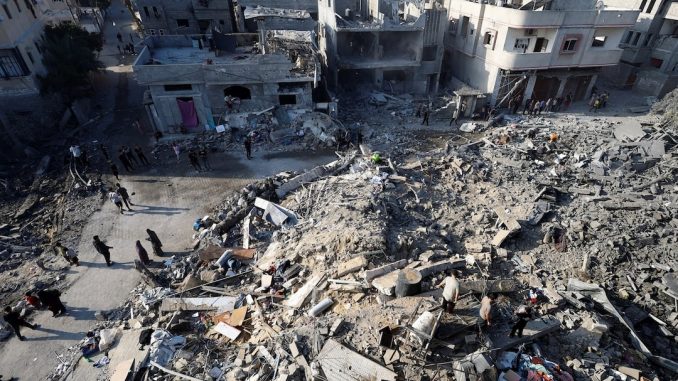
Palestinians inspect the site of an Israeli strike on a house that was pre-warned by the Israeli military to evacuate before the strike was carried out late on Wednesday, in Al-Nuseirat refugee camp, in the central Gaza Strip, July 16, 2026
Published July 16, 2026
GAZA STRIP — July 16, 2026 — Israeli military strikes in the Gaza Strip have continued despite ongoing ceasefire efforts, with Palestinian health officials reporting new deaths and injuries as tensions remain high between Israel and Hamas.
The latest escalation has raised concerns that the fragile ceasefire framework may be weakening, with both sides accusing each other of violations. Israeli officials say military operations are aimed at preventing attacks by armed groups in Gaza, while Palestinian authorities say civilians continue to bear the consequences of renewed strikes.
 Mourners sit inside and atop a damaged car during the funeral of three Palestinians, who were killed in an Israeli strike, according to medics, in Gaza City, July 16, 2026. REUTERS/Dawoud Abu Alkas
Israeli Strikes Reported Across Gaza
According to Palestinian health officials, Israeli attacks on Thursday killed at least five Palestinians in several locations across Gaza.
Reported incidents included:
- Two people killed near the Tuffah neighborhood in northern Gaza.
- One person killed in tank shelling in the Zeitoun area of Gaza City.
- One person killed in an airstrike targeting a tent camp for displaced people in western Gaza City.
- One person killed in a vehicle strike in Khan Younis in southern Gaza.
- Additional damage was reported after an airstrike struck residential buildings near the Nuseirat refugee camp.
The incidents represent another increase in violence despite international efforts to maintain a ceasefire arrangement.
 Palestinians inspect the site of an Israeli strike on a house that was pre-warned by the Israeli military to evacuate before the strike was carried out late on Wednesday, in Deir al-Balah, in the central Gaza Strip, July 16, 2026. REUTERS/Mahmoud
Israel Says Operations Target Security Threats
Israeli officials have continued to argue that military actions in Gaza are aimed at preventing attacks by Hamas and other armed groups.
The Israeli military has previously said that strikes are conducted in response to militant activity and alleged ceasefire violations, including threats against Israeli forces.
Israeli officials maintain that operations are focused on security objectives rather than targeting civilians.
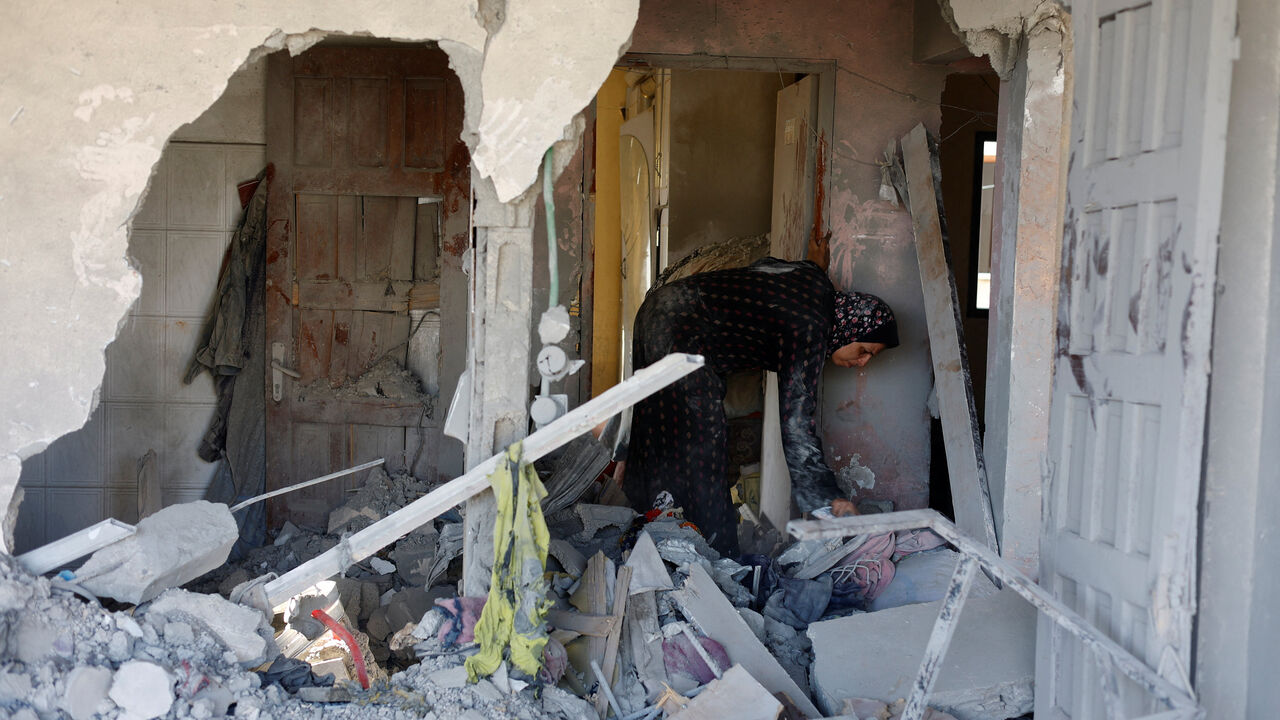 A Palestinian woman inspects the site of an Israeli strike on a house that was pre-warned by the Israeli military to evacuate before the strike was carried out late on Wednesday, in Al-Nuseirat refugee camp, in the central Gaza Strip, July 16, 2026. REUTERS/Mahmoud Issa — Mahmoud Issa
A Palestinian woman inspects the site of an Israeli strike on a house that was pre-warned by the Israeli military to evacuate before the strike was carried out late on Wednesday, in Al-Nuseirat refugee camp, in the central Gaza Strip, July 16, 2026. REUTERS/Mahmoud Issa — Mahmoud IssaCeasefire Stability Under Pressure
The latest strikes have renewed concerns over the durability of the Gaza ceasefire.
Although the agreement reduced the intensity of large-scale fighting, violence has continued through periodic airstrikes, shootings, and military operations.
Conflict monitoring groups have reported a rise in Israeli strikes in recent months, with analysts warning that repeated incidents could undermine diplomatic efforts to move toward a longer-term settlement.
Humanitarian Situation Remains Critical
The renewed violence comes as Gaza continues facing severe humanitarian challenges.
- Large areas of Gaza remain heavily damaged from years of conflict.
- Millions of residents continue relying on humanitarian assistance.
- Medical facilities and emergency services remain under significant pressure.
International organizations have warned that continued fighting could further delay reconstruction and worsen conditions for civilians.
Ceasefire Talks Face New Challenges
Diplomatic efforts to stabilize Gaza remain ongoing, but the latest violence complicates attempts to move toward a more permanent arrangement.
International mediators continue pushing for:
- A reduction in hostilities.
- Protection of civilians.
- Humanitarian access.
- A political framework for Gaza’s future governance.
However, disagreements between Israel and Hamas over security, weapons, and political control remain major obstacles.
Regional Tensions Add Further Pressure
The Gaza conflict is unfolding amid wider Middle East instability involving Iran, the United States, Hezbollah, and other regional actors.
The broader regional confrontation has increased concerns that renewed fighting in Gaza could contribute to a larger escalation across the Middle East.
International Attention Continues
The latest strikes have drawn renewed international focus on the humanitarian and security situation in Gaza.
Governments and international organizations continue calling for restraint while urging both sides to respect ceasefire commitments and prevent further civilian suffering.
As fighting continues at a lower but persistent level, the future of the ceasefire remains uncertain.
👥 Public / Political Reactions:
🇮🇱 Israeli Government
Israeli officials defended continued military operations in Gaza, saying strikes are necessary to protect Israel’s security and prevent renewed attacks by Hamas and other armed groups.
- Israeli authorities said military actions are focused on targeting militant infrastructure and responding to security threats.
- Officials have maintained that Israel has the right to defend itself and will continue operations if Hamas or other armed groups threaten Israeli forces or civilians.
- Israeli leaders have emphasized that any long-term arrangement for Gaza must address security concerns, including preventing Hamas from rebuilding its military capabilities.
➡️ Position: Israel says continued operations are a security measure aimed at preventing future attacks and weakening militant capabilities.
🇵🇸 Hamas and Palestinian Authorities
Hamas and Palestinian officials condemned the renewed Israeli strikes, accusing Israel of undermining ceasefire efforts and increasing civilian suffering.
- Palestinian officials reported deaths and injuries from the latest strikes and called for an end to military operations.
- Hamas has accused Israel of violating ceasefire commitments and has called on international mediators to pressure Israel to halt attacks.
- Palestinian authorities continue demanding greater humanitarian access and protection for civilians in Gaza.
➡️ Position: Palestinian officials say continued strikes threaten ceasefire efforts and worsen the humanitarian crisis.
🇺🇸 United States
The United States continues balancing support for Israel’s security with calls for reducing civilian harm and maintaining diplomatic efforts.
- Washington has remained involved in regional diplomacy aimed at preventing a wider conflict.
- U.S. officials have continued urging protection of civilians and increased humanitarian assistance.
- American policymakers are closely monitoring developments as Gaza remains connected to broader regional tensions involving Iran and other actors.
➡️ Position: The United States continues supporting Israel’s security while seeking diplomatic solutions and humanitarian protections.
🌍 International Community
Governments and international organizations expressed concern over renewed violence in Gaza.
- International observers warned that continued strikes could further weaken the fragile ceasefire environment.
- Humanitarian organizations continue calling for protection of civilians and uninterrupted aid access.
- Diplomatic efforts remain focused on preventing further escalation and keeping negotiations alive.
➡️ Position: The international community is urging restraint, humanitarian protection, and continued diplomatic engagement.
🕌 Regional Governments
Middle Eastern governments continue monitoring developments closely as fears grow that Gaza tensions could contribute to wider regional instability.
- Arab governments have repeatedly called for a reduction in violence and increased humanitarian assistance.
- Regional leaders remain concerned that continued fighting could affect broader security issues involving Iran, Hezbollah, and other armed groups.
- Governments are watching whether the Gaza situation could trigger further escalation beyond Palestinian territory.
➡️ Position: Regional governments are calling for de-escalation while preparing for possible wider consequences.
👥 Public Response
Civilian reactions remain divided and shaped by the ongoing humanitarian and security concerns.
- Palestinians in Gaza continue expressing fear over renewed strikes, displacement, and shortages of essential supplies.
- Israeli communities remain concerned about security threats and the possibility of renewed attacks.
- International demonstrations and public debate continue over the humanitarian impact of the conflict and the future of Gaza.
➡️ Position: Public reaction reflects deep concern, with civilians on both sides affected by continued uncertainty and violence.
🏛️ Broader Political Impact
The latest strikes have increased pressure on leaders involved in ceasefire negotiations.
- The durability of the ceasefire remains under scrutiny as both sides accuse each other of violations.
- International mediators face renewed challenges in maintaining negotiations and preventing further escalation.
- The conflict continues influencing wider Middle East politics, including relations between Israel, Iran, the United States, and regional actors.
➡️ Position: Renewed violence in Gaza has complicated diplomatic efforts and increased pressure for a long-term political solution.
⚠️ Resulting Effects:
The continuation of Israeli strikes in Gaza despite ceasefire efforts has increased uncertainty over the future of the truce and intensified humanitarian and political pressures. While Israel says its operations are aimed at preventing security threats, Palestinian officials and humanitarian organizations warn that renewed violence is worsening conditions for civilians and making diplomatic progress more difficult.
1. Ceasefire Stability Becomes More Fragile
The latest strikes have raised concerns that the ceasefire arrangement could collapse.
⚔️ Israel and Hamas continue accusing each other of violating ceasefire commitments.
🕊️ International mediators face greater difficulty maintaining negotiations and preventing further escalation.
📉 Repeated military incidents risk reducing trust between the parties involved.
➡️ Result: Continued strikes → increased uncertainty over the survival of ceasefire efforts.
2. Civilian Casualties and Humanitarian Pressure Increase
The renewed violence has added to Gaza’s already severe humanitarian challenges.
🏥 Medical facilities continue facing pressure as casualties increase and resources remain limited.
🚑 Emergency responders are working in damaged areas while assisting civilians affected by strikes.
🥖 Humanitarian organizations warn that continued instability could disrupt aid deliveries and worsen shortages.
➡️ Result: Renewed fighting → deeper humanitarian challenges for Gaza’s civilian population.
3. Reconstruction Efforts Face Additional Obstacles
Continued violence threatens efforts to rebuild damaged areas.
🏚️ Infrastructure repairs may be delayed if fighting continues.
🏗️ Homes, roads, hospitals, and public facilities remain vulnerable to further damage.
💰 International reconstruction plans could face delays due to security concerns and political disagreements.
➡️ Result: Ongoing conflict → slower recovery and reconstruction efforts.
4. Pressure on Israeli Leadership Increases
The latest developments create political challenges inside Israel.
🛡️ The government faces pressure to maintain national security and prevent future attacks.
👥 Families of hostages and other groups continue demanding progress on unresolved issues connected to the conflict.
⚖️ Israeli leaders must balance military objectives with international concerns over civilian casualties.
➡️ Result: Continued Gaza operations → increased domestic and international pressure on Israeli decision-makers.
5. Hamas Faces Continued Military and Political Challenges
The renewed strikes also affect Hamas and its position in Gaza.
⚔️ Israeli operations continue targeting Hamas capabilities and leadership structures.
🏛️ Hamas faces pressure regarding governance, military activity, and negotiations.
🌍 International scrutiny remains focused on the group’s role in the conflict and Gaza’s future.
➡️ Result: Continued Israeli operations → increased pressure on Hamas’ military and political position.
6. Regional Tensions Could Expand*
The Gaza conflict remains connected to wider Middle East tensions.
🇮🇷 Iran and its allied groups continue influencing regional security calculations.
🇱🇧 Hezbollah and other Iran-aligned movements remain closely monitored by Israel and regional governments.
🌍 Any major escalation in Gaza could affect broader conflicts involving Iran, Lebanon, Yemen, and other regional actors.
➡️ Result: Gaza escalation → increased risk of wider Middle East instability.
7. Diplomatic Efforts Face New Challenges
The latest violence makes achieving a permanent agreement more difficult.
🤝 International mediators continue attempting to maintain communication between the sides.
📖 Negotiations over security arrangements, humanitarian access, and Gaza’s future governance remain complicated.
🌐 Global pressure is expected to increase as leaders seek a path toward a longer-term solution.
➡️ Result: Renewed violence → greater obstacles to achieving lasting peace.
🔮 Future Outlook:
The future of the Gaza conflict remains uncertain as Israeli strikes continue despite ongoing ceasefire efforts. While diplomatic channels remain active, the latest violence has increased fears that the fragile truce could collapse and that the conflict could enter another period of intensified fighting.
The coming weeks are expected to be shaped by military decisions, hostage negotiations, humanitarian conditions, and international diplomatic pressure.
1. Ceasefire Talks Will Face a Critical Test
Diplomatic efforts to maintain the ceasefire are expected to continue but will face significant challenges.
🕊️ Mediators from the United States, Egypt, and Qatar are expected to continue efforts aimed at preventing a return to large-scale fighting.
⚖️ Negotiations remain complicated by disagreements over security guarantees, Hamas’ military capabilities, and the future governance of Gaza.
📢 Any additional major strikes or retaliatory attacks could further damage trust between the sides.
➡️ Outlook: Ceasefire negotiations → continued diplomacy but with increased risk of collapse.
2. Israel Is Expected to Maintain Security Operations*
Israel is likely to continue prioritizing military and security objectives.
🛡️ Israeli forces may continue operations against Hamas infrastructure and suspected militant activity.
🎯 Israeli leaders are expected to argue that military pressure is necessary to prevent future attacks.
⚔️ The level of operations will depend on security assessments and developments on the ground.
➡️ Outlook: Continued Israeli operations → sustained military pressure on Hamas.
3. Hamas’ Future Strategy Remains Uncertain
Hamas faces major challenges as the conflict continues.
⚔️ The group remains under military pressure from Israel and faces questions about its ability to maintain control in Gaza.
🤝 Hamas may face increasing pressure to negotiate over security arrangements, hostages, and Gaza’s future.
🏛️ Questions remain about whether Hamas will retain political influence in Gaza after the conflict.
➡️ Outlook: Hamas under pressure → uncertain political and military future.
4. Humanitarian Conditions Will Remain a Major Concern
The humanitarian situation is expected to remain one of the biggest challenges.
🏥 Gaza’s healthcare system continues operating under severe pressure.
🚚 International organizations are expected to continue pushing for expanded humanitarian access.
🏚️ Reconstruction efforts will depend heavily on security conditions and political agreements.
➡️ Outlook: Humanitarian crisis → continued international focus on aid, recovery, and civilian protection.
5. Regional Escalation Remains a Major Risk
The Gaza conflict continues to influence wider Middle East security.
🇮🇷 Iran and its regional allies remain key factors in determining whether tensions expand.
🇱🇧 Hezbollah, Yemen’s Houthis, and other Iran-linked groups continue to be monitored closely.
🌍 A major escalation in Gaza could trigger broader regional consequences.
➡️ Outlook: Regional tensions → continued risk of a wider Middle East conflict.
6. International Pressure Will Increase
Governments around the world are expected to intensify calls for a political solution.
🌍 The United Nations and international partners will likely continue urging civilian protection and humanitarian access.
🤝 Diplomatic pressure on Israel and Hamas is expected to grow as the conflict continues.
📖 International attention will remain focused on Gaza’s future governance and reconstruction.
➡️ Outlook: Global involvement → increased diplomatic efforts to prevent prolonged conflict.
7. Gaza’s Long-Term Future Remains Unresolved
The biggest challenge remains determining what happens after the fighting decreases.
🏛️ Questions remain over who will govern Gaza and how security will be maintained.
🏗️ Reconstruction will require major international funding and political cooperation.
🕊️ A lasting solution will likely depend on security guarantees, political agreements, and regional cooperation.
➡️ Outlook: Post-war Gaza → the future remains uncertain and dependent on major political decisions.
Overall Outlook:
The Gaza conflict remains at a critical stage. While diplomatic efforts continue, ongoing strikes and mutual accusations threaten to undermine ceasefire arrangements. The next phase will depend on whether Israel and Hamas choose continued military confrontation or move toward a negotiated framework that addresses security, humanitarian needs, and Gaza’s long-term future.
➡️ Future Outlook: Fragile ceasefire → continued uncertainty, with the possibility of either renewed escalation or renewed diplomatic progress.
🧩 Bottom Line:
The Gaza conflict remains at a dangerous crossroads as Israeli strikes continue despite ongoing ceasefire efforts. While Israel maintains that its military actions are necessary to prevent further attacks and protect its citizens, Palestinian officials and humanitarian organizations warn that continued fighting is deepening the humanitarian crisis and threatening any progress toward a lasting agreement.
The latest violence demonstrates that the ceasefire remains fragile, with both sides continuing to accuse each other of violations. Even limited military exchanges risk triggering a wider escalation, especially as tensions remain high across the Middle East involving Iran, Hezbollah, and other regional actors.
For civilians in Gaza, the consequences remain severe, with continued displacement, damaged infrastructure, and pressure on essential services. At the same time, Israeli communities remain focused on security concerns and preventing future attacks.
The coming weeks will be critical as international mediators attempt to keep negotiations alive while addressing the most difficult issues: security guarantees, Hamas’ military capabilities, humanitarian access, hostage concerns, and Gaza’s future governance.
➡️ Bottom Line: The Gaza conflict remains unresolved, and the fragile ceasefire faces a major test. Without a sustainable political agreement and security framework, the region risks returning to a cycle of renewed violence, while civilians on all sides continue to bear the consequences of prolonged instability.
SOURCES: REUTERS – Escalating Israeli strikes kill five people in Gaza, medics say
HAARETZ – Five Palestinians Killed in Israeli Strikes in Gaza Strip, Health Officials Say




