Reported by:

Cherry Meigh Timbol
News Content Editor
Published September 12, 2026
A rapid Houthi offensive in Yemen has transformed what initially appeared to be a setback for Iran-backed forces into a major strategic challenge for Saudi Arabia, the Yemeni government and the United States.
The offensive has exposed deep divisions within the coalition fighting the Houthis, while the Iran-aligned movement has captured strategically important territory along Yemen’s western coast and moved toward the Bab el-Mandeb Strait, one of the world’s most important maritime chokepoints.
The developments come only days after forces aligned with Yemen’s internationally recognized government launched a major offensive against the Houthis. The initial advance appeared significant, with government forces claiming battlefield successes and talking openly about eventually retaking Sanaa, the Houthi-controlled capital. Within days, however, the momentum reversed.
From Counteroffensive to Houthi Advance
The Houthis quickly regrouped and launched their own push toward the Red Sea coast.
Their forces captured Mocha and advanced toward the Bab el-Mandeb Strait. Reports also indicate that Houthi forces have taken control of Perim Island, which sits in the strategic waterway connecting the Red Sea with the Gulf of Aden.
The location matters far beyond Yemen.
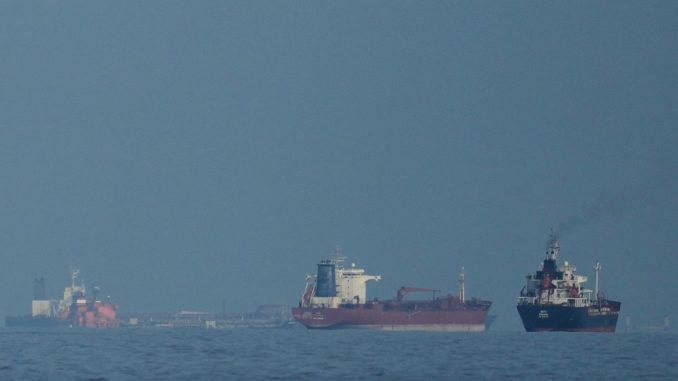
The Bab el-Mandeb is the southern gateway to the Red Sea and the Suez Canal. Control or disruption of the passage gives the Houthis an opportunity to threaten commercial shipping and potentially interfere with one of the world’s most important trade routes.
Reuters reported that the Houthi advance has put the group in a position to potentially threaten the strait while creating a new dilemma for President Donald Trump, whose administration is already dealing with the wider conflict involving Iran.
Yemen’s Anti-Houthi Coalition Is Fracturing
One of the most significant lessons from the offensive is that the forces opposing the Houthis are far from unified.
The anti-Houthi side includes Yemen’s internationally recognized government, the Southern Transitional Council, UAE-backed forces, Saudi-backed units and several other armed formations. Their objectives are not always identical.
The UAE has supported southern Yemeni factions that have their own political ambitions, including the Southern Transitional Council, while Saudi Arabia has backed the internationally recognized government.
That rivalry has become increasingly visible during the latest fighting.
RedState reported that UAE-aligned forces prevented retreating Saudi-backed Yemeni units from moving freely into southern areas, illustrating the degree to which divisions inside the anti-Houthi camp have become a military liability.
The result is a troubling contrast: the Houthis operate under a relatively unified command structure, while their opponents remain divided among competing political and military organizations.
That fragmentation can turn battlefield setbacks into strategic collapses.
Saudi Arabia Faces a New Security Problem
The Houthi advance is particularly serious for Saudi Arabia.
Riyadh has spent years attempting to contain the Houthi threat while avoiding a return to the kind of costly Yemen war that dominated the region for much of the previous decade.
But the latest offensive has brought the threat closer to Saudi Arabia’s critical economic infrastructure.
Saudi Arabia has been increasingly dependent on its Red Sea infrastructure to move oil while instability around the Strait of Hormuz has disrupted traditional Persian Gulf export routes.
A drone attack also damaged a pumping station on Saudi Arabia’s East-West oil pipeline, further highlighting the vulnerability of the alternative route. The Associated Press reported that the attack contributed to the disruption of a key Saudi oil-export pathway.
For Riyadh, the strategic problem is therefore no longer confined to the battlefield in Yemen.
It potentially involves oil production, maritime security and international trade.
Trump Declines Immediate Saudi Request for Strikes
The United States now faces its own difficult calculation.
According to reporting cited by RedState, Saudi Crown Prince Mohammed bin Salman contacted President Trump twice seeking U.S. strikes against the Houthis. Trump declined to intervene militarily for the moment.
Reuters separately reported that Saudi Arabia has sought U.S. military support as the Houthis have moved toward the Bab el-Mandeb, while Washington has so far emphasized intelligence cooperation rather than immediately expanding its military involvement.
The decision reflects the complicated strategic environment facing Washington.
The United States is already heavily engaged in the wider confrontation with Iran. Opening another major front in Yemen could expand the conflict considerably.
At the same time, allowing an Iran-aligned force to establish effective control over another major maritime chokepoint carries its own risks.
Iran Gains Strategic Leverage
The Houthi advance is also a potential strategic victory for Tehran.
Iran already has significant leverage over the Strait of Hormuz. The possibility of the Houthis threatening the Bab el-Mandeb creates pressure on both ends of the Arabian Peninsula.
That could give Iran and its regional partners additional leverage over global energy markets and international shipping.
The Financial Times reported that the Houthi capture of key positions around the Bab el-Mandeb has already affected energy markets, with Brent crude rising above $100 per barrel amid fears about disruptions to oil transportation.
The danger for the United States and its allies is that two separate maritime chokepoints could become vulnerable at the same time.
A Crisis That Could Get Worse Quickly
For now, the Houthis appear to be calibrating their actions.
RedState reported that President Trump said the Houthis had contacted Washington and indicated that they did not want a direct confrontation with the United States. The group has also reportedly continued allowing many vessels to pass while focusing its attacks primarily on Saudi-linked targets.
That distinction could prove important.
If the Houthis restrict their attacks to Saudi interests, Washington may continue treating the crisis primarily as a regional conflict.
But an attack on American forces, international commercial shipping or unrestricted attempts to close the Bab el-Mandeb could dramatically change the calculation.
The United States would then face pressure to protect freedom of navigation and prevent Iran and its proxies from gaining control over a critical global trade route.
The Bigger Picture
The immediate battlefield reversal in Yemen is therefore only part of the story.
The more consequential development is the combination of three factors: a resurgent Houthi movement, divisions among the forces opposing it and increasing pressure on Saudi Arabia’s alternative oil-export routes.
The crisis also demonstrates the limits of relying on a coalition whose members have competing interests.
The Houthis have been able to exploit those divisions while consolidating their position along the Red Sea.
For Saudi Arabia, the challenge is whether it can restore a credible defense of its southern approaches without becoming trapped in another open-ended Yemen war.
For Washington, the question is even broader: how much responsibility should the United States assume for defending a regional order that its local partners have struggled to defend themselves?
The answer could determine whether the latest Yemen offensive remains a contained regional crisis—or becomes another front in the expanding confrontation with Iran.
🧩 Bottom Line:
The Houthi offensive has exposed serious fractures within Yemen’s anti-Houthi coalition and handed Iran’s regional network a potentially valuable strategic position near the Bab el-Mandeb. For now, Washington is resisting calls to enter another major fight in Yemen, but that calculation could change quickly if the Houthis threaten American forces or international shipping.
SOURCES: REDSTATE – Houthis Rally, Seize Mocha As Yemen Coalition Splits and Trump Declines Saudi Strike Plea