
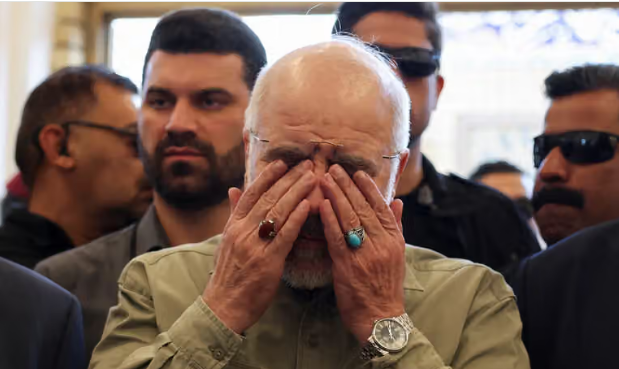
Iranian Parliament Speaker Ghalibaf during a visit to Najaf in Iraq.
Reported by:

Cherry Meigh Timbol
News Content Editor
Published August 24, 2026
Iran’s political establishment is showing unprecedented signs of internal strain after Parliament Speaker Mohammad Bagher Ghalibaf warned that widespread hunger and economic collapse could endanger the survival of the Islamic Republic itself. The unusually candid remarks have ignited backlash from hardliners, who accuse him of projecting weakness at a time of mounting pressure from the United States.
Speaking during a meeting with Iranian and Iraqi business leaders in Baghdad, Ghalibaf argued that military strength alone cannot preserve the nation if ordinary citizens can no longer afford food or maintain their livelihoods. His statement marked one of the clearest acknowledgments yet by a senior Iranian official that the country’s greatest threat may be economic rather than military.

Iranian President Masoud Pezeshkian warned Friday that Iran cannot remain in a state of “neither war nor peace” indefinitely.Anadolu via Getty Images
Hunger becomes Tehran’s biggest warning sign
Ghalibaf stressed that national power depends on more than missiles and armed forces. He warned that without economic growth, financial circulation, and domestic production, the government’s long-term stability would be impossible to sustain.
His comments come as Iran faces soaring inflation, a rapidly weakening currency, declining oil revenue, and intensified U.S. sanctions that have squeezed trade and investment. Many Iranian families are struggling to afford basic necessities, with food prices becoming one of the country’s most painful economic burdens.

Iranian Parliament Speaker Mohammad Bagher Ghalibaf contended that the country cannot endure militarily if its economy is in tatters.Anadolu via Getty Images
Hardliners accuse him of showing weakness
Rather than rallying behind Ghalibaf’s warning, conservative factions quickly criticized the parliament speaker for publicly discussing Iran’s economic fragility. Hardline commentators argued that admitting hunger and financial distress only encourages Washington to increase sanctions and pressure Tehran further.
The backlash highlights a widening divide within Iran’s leadership between officials advocating pragmatic economic reform and those insisting that public displays of resilience are essential to confronting the United States.

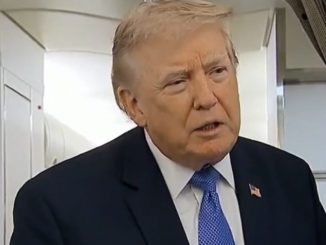
President Trump has been adamant that Iran can never obtain a nuclear weapon.AP Photo/Jacquelyn Martin
Pressure grows for a negotiated settlement
Ghalibaf’s warning echoes recent remarks from President Masoud Pezeshkian, who has also urged ending the conflict with the United States from what he calls a “position of strength.” Together, the two senior civilian leaders have increasingly emphasized economic recovery over prolonged confrontation, signaling growing concern about domestic instability.
Meanwhile, President Donald Trump’s administration has continued expanding sanctions and economic measures aimed at forcing Iran back to negotiations, creating additional pressure on Tehran’s already fragile economy.
🧩 Bottom Line:
For years, Iran’s rulers have told their people that resistance and military strength would guarantee survival. But Ghalibaf’s admission shattered that narrative with one sobering truth: a nation cannot eat missiles. While the regime pours resources into confrontation abroad, millions of ordinary Iranians are paying the price through inflation, hunger, and economic despair. The greatest danger facing the Islamic Republic may no longer be an American bomb—it may be the empty dinner tables of its own people.




https://newscats.org/trump-administration-declares-iran-endgame-as-bessent-unveils-massive-economic-offensive-against-tehran