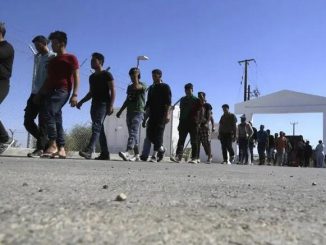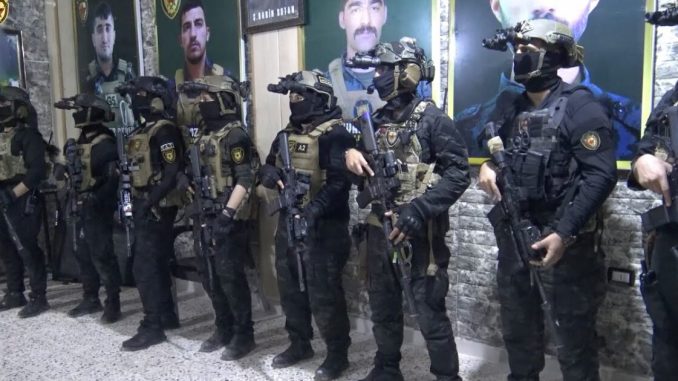
The Syrian Democratic Forces’ Anti-Terrorism Units (YAT) and International Coalition forces conducted joint raids targeting senior ISIS terrorists. The United States now expects the Syrian army, whose ranks include former ISIS and al-Qaeda members, to take over counterterrorism operations. Photo courtesy of the SDF.
Reported by:

Cherry Meigh Timbol
News Content Editor
Published September 30, 2026
As the United States completes its military withdrawal from Iraq, Washington is increasingly relying on Syria’s government in Damascus to assume a larger role in preventing an Islamic State resurgence. The shift comes as Syria’s new military incorporates fighters from a range of former armed factions, including groups with histories linked to jihadist movements.
The issue has become particularly significant because the Syrian Democratic Forces (SDF), the Kurdish-led force that served for years as Washington’s principal ground partner against ISIS, formally dissolved as an independent military organization in August and integrated into Syria’s national army.
From Assad’s Fall to a New Security Structure
Syria’s military landscape changed dramatically after the fall of Bashar al-Assad in December 2024. The new government, headed by Ahmed al-Sharaa, has sought to consolidate the various armed factions that helped overthrow the former government into a national military.
Al-Sharaa previously led Hay’at Tahrir al-Sham (HTS), which developed from the al-Nusrah Front, an organization that had been affiliated with al-Qaeda. The U.S. State Department designated al-Sharaa a Specially Designated Global Terrorist in 2013. Washington subsequently revoked HTS’s terrorist designation in July 2025 after the group was dissolved and the Syrian government committed to combating terrorism, according to the source report.
The transition has nevertheless left questions about how former insurgents will function inside Syria’s new security institutions.
Foreign Fighters Enter the Syrian Army
One of the most consequential elements of the military restructuring has been the incorporation of foreign fighters.
Reuters reported in June 2025 that Syria planned to integrate approximately 3,500 foreign fighters, primarily Uyghurs from China and neighboring countries, into the newly established 84th Division. Many had previously fought alongside HTS or the Turkistan Islamic Party (TIP).
U.S. special envoy Thomas Barrack told Reuters that Washington had an understanding with Damascus regarding the integration, emphasizing transparency. Syrian officials argued that incorporating the fighters into state structures would be preferable to leaving them outside government control and potentially vulnerable to recruitment by ISIS or al-Qaeda-linked organizations.
The issue remains sensitive because the TIP has been described by the U.S. State Department as a violent extremist organization active in Syria and Afghanistan, while China considers the organization a terrorist threat.
The End of the SDF’s Independent Role
The other major development has been the absorption of the Syrian Democratic Forces into the Syrian state.
The SDF was created with U.S. backing in 2015 and became Washington’s principal ground partner in the campaign against ISIS in Syria. Its Kurdish and Arab fighters helped defeat the group’s territorial caliphate and subsequently guarded ISIS detainees and camps.
On August 25, 2026, SDF commander Mazloum Abdi announced that the organization had completed its merger with the Syrian army and would no longer operate as an independent military force.
The agreement also included commitments concerning Kurdish cultural and educational rights, including recognition of Kurdish-language education. However, questions remain over how those guarantees will work in practice and how former SDF fighters will be incorporated into the Syrian military structure.
Washington’s Counter-ISIS Strategy Is Changing
The developments represent a broader change in U.S. strategy.
For years, Washington relied heavily on local non-state partners, particularly the SDF, to conduct ground operations against ISIS. Analysts have described 2026 as a period in which Washington began moving toward a more state-centered counterterrorism strategy in Syria.
The Washington Institute has similarly noted that Damascus has taken steps against ISIS remnants and has used U.S. intelligence in counterterrorism operations, while warning that questions remain about whether Syria’s government can realistically assume the entire counter-ISIS mission.
That transition is becoming more consequential as the United States ends its Iraq-based Operation Inherent Resolve mission.
On September 30, 2026, U.S. Central Command completed the withdrawal of American forces and equipment from Erbil, ending the U.S.-led military mission in Iraq. The counter-ISIS task force has shifted its headquarters to Jordan, while counterterrorism operations in Syria continue with regional and coalition partners.
🧩 Bottom Line:
The United States is moving from a Syria strategy centered heavily on the Kurdish-led SDF toward one that places substantially greater responsibility on Damascus.
That transition has created a complicated security structure: Syria’s new army includes former HTS fighters, foreign militants who have been integrated into state forces, former Turkish-backed factions and former SDF personnel.
The arrangement could provide Damascus with a broader national military, but it also creates difficult questions over command, accountability and the long-term reliability of Syria as a U.S. counterterrorism partner. The coming months will show whether integration strengthens Syria’s ability to contain ISIS or creates new vulnerabilities that the militant group could exploit.
SOURCES: THE GATEWAY PUNDIT – Washington’s Counter-ISIS Partner in Syria Built Its Army Around Jihadists