Reported by:

Cherry Meigh Timbol
News Content Editor
Published October 22, 2026
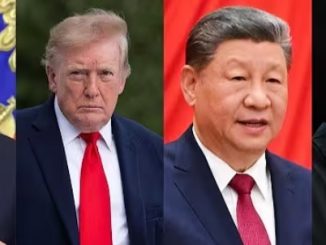
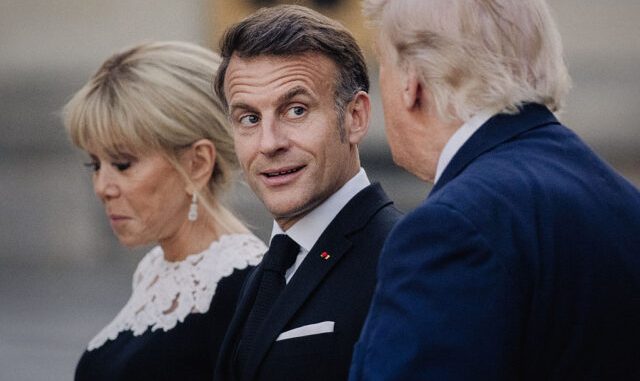
French President Emmanuel Macron has criticized foreign leaders, including U.S. President Donald Trump, for linking France’s recent riots to migration and Islamist extremism. Macron accused political figures of exploiting the unrest for domestic political gain and spreading misleading information, including AI-generated images. The dispute has intensified a broader debate over immigration, integration, public security and the French government’s handling of social unrest.
Macron’s Response Draws Criticism
Speaking in Doha, Qatar, on October 21, Macron described comments from foreign leaders as “unacceptable” and “stupid.” Trump had called on France to close its borders and take control of the situation, while other political figures also attributed the violence to immigration and Islamist extremism.
Macron rejected claims that France had been overrun by migrants and Islamists, arguing that political leaders were using the crisis to advance their own agendas.
However, dismissing concerns about migration does not resolve the underlying questions about integration, policing, social cohesion and the circumstances that allowed rioting and looting to spread.
The Counterargument: Why Migration and Integration Cannot Simply Be Dismissed
There are legitimate grounds to examine immigration and integration as part of France’s wider public-order debate. But a factual assessment must distinguish between evidence about individual offenders, conditions in affected neighborhoods and claims about migrants as a whole.
1. The Demographic Background of the Rioters Deserves Scrutiny
France’s 2023 riots provide an important example. A joint investigation by the General Inspectorate of Administration and the General Inspectorate of Justice examined court records and a representative sample of 395 adults convicted following the unrest.
The official findings showed that 78% of the convicted adults in the national statistics were French nationals. The sample also showed that many had limited educational qualifications, while inactivity or employment featured prominently in their circumstances. The government report did not establish that most convicted individuals were immigrants or that immigration itself caused the riots.
These findings do not mean migration and integration are irrelevant. They mean that nationality, ancestry, citizenship and socioeconomic circumstances must not be treated as interchangeable categories. A French citizen can have an immigrant background, but citizenship or ancestry alone cannot establish a person’s motive for committing violence.
2. Integration Failures and Neighborhood Disadvantage Are Relevant Questions
A June 2026 publication by the Robert Badinter Institute, summarizing sociological research into the 2023 riots, found that unrest was strongly associated with communities experiencing social deprivation and weakened connections to institutions. The research also linked the mobilization to anger following the police killing of Nahel Merzouk, a 17-year-old of Arab background, and to local grievances.
These findings support examining whether inadequate integration, educational disadvantage, unemployment, residential segregation and distrust of public institutions contribute to tensions in some neighborhoods.
Immigration policy can form part of that discussion, particularly when governments struggle to integrate newcomers or maintain public confidence in their ability to enforce the law. Nevertheless, the available evidence does not establish that immigration independently caused the 2026 riots.
3. The Spread of Violence Requires Accountability Beyond Political Slogans
The official 2023 investigation described extensive damage to public facilities, looting and attacks on security forces. Researchers found that opportunism and peer influence were prominent explanations given by convicted participants, rather than clearly articulated ideological objectives.
That evidence raises a separate but important issue: when young people believe that vandalism and looting carry little risk of punishment, disorder can spread beyond the original protest. Authorities must enforce the law consistently while investigating any misconduct by police.
The responsible response is neither to blame an entire migrant population nor to pretend that questions about integration and social cohesion are illegitimate.
Macron’s Critics Have a Point—but the Evidence Matters
Macron is right to challenge fabricated images and sweeping claims that France has been invaded by migrants or Islamists. Yet calling criticism “stupid” risks making a serious policy debate sound like an argument over political loyalty.
Trump and other leaders can legitimately question whether France’s immigration, integration and security policies are working. Their arguments, however, should be supported by reliable evidence rather than generalized accusations against Muslims, immigrants or people of foreign ancestry.
Likewise, Macron should address the substance of public concerns rather than relying solely on accusations of political manipulation. A government can reject misinformation while still acknowledging failures in public security, integration or social policy.
Conclusion: France Needs Facts, Not Insults
The dispute between Macron and Trump reflects a larger European debate over migration, national identity and public order. The evidence from France’s 2023 riots demonstrates that police-related grievances, socioeconomic disadvantage, peer influence and opportunistic criminal behavior can interact to produce widespread violence. It does not prove that migration alone caused the unrest.
The strongest counterargument to Macron is therefore not that all migrants are responsible, but that no government should dismiss legitimate questions about immigration, integration and law enforcement simply because political opponents raise them.
France needs transparent investigations, effective border and immigration policies, credible integration programs and consistent law enforcement. It also needs political leaders to distinguish documented facts from speculation. That is a more defensible approach than either blaming an entire population or dismissing every criticism as political propaganda.