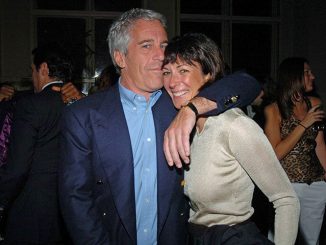
The late model scout (and alleged serial rapist) Jean-Luc Brunel, playing with Ghislaine Maxwell at ‘Pedophile Island.’
Published March 10, 2025
‘They built/the dark satanic Mills/that manufacture hell on earth’ – Roger Waters/Watching TV
Confidential French court documents have brought renewed scrutiny to Jean‑Luc Brunel, a long‑time associate of convicted sex offender Jeffrey Epstein, revealing what investigators describe as an extensive and highly organized system of exploitation that stretched across France and into the United States.
Network of Abuse in France
The 30‑page judicial order—kept sealed until recently—depicts Brunel as the architect of a sprawling operation that allegedly used luxury properties—from castles in Normandy to upscale Paris apartments—as covert sites of abuse. Victims described being led to remote locations under the pretense of professional modelling opportunities, only to be assaulted in isolation.
Rather than being isolated incidents, the newly released documents show repeated patterns of predation over decades, suggesting an organized system of exploitation rather than random abuse.
“The documents reveal a disturbing logistical operation. From grand castles in Normandy to upscale Parisian apartments, properties were specifically used to facilitate predation. Testimonies describe how victims were transported to isolated locations where the abuse took place, often during trips presented as professional modelling assignments.
Modelling Agencies Allegedly Used as Recruitment Platforms
At the heart of the alleged network were Brunel’s modelling interests—most notably agencies like Karin Models and MC2 Model Management, which Brunel cofounded (with financing from Epstein).
According to the documents, these agencies served as “talent pools,” where young women were groomed and evaluated under the guise of building modeling careers. Aspiring models were allegedly pressured into compliance with sexual demands from powerful figures as a condition for professional advancement.
Confiscated passports, persistent pressure from influential contacts, and international logistical support reportedly allowed Brunel to operate with minimal interference—raising serious concerns about the complicity of industry players and the effectiveness of oversight mechanisms.
One former model recounted being taken to a ‘small castle’ and assaulted, describing hidden passageways that allowed Brunel to orchestrate attacks without being seen.”

These places like castles isolated the young victims, in a pattern of abuse spanning over decades.
Agencies such as Karin Models and MC2 allegedly served as ‘talent pools’ for Brunel, ‘where young women’s careers were conditioned on submitting to sexual demands’.
“Aspiring models were groomed, monitored, and coerced into compliance under the guise of professional advancement. Confiscated passports, ongoing pressure from powerful figures, and a network of international contacts reportedly enabled Brunel to operate without fear of prosecution for years. The documents illustrate how complicity was embedded in multiple layers of the modelling industry, allowing exploitation to continue largely unchecked.”
Trafficking to the U.S. and Global Scope
Perhaps most alarming, the judicial order details how underage models were sometimes transported from France to the United States for further exploitation, prompting questions about how such cross‑border movements were carried out with little resistance from authorities.
The documents suggest that some victims were coerced into travel under the promise of career opportunities, only to be placed in situations where abuse could occur with limited accountability.

Maxwell reveals herself by opening her top while massaging Epstein, with Jean-Luc Brunel’s attention focused behind them.
Brunel’s Death and the Case’s Abrupt End
Brunel died in La Santé Prison in Paris in February 2022—officially ruled a suicide while he was awaiting trial on charges of rape, sexual assault of minors, and human trafficking.
His death effectively ended the formal prosecution against him, but the newly disclosed documents make clear that numerous witnesses, complainants, and alleged accomplices were cited in the case, underscoring that the closure was administrative rather than substantive.
Calls for Broader Investigations
Experts, advocates, and victims’ rights groups argue that Brunel’s death should not be the final word on the matter. They emphasize that the architectural reach of the network—embedded within parts of the global modelling industry and tied to influential international figures—calls for a broader examination of systemic enabling factors that allowed exploitation to continue unchecked.
French authorities have since announced efforts to re‑examine the case in light of the newly published documents, with the aim of uncovering evidence of complicity and holding others accountable.
 Public / Political Reactions
Political Reactions in France
1. Government Investigation Efforts
French authorities have moved to broaden the official scrutiny of Epstein‑linked cases following the release of documents. The Paris prosecutor’s office established a special team to analyze evidence that might involve French nationals and to re‑examine the case of Brunel and others. This effort has been presented as part of a national commitment to ensuring justice beyond past investigative limits.
2. Foreign Ministry Inquiry
France’s Foreign Affairs Minister publicly pledged a thorough internal investigation into alleged Epstein ties involving a French diplomat, indicating the issue has reached high levels of government and not just the judicial system.
3. Presidential Statements and Criticism
According to some French commentary, President Emmanuel Macron described the matter as primarily concerning the United States—a characterization that has prompted critics to argue that France needs to take more responsibility for alleged abuses occurring on French soil. Calls have emerged—especially from advocacy groups—for a domestic inquiry or commission to address perceived inaction and past investigative omissions.
Broader Public Opinion and Global Discussion
4. Public Skepticism and Demand for Transparency
Surveys in the U.S.—where much of the Epstein file discourse has unfolded—show significant dissatisfaction with government transparency regarding the released files, with a substantial portion of the public believing authorities have withheld information.
5. International Commentary
Some international voices (e.g., Russian officials) have seized on the revelations to criticize Western elites, framing the scandal as evidence of moral decline.
6. Victim Advocacy Pressure
Victims’ rights groups and advocates have used the document releases to argue that justice has been incomplete, especially in cases where accused individuals died (as Brunel did) before trial or where investigations were closed early. These groups push for renewed legal and social accountability beyond individual defendants.
Cultural and Media Reaction
7. Media Scrutiny and Public Debate
The files have reignited global media focus on the Epstein network, leading to renewed public debate about complicity, elite protection, and institutional failure—both in the U.S. and France. Coverage has ranged from detailed investigative reporting to opinion pieces questioning how abuse could persist with minimal consequences for high‑profile figures.
8. Political Divisions
While there isn’t a unified political party stance (especially in France), the controversy feeds into larger debates about abuse, accountability, and institutional trust. Some commentators see the government’s response as too cautious, while others warn against politicizing the investigation. (This reflects ongoing public discourse broadly, even if specific party declarations tied directly to Brunel’s case are limited in available sources.)
 Resulting Effects
1. Legal and Judicial Impacts
-
Expanded Investigations in France: The release of court documents prompted French authorities to establish specialized teams to revisit cases linked to Brunel and other associates of Epstein. Investigators are now reviewing prior complaints, potential accomplices, and gaps in earlier investigations.
-
Cross-Border Scrutiny: There is increased coordination with U.S. authorities to track potential trafficking routes and financial records associated with Brunel’s operations.
-
Case Repercussions Despite Brunel’s Death: Although Brunel died before trial, ongoing investigations may implicate other industry figures, including modelling agencies, financiers, and high-profile individuals.
2. Institutional and Industry Consequences
-
Modelling Agencies Under Pressure: Agencies like MC2 Model Management and Karin Models, co-founded or managed by Brunel, are now facing heightened scrutiny. This includes audits, reputation management crises, and potential legal liability.
-
Policy and Oversight Reforms: Some French modelling and talent industry organizations are discussing new safeguards, such as background checks for recruiters and mandatory reporting of abuse allegations.
3. Political and Public Effects
-
Public Distrust in Authorities: Revelations have amplified skepticism over the ability of governments and judicial systems to hold elites accountable. Surveys indicate that many citizens believe investigations were historically incomplete.
-
Calls for Accountability: Victims’ advocacy groups and politicians have demanded broader commissions to investigate institutional enabling of abuse, particularly in France, where some believe systemic protection allowed Brunel to operate unchecked.
-
Media and Cultural Impact: The scandal has sparked renewed international media attention and debates on elite accountability, sexual exploitation, and cross-border trafficking networks, shaping public discourse beyond France and the U.S.
4. Social and Advocacy Effects
-
Empowerment of Victims: The released documents have validated victims’ accounts, providing evidence that supports survivor advocacy and legal claims.
-
Heightened Awareness of Trafficking Networks: The case has served as a high-profile example of how power, influence, and glamour industries can mask exploitation, fueling education campaigns and NGO initiatives.
5. Long-Term Implications
-
Potential Policy Shifts: Governments may implement stricter international reporting protocols, visa controls for minors, and oversight of modeling/talent industries.
-
Ongoing International Cooperation: The Brunel case has reinforced the need for cross-border law enforcement collaboration on trafficking and sexual exploitation.
-
Cultural Reflection: Globally, this has led to renewed scrutiny of celebrity and elite networks, similar to the public impact of the original Epstein case, influencing journalism, social media discourse, and political dialogue.
 Future Outlook
1. Legal Outlook
-
Expanded Investigations and Prosecutions: Even though Brunel died before trial, French authorities are likely to continue investigations into accomplices, enablers, and industry figures who may have facilitated trafficking or abuse.
-
International Coordination: The case sets a precedent for cross-border investigations, particularly between France, the U.S., and potentially other countries where victims were trafficked. This could lead to future indictments or civil actions against individuals still alive.
-
Reform of Judicial Procedures: The public exposure of these documents may prompt French prosecutors to strengthen protections for whistleblowers, witnesses, and minors, as well as enforce stricter deadlines on abuse cases.
2. Political and Institutional Outlook
-
Increased Government Accountability: Pressure from advocacy groups and media scrutiny may push French authorities to establish permanent oversight mechanisms for industries at risk of exploitation, particularly modeling and entertainment.
-
Policy Changes: Possible reforms include stricter regulations for talent agencies, mandatory reporting of abuse allegations, and enhanced international cooperation protocols.
-
Political Sensitivity: Politicians may tread cautiously on these issues to avoid appearing complicit or dismissive of victims, which could affect upcoming legislative debates on child protection, trafficking laws, and elite accountability.
3. Social and Cultural Outlook
-
Empowerment of Survivors: The released documents strengthen victims’ narratives and could encourage more survivors to come forward, expanding public awareness and legal actions.
-
Public Discourse on Elite Exploitation: Society may increasingly question elite networks and glamorous industries, demanding transparency and ethical accountability from high-profile figures.
-
Media and Advocacy Influence: Investigative journalism and NGOs are likely to maintain pressure, using the Brunel revelations to educate the public about grooming, trafficking, and systemic abuse.
4. Long-Term Global Outlook
-
Precedent for Cross-Border Trafficking Cases: The case demonstrates how wealth and influence can mask exploitation, creating a roadmap for future international prosecutions.
-
Enhanced Safeguards in Talent Industries: Modeling, entertainment, and related industries may implement stricter vetting, monitoring, and reporting protocols to prevent similar abuse.
-
Ongoing Cultural Repercussions: Globally, this case reinforces the scrutiny of power structures, corruption, and the intersection of wealth with abuse, potentially influencing policy, media narratives, and public consciousness for years.
 Bottom Line:
The revelations surrounding Jean‑Luc Brunel underscore the disturbing depth and reach of a network of exploitation that spanned continents and decades. While Brunel’s death precluded a full judicial reckoning, the newly released court documents have shed light on the systemic abuses within the modeling industry and the complicity of influential figures who allowed such exploitation to continue.
Public outrage, political scrutiny, and the mobilization of victim advocacy groups signal a broader demand for accountability—both in France and internationally. The case serves as a stark reminder that wealth, power, and glamour can shield predators, and that vigilance, transparency, and systemic reforms are essential to protect vulnerable individuals.
Looking ahead, strengthened cross-border cooperation, reforms in talent and entertainment industries, and continued advocacy for survivors offer a path toward justice and prevention. While the Brunel case may never see a traditional courtroom conclusion, its exposure has already initiated lasting legal, political, and cultural repercussions that could reshape how society confronts elite-enabled abuse in the future.