
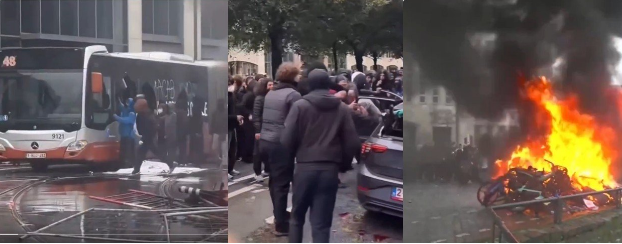
The protests that started in France have spread to Italy, Albania and other countries as more groups have joined. Organizers have called for continued action through the end of the month.
Reported by:

Cherry Meigh Timbol
News Content Editor
Published October 18, 2026
A wave of student-led protests and social unrest is spreading across Europe, with violent demonstrations in Milan, Italy, and Tirana, Albania, highlighting growing frustration over education, living costs, corruption and political leadership. The unrest comes amid wider demonstrations in France and other European countries over public services and economic pressures.
Milan protests turn violent
In Milan on Saturday, October 17, a demonstration that began as a protest against wars and rising living costs escalated into clashes between demonstrators and riot police. Masked individuals threw stones and other objects, set barricades on fire and looted shops in the city center.
Police used water cannons and tear gas to disperse the crowds. Reports said at least two police officers were injured and around 50 demonstrators were detained. The unrest disrupted activity around Piazza del Duomo and a nearby luxury shopping arcade.
Italian Prime Minister Giorgia Meloni condemned the violence, while Milan Mayor Giuseppe Sala acknowledged the protesters’ concerns but rejected attacks on police and damage to property.
Student demonstrations have also taken place in other Italian cities, with grievances extending to education conditions, government policies and the allocation of public spending. The protests have unfolded alongside wider discontent over the cost of living.
Tirana protests intensify against government
In Albania, student participation has added momentum to an expanding anti-government movement demanding the resignation of Prime Minister Edi Rama. Demonstrators have voiced anger over perceived corruption, limited employment opportunities, education costs and the quality of university facilities.
The protests intensified in Tirana during the week, with demonstrators throwing rocks and incendiary devices at police and setting fires near government buildings and banks. Police responded with tear gas, water cannons and other crowd-control measures.
By Sunday, October 18, Rama had rejected calls to resign, arguing that the unrest threatened Albania’s efforts to join the European Union rather than his government. He invited students to engage in dialogue, while authorities reported arrests, criminal charges and injuries among police officers and protesters.
The demonstrations follow months of protests over a proposed luxury coastal development linked to Jared Kushner, the son-in-law of US President Donald Trump. The controversy has contributed to wider concerns about political influence, development decisions and accountability.
A wider European wave of discontent
The unrest in Italy and Albania forms part of a broader period of protests across Europe. In France, students have demonstrated against teacher shortages, deteriorating school facilities and problems within the university admissions system. Other demonstrators have joined rallies over rising prices and pressure on household budgets.
In Portugal, housing affordability has driven protests, while demonstrations in Belgium have included opposition to education reforms and rising study costs. Although the causes differ from country to country, economic insecurity and dissatisfaction with public services have emerged as recurring themes.
The protests do not represent a single unified movement. Local political disputes, national education policies and different economic pressures shape the demands in each country. However, the spread of demonstrations illustrates the challenges facing European governments as young people and other citizens demand better opportunities, affordable living conditions and greater accountability.
Political pressure and an uncertain outlook
The escalation presents governments with two immediate challenges: responding to protesters’ grievances and preventing demonstrations from turning into violence. Officials have defended public order measures, while critics and international observers have raised concerns about excessive force and damage to public property.
In Albania, the confrontation carries additional significance because the country is seeking EU membership. In Italy, the Milan violence has intensified debate over public security and the handling of demonstrations.
Whether the unrest will lead to substantial policy changes remains uncertain. For now, protests across the continent continue to expose tensions over education, economic conditions and public confidence in political institutions.


