
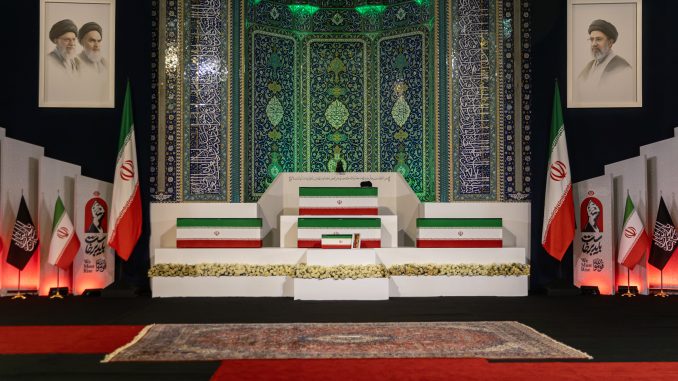
Coffins containing Ayatollah Ali Khamenei and members of his family at a mosque in Tehran. Majid Saeedi/
Published July 5, 2026
TEHRAN, Iran — Iran’s week-long state funeral for former Supreme Leader Ayatollah Ali Khamenei entered its third day Monday, with hundreds of thousands of mourners continuing to gather in Tehran as the Islamic Republic seeks to demonstrate political stability and national unity following the death of the country’s longtime leader.
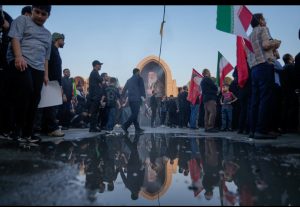 Mourners walk through the grounds of the Imam Khomeini Mosalla Grand Mosque during the duneral ceremonies for slain Iranian Supreme Leader Ayatollah Ali Khamenei and members of his family in Tehran, Iran , Saturday, July 4, 2026
The funeral ceremonies, among the largest in Iran’s modern history, have drawn senior government officials, military commanders, religious leaders, and foreign delegations from dozens of countries. The procession comes months after Khamenei was killed during a U.S.-Israeli airstrike at the outset of the regional conflict, an event that dramatically reshaped the Middle East’s geopolitical landscape.
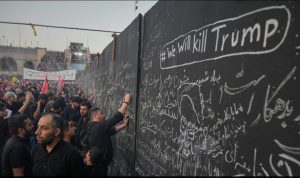 Mourners write message on a wall, including one in English that reads “We will kill Trump,” during the funeral ceremonies of the slain Iranian Supreme Leader Ayatollah Ali Khamenei and members of his family at Imam Khomeini Mosalla Grand Mosque
Iranian authorities have transformed the funeral into both a national mourning ceremony and a political demonstration. State media have broadcast extensive coverage of crowds filling Tehran’s Grand Mosalla prayer complex, where mourners carried portraits of Khamenei, chanted religious slogans, and pledged continued support for the Islamic Republic. Senior officials have portrayed the turnout as evidence that the country’s leadership remains resilient despite months of war, economic pressure, and international isolation.
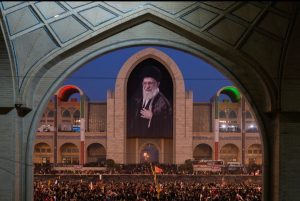 Mourners gather beneath the portrait of the late Iranian Supreme Leader Ayatollah Ali Khamenei
Security remains exceptionally tight throughout the capital as officials continue the multi-day ceremonies. The government has deployed additional security personnel around major gathering sites amid concerns that the funeral could become a target following months of regional conflict. Authorities have also implemented extensive traffic restrictions while encouraging nationwide participation in the commemorations.
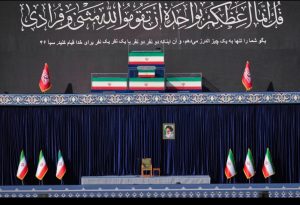 The coffins of the late Iranian Supreme Leader Ayatollah Ali Khamenei and the members of his family are displayed on a platform above an empty chair at the start of the dayslong funeral ceremonies
The funeral has also drawn international attention because of the notable absence of Ayatollah Mojtaba Khamenei, the late leader’s son and designated successor. Iranian officials have not provided a detailed public explanation for his absence, though multiple reports indicate security considerations remain a significant factor following the February airstrike in which he was reportedly injured.
Beyond honoring Khamenei’s nearly four decades as Iran’s supreme leader, the ceremonies have become a test of the Islamic Republic’s ability to project continuity during a period of profound uncertainty. Analysts say the government’s handling of the funeral—and the public response to it—will be closely watched by allies and adversaries alike as Iran navigates questions surrounding succession, regional security, and future diplomatic relations with the West.
As the funeral continues toward its final ceremonies later this week, attention remains focused not only on the massive public gatherings but also on what the event signals about Iran’s political future and its role in an increasingly volatile Middle East.
 Public / Political Reactions:
🇮🇷 Iranian Government
Iranian leaders used the third day of Ayatollah Ali Khamenei’s state funeral to project national unity and demonstrate that the country’s political and military leadership remains intact following his death.
- President Masoud Pezeshkian, senior cabinet officials, Revolutionary Guard commanders, and prominent clerics attended the ceremonies in Tehran.
- State media highlighted the large turnout, portraying it as evidence of continued public support for the Islamic Republic.
- Officials emphasized that Iran’s policies and strategic direction would continue under the country’s new leadership.
➡️ Position: The Iranian government is presenting the funeral as a symbol of regime stability, continuity, and national resilience.
🇺🇸 United States
U.S. officials have not issued a major new statement specifically addressing the funeral, but Washington continues to monitor developments closely.
- The United States has maintained a heightened military presence in the region following recent hostilities.
- Indirect diplomatic talks with Iran remain paused during the national mourning period.
- American officials continue to emphasize regional security, freedom of navigation, and the protection of U.S. personnel and allies.
➡️ Position: Washington remains focused on regional stability while monitoring Iran’s political transition.
🌍 International Community
Governments across the Middle East and beyond have closely watched the funeral because of its implications for Iran’s future leadership.
- Representatives from numerous countries have attended or sent delegations to pay their respects.
- Regional governments are assessing whether Iran’s leadership transition will affect diplomatic relations and regional security.
- International observers continue to monitor the country’s internal stability following months of conflict.
➡️ Position: The international community is watching closely for signs of political continuity or shifts in Iran’s regional posture.
👥 Public Response
Public reaction inside and outside Iran has remained deeply divided.
- Hundreds of thousands of mourners gathered in Tehran, chanting religious slogans and expressing loyalty to the late supreme leader.
- Some participants called for revenge against the United States and Israel during the funeral ceremonies.
- At the same time, reports indicate that segments of the Iranian public and members of the Iranian diaspora continue to hold sharply different views regarding Khamenei’s legacy.
➡️ Position: While official ceremonies have drawn massive crowds, public opinion remains polarized both within Iran and among Iranians abroad.
🏛️ Broader Political Impact
Analysts say the funeral represents more than a period of national mourning—it is also a critical political event for the Islamic Republic.
- The ceremonies are intended to reinforce confidence in Iran’s leadership during a sensitive transition.
- The continued absence of Supreme Leader Mojtaba Khamenei from public events has fueled speculation, although reports attribute it to security concerns.
- The coming weeks are expected to provide a clearer picture of how Iran’s new leadership will approach domestic governance, regional security, and international diplomacy.
➡️ Position: The funeral is serving as both a national memorial and a demonstration of political continuity as Iran enters a new chapter under its post-Khamenei leadership.
 Resulting Effects:
The third day of Ayatollah Ali Khamenei’s state funeral has become more than a national mourning event. It has reinforced Iran’s efforts to demonstrate political continuity, strengthened security measures across the country, and intensified international attention on the Islamic Republic’s future leadership and regional policies.
1. Reinforced Regime Stability and Political Continuity
Iranian authorities have used the funeral to project an image of unity following the death of the country’s longtime supreme leader.
🏛️ Senior government officials, military commanders, and religious leaders appeared together during the ceremonies.
🇮🇷 State media emphasized national solidarity and continuity of leadership.
📢 Officials reaffirmed that Iran’s domestic and foreign policies will continue under the new leadership.
➡️ Result: Large-scale state funeral → strengthened government messaging on political stability and continuity.
2. Heightened Security Across Iran
The funeral has prompted one of the country’s largest domestic security operations in recent years.
🚔 Thousands of security personnel have been deployed throughout Tehran and other major cities.
🛡️ Authorities increased surveillance around key government buildings and funeral venues.
⚠️ Public gatherings are being closely monitored amid concerns over potential security threats.
➡️ Result: High-profile funeral → expanded nationwide security measures.
3. Increased International Attention on Iran’s Leadership Transition
Foreign governments and analysts are closely watching how Iran manages the transition following Khamenei’s death.
🌍 International media continue to monitor developments inside Iran.
🤝 Regional governments are assessing the potential impact on Middle East diplomacy.
📊 Analysts are evaluating whether the leadership transition could influence Iran’s foreign policy.
➡️ Result: Leadership transition → heightened global scrutiny of Iran’s political future.
4. Renewed Focus on Regional Security
The funeral has taken place against the backdrop of continuing tensions involving the United States, Israel, and Iran.
🚢 Attention remains focused on the Strait of Hormuz and regional maritime security.
⚔️ Neighboring countries continue monitoring Iran’s military posture.
🌐 The leadership transition could shape future security dynamics across the Middle East.
➡️ Result: Political transition → renewed focus on regional stability and security.
5. Diplomatic Uncertainty Continues
Although the funeral has demonstrated political continuity, questions remain about Iran’s future international engagement.
🤝 Indirect diplomatic contacts with the United States remain temporarily paused.
🕊️ Future negotiations on regional security and Iran’s nuclear program are expected after the mourning period.
📖 Foreign governments are awaiting clearer signals from Iran’s new leadership regarding its diplomatic priorities.
➡️ Result: National mourning → temporary pause in diplomacy while the leadership transition unfolds.
6. Khamenei’s Legacy Will Continue to Shape Iran
The funeral has reinforced the lasting influence of Ayatollah Ali Khamenei on the Islamic Republic.
📚 Officials praised his decades-long leadership and revolutionary legacy.
🇮🇷 State institutions pledged to continue the policies established during his tenure.
🌍 His death marks the beginning of a new chapter that will influence Iran’s domestic politics and international relations for years to come.
➡️ Result: End of an era → Khamenei’s legacy continues to shape Iran’s future direction.
 Future Outlook:
As Iran’s state funeral for Ayatollah Ali Khamenei continues, attention is shifting from the mourning ceremonies to the country’s political future. The coming weeks and months are expected to be critical as Iran’s new leadership seeks to consolidate power, maintain domestic stability, and navigate growing regional and international challenges.
1. Iran’s New Leadership Will Face Early Tests
The post-Khamenei leadership is expected to focus on demonstrating political stability and maintaining continuity within the Islamic Republic.
🏛️ Senior officials are likely to emphasize unity among the government, military, and religious establishment.
🇮🇷 Authorities are expected to reassure the public that state institutions remain stable.
📢 The new leadership may outline its long-term domestic and foreign policy priorities after the mourning period concludes.
➡️ Outlook: Leadership transition → continued efforts to reinforce political stability and public confidence.
2. Regional Tensions Are Likely to Remain High
Iran is expected to continue playing a major role in Middle Eastern security and regional affairs.
⚔️ Relations with Israel and the United States are likely to remain tense.
🚢 The Strait of Hormuz will continue to be closely monitored due to its importance to global energy supplies.
🌍 Regional governments are expected to watch for any changes in Iran’s military or diplomatic posture.
➡️ Outlook: Continuing geopolitical tensions → sustained focus on regional security and deterrence.
3. Diplomatic Engagement May Gradually Resume
Following the official mourning period, Iran is expected to return its attention to international diplomacy.
🤝 Indirect discussions with the United States and other international partners could resume.
🕊️ Diplomatic efforts may focus on regional security, sanctions, and Iran’s nuclear program.
📖 Progress is expected to depend on broader geopolitical developments and mutual willingness to negotiate.
➡️ Outlook: End of national mourning → gradual return to diplomatic engagement.
4. Domestic Security Will Remain a Priority
Iranian authorities are likely to maintain heightened security even after the funeral ceremonies conclude.
🚔 Security forces are expected to remain on alert to prevent unrest or external threats.
🛡️ Protection of government institutions and senior officials will remain a priority.
⚠️ Authorities may continue monitoring public gatherings and critical infrastructure.
➡️ Outlook: Ongoing security concerns → continued vigilance across the country.
5. The Economy Will Remain a Major Challenge
Beyond the political transition, Iran’s leadership will continue facing significant economic pressures.
📉 Inflation, sanctions, and unemployment remain major concerns for many Iranians.
💰 The government may seek stronger economic partnerships with regional allies and strategic partners.
🏗️ Economic recovery is expected to remain a key domestic priority.
➡️ Outlook: Continuing economic pressures → increased focus on financial stability and growth.
6. Iran’s Global Role Will Be Closely Watched
The leadership transition is expected to influence Iran’s international relationships for years to come.
🌐 Allies and adversaries alike will monitor Tehran’s foreign policy decisions.
📊 Analysts will assess whether the new leadership maintains Khamenei’s strategic direction or introduces policy adjustments.
🤝 Iran’s actions on regional conflicts, diplomacy, and international security will remain under close global scrutiny.
➡️ Outlook: A new political era → continued international attention on Iran’s future direction and role in global affairs.
 Bottom Line:
The third day of Ayatollah Ali Khamenei’s state funeral represents more than a period of national mourning—it marks a pivotal moment in Iran’s modern history. As the Islamic Republic bids farewell to its longest-serving supreme leader, the country is simultaneously attempting to demonstrate political continuity, reassure its citizens, and project stability to the international community during a period of heightened regional tensions.
While the funeral has showcased the government’s ability to organize large-scale public ceremonies and reinforce its message of unity, significant challenges remain. Iran continues to face economic pressures, strained relations with the United States and Israel, regional security concerns, and uncertainty over how its new leadership will navigate an increasingly complex geopolitical environment.
Ultimately, the true significance of the funeral will be measured not by the size of the crowds or the symbolism of the ceremonies, but by what follows. The decisions made by Iran’s new leadership in the coming weeks and months—both at home and abroad—will determine whether the country enters a period of stability or faces new political, economic, and diplomatic challenges. As the mourning ceremonies draw to a close, the world will be watching closely to see how Iran charts the next chapter in its history.
SOURCES: AP NEWS – Iran begins dayslong funeral for Supreme Leader Ayatollah Ali Khamenei, killed in war
THE WALL STREET JOURNAL – Massive Crowds Gather in Tehran for Khamenei’s Six-Day Funeral


