Reported by:

Cherry Meigh Timbol
News Content Editor
Published November 22, 2026
KINSHASA, Democratic Republic of the Congo — At least 141 civilians have reportedly been killed in a series of attacks attributed to the Islamic State-linked Allied Democratic Forces (ADF) in eastern Democratic Republic of the Congo (DRC), as renewed violence intensifies insecurity in the country’s northeastern provinces.
The reported death toll combines casualties from separate attacks in North Kivu and Ituri provinces in November. The violence has targeted rural communities, destroyed homes and healthcare facilities, and forced residents to flee their villages.
The ADF, an armed group with origins in neighboring Uganda, has operated in eastern Congo for years. It pledged allegiance to the Islamic State (IS) in 2019 and is recognized by the extremist organization as part of its Central Africa Province network.
According to reports published on November 23, the attacks include a November 5–6 assault in Cantine-Aloya, in North Kivu, and subsequent raids in Mambasa territory, in neighboring Ituri province.
Attacks in North Kivu and Ituri
The first major attack occurred in Cantine-Aloya, North Kivu, overnight on November 5–6. Local civil society representatives initially reported at least 33 deaths, while subsequent reporting cited a higher toll.
The World Health Organization (WHO) and Africa Centres for Disease Control and Prevention (Africa CDC) later placed the death toll at 66 people, including three health workers.
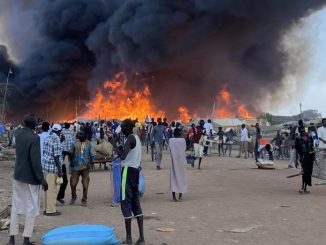
More than 50 houses were reportedly burned during the assault. Several healthcare facilities were also looted or destroyed, disrupting medical services in an area already affected by an Ebola outbreak.
In the following days, ADF fighters launched additional attacks in Mambasa territory, Ituri province.
Reports cited in the November 23 account put the death toll from these attacks at at least 75 civilians. The affected communities included Mingazi, Amani, Lelesi and Mitume, in the Babila-Babombi chiefdom, as well as villages in the Bangole area.
Residents reportedly discovered additional bodies while returning to their communities. Victims were reportedly killed by gunfire and machete attacks, while houses and motorcycles were also set on fire.
Local civil society representatives said some residents fled toward Beni and Butembo to escape further attacks.
Conflicting casualty reports
Although the combined reported toll stands at 141, casualty figures have varied across reports.
On November 13, Agence France-Presse (AFP) reported at least 44 civilian deaths in the Mambasa attacks, citing humanitarian and security sources. Other local assessments subsequently reported higher figures.
The difference reflects continuing difficulties in documenting casualties in remote communities, where insecurity and limited access have prevented investigators and humanitarian personnel from reaching some affected areas.
The figures should therefore be treated as reported minimums rather than a final, independently verified count.
Ebola response further disrupted
The attacks have also raised concerns about the impact of armed violence on the region’s ongoing Ebola response.
During the Cantine-Aloya assault, approximately 180 patients reportedly fled the Kelekele Hospital Centre, including individuals suspected of having Ebola and at least one confirmed case.
Christian Kakule, the hospital’s medical director, warned that the displacement of patients and individuals under monitoring could increase the risk of further transmission.
WHO Director-General Tedros Adhanom Ghebreyesus has also identified persistent insecurity as a major obstacle to containing the outbreak.
The destruction of healthcare facilities and displacement of patients have complicated efforts to maintain treatment, surveillance and contact tracing in affected communities.
ADF’s continued expansion in eastern Congo
The Allied Democratic Forces originated as a Ugandan rebel movement before establishing operations in eastern Democratic Republic of the Congo.
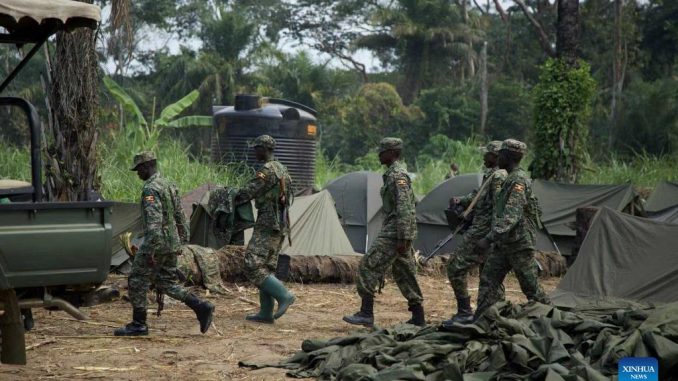
Despite joint military operations conducted by Congolese and Ugandan forces since November 2021, the group has continued carrying out attacks against civilian populations.
The Islamic State formally recognized the ADF as an affiliate in 2019, referring to it as the Islamic State Central Africa Province (ISCAP).
The group has repeatedly been accused of massacres, kidnappings and attacks on villages across North Kivu and Ituri. Its continued operations have contributed to the displacement of civilians and the deterioration of security in the region.
The ADF is among several armed groups operating in eastern Congo, where longstanding conflict, competition over territory and weak security structures have contributed to persistent instability.
Government and military response
Congolese and Ugandan forces have continued joint military operations against the ADF, although repeated attacks have raised questions about the effectiveness of existing security measures.
On November 20, North Kivu military governor Major General Evariste Kakule Somo visited Cantine alongside the commander of Ugandan troops deployed in the region.
He called for intensified joint operations and efforts to pursue the attackers into their suspected hideouts.
Local civil society representatives have also called for stronger protection of isolated communities, arguing that military forces have struggled to prevent attacks despite their presence in the region.
Continuing humanitarian concerns
The latest violence highlights the overlapping security and humanitarian challenges facing eastern Democratic Republic of the Congo.
Beyond the loss of civilian lives, the attacks have displaced families, damaged essential infrastructure and disrupted access to healthcare in communities already experiencing a serious public health emergency.
Humanitarian organizations face additional challenges reaching affected populations because of insecurity and the threat of further attacks.
As military operations continue, the protection of civilians, restoration of healthcare services and safe access for humanitarian workers remain critical concerns.
The full extent of the casualties and damage may become clearer as security conditions improve and authorities gain access to previously inaccessible communities.