Published February 24, 2025
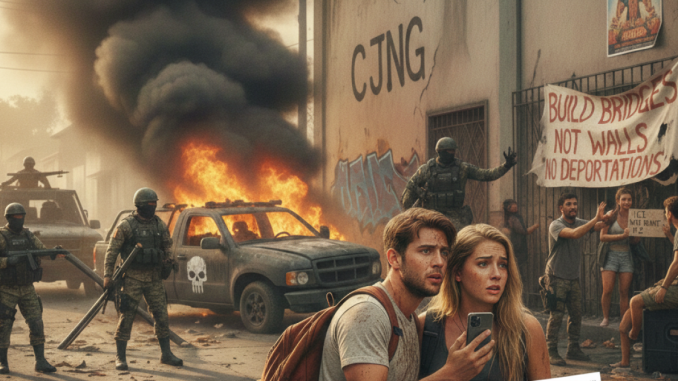
A wave of violent unrest in western Mexico has left American tourists stranded in areas like Puerto Vallarta and Tapalpa, prompting a flurry of social media posts from liberal travelers calling on President Donald Trump to “rescue” them amid escalating cartel violence.
The unrest followed the killing of Nemesio “El Mencho” Oseguera Cervantes, leader of the Jalisco New Generation Cartel (CJNG), by Mexican authorities with U.S. intelligence support. The death sparked violent reprisals, including road blockades, vehicle fires, and clashes with security forces, severely disrupting travel in popular tourist regions.
Social Media Uproar: Calls for Help
Several U.S. citizens stranded in Mexico took to platforms like Instagram and Twitter, sharing dramatic appeals for government intervention. Some posts criticized the Trump administration for not acting quickly enough, while others expressed frustration over flight cancellations, blocked roads, and enforced shelter-in-place orders.
Political commentators noted a contrast between these demands and previous liberal criticism of stricter U.S. border policies, highlighting the irony of asking for federal intervention abroad while opposing robust security measures at home.
Trump Administration Response
Contrary to some social media claims of a “rescue mission,” the Trump administration’s actions were focused on protecting Americans through diplomatic, advisory, and support measures, not a military intervention:
-
Shelter-in-Place Alerts: The U.S. State Department issued official guidance urging Americans in Jalisco, Nayarit, and surrounding areas to stay indoors and avoid unnecessary travel.
-
Intelligence Assistance: U.S. agencies provided intelligence support to Mexican authorities in the operation against El Mencho, assisting in tracking cartel movements and anticipating reprisals.
-
Public Warnings: The White House issued statements warning cartel groups against harming American citizens, emphasizing that attacks on U.S. nationals would trigger serious consequences.
-
Embassy Support: The U.S. Embassy established a 24/7 hotline to assist stranded citizens, coordinate with local authorities, and offer advice on safe evacuation routes.
-
Travel & Border Measures: Airlines canceled flights from affected airports, and states near the U.S.–Mexico border, including Texas, increased law enforcement presence to monitor potential spillover effects.
Veteran-Led Rescue Teams Step In
While the U.S. government did not deploy troops, nonprofit veteran rescue groups took action. Florida-based Grey Bull Rescue launched “Operation Condor Reach,” sending trained personnel to evacuate Americans from high-risk areas. Founder Bryan Stern, a former combat operator, described conditions as “war-zone level” due to blocked roads and cartel activity, urging those in safer locations to shelter in place until rescue was possible.
These teams have a history of operating in conflict zones worldwide and are providing their services free of charge to stranded tourists.
On-the-Ground Situation
Travelers reported days of waiting for flights or evacuation assistance, witnessing fires, roadblocks, and heavy security presence. Mexican authorities have worked to reopen roads and restore order, but conditions remain uneven across affected states.
While no American citizens were reported harmed or kidnapped, the ongoing unrest underscores the risks U.S. nationals face during cartel conflicts, even in popular tourist areas.
The Big Picture
| Social Media Claim | Reality |
|---|---|
| Liberals demanded Trump rescue them. | Travelers posted appeals online; officials emphasized caution and shelter-in-place. |
| Trump ordered a military extraction. | No direct military rescue occurred; measures were advisory and supportive. |
| U.S. directly intervened in Mexico. | Operations were carried out by Mexican authorities with U.S. intelligence assistance. |
 Implications
The situation in Mexico serves as a stark reminder of the importance of robust security policies, personal preparedness, and government accountability. When violence erupts in foreign regions, Americans abroad rely on both their own caution and timely, effective support from government institutions.
-
National Security Matters Beyond Borders
The unrest underscores how criminal activity abroad can directly affect U.S. citizens, tourism, and commerce. Strong enforcement and intelligence cooperation with neighboring countries are crucial to prevent such crises from spilling into American territory. -
Preparedness Reduces Risk
Travelers who ignore official advisories or venture into high-risk zones place themselves in unnecessary danger. This situation reinforces the need for personal responsibility: staying informed, understanding the risks, and following guidance from authorities can save lives. -
Government Action vs. Public Expectation
While social media posts called for dramatic “rescues,” the measured approach by officials highlights the limits of government intervention. Strategic support, intelligence sharing, and diplomatic coordination often achieve more than reactionary actions, while ensuring safety without escalating conflict abroad. -
Policy Messaging and Public Perception
The episode also reveals a tension between popular sentiment and national security realities. When policies are framed around safety and protection, rather than ideological preference, citizens gain a clearer understanding of the stakes and the need for preventive measures both domestically and internationally.
 Overall Takeaway:
The recent unrest in Mexico highlights a sobering reality: violence abroad can quickly put U.S. citizens at risk, and reliance on social media appeals or reactive measures is not a substitute for planning, awareness, and government coordination. While dramatic calls for “rescues” captured attention online, the measured response — including shelter-in-place guidance, intelligence support, diplomatic coordination, and veteran-led evacuations — demonstrates how preparedness, strategy, and cooperation are the most effective tools to protect Americans.
Ultimately, this episode serves as a reminder that personal responsibility, adherence to official guidance, and strong security measures are essential to navigating crises, whether at home or abroad. Americans traveling internationally can take lessons from this event: stay informed, follow advisories, and trust that measured, well-coordinated responses save lives — even when headlines seem urgent or dramatic.
SOURCES: THE NEW YORK POST – Rescue team with ‘war-zone level’ experience helping stranded Americans evacuate Mexico
FOX NEWS – Rescue team heading to Mexico to free American tourists trapped amid cartel violence
THE GATEWAY PUNDIT – Liberals Demand Trump Rescue Them from Mexico as Violence Escalates