Published May 29, 2026
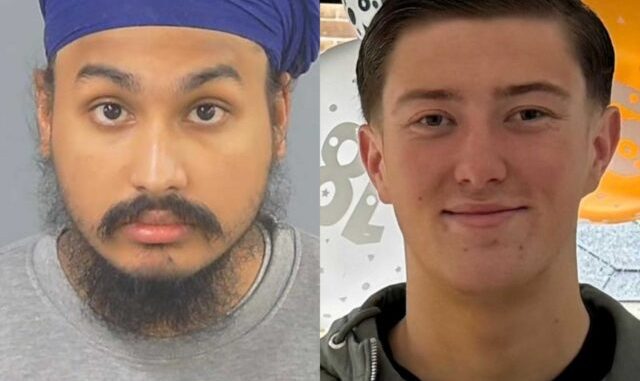
A Sikh man who claimed to have been the victim of a racist attack has been found guilty of murder for the slaying of student Henry Nowak, the death of whom became notorious after it was revealed he was handcuffed by police and ignored while he bled to death.
Southampton, U.K. —
British police have issued a formal apology after officers handcuffed a dying teenage stabbing victim who had just been attacked with a ceremonial knife, as a jury has now found the killer guilty of murder in a case that has sparked widespread outrage and scrutiny of police conduct.
The victim, 18-year-old Henry Nowak, was fatally stabbed multiple times during a late-night confrontation before officers arrived at the scene, where confusion over conflicting accounts led to a devastating error in judgment.
Police Misled at Scene by False Racism Claim
According to court evidence, the attacker falsely claimed that he was the victim of a racist assault, prompting officers to initially detain and handcuff the severely injured Nowak instead of immediately identifying him as the victim.
Officers only realized the severity of his injuries after he collapsed moments later, despite attempts to provide emergency aid at the scene.
Authorities have since acknowledged that officers were misled by what prosecutors described as a “wicked lie” told during the chaotic aftermath of the stabbing.
Killer Convicted in Ceremonial Knife Murder
A jury at Southampton Crown Court found 23-year-old Vickrum Digwa guilty of murdering Nowak with a 21cm ceremonial blade, following a confrontation in which prosecutors said the attacker used a false racism allegation to deflect blame.
The court heard that Digwa stabbed the victim multiple times before attempting to justify his actions as self-defense, a claim the prosecution rejected outright.
Digwa’s mother was also convicted of assisting an offender after she removed the weapon from the scene following the attack.
Police Apology and Investigation Launched
Hampshire Police issued an apology following the verdict, acknowledging that the victim should not have been treated as a suspect and describing the incident as a tragic mistake under rapidly unfolding circumstances.
The Independent Office for Police Conduct has opened an investigation into the officers’ actions, including why a visibly injured teenager was handcuffed while still alive at the scene.
Public Outrage Over Response and “Two-Tier” Concerns
The case has triggered intense public debate in the U.K., with critics questioning how a critically wounded victim was mistakenly detained during a life-or-death emergency.
Commentators and political figures have called for transparency, including release of body camera footage, amid claims that officers were overly influenced by allegations of racism during their initial response.
Broader Questions for Law Enforcement
The incident has raised wider concerns about split-second decision-making in high-pressure crime scenes, especially when misleading information is introduced by suspects in violent cases.
Officials insist a full review will determine how the tragic error occurred and whether procedural changes are needed to prevent similar mistakes in future emergencies.
Outlook
As the killer awaits sentencing, attention has shifted toward accountability within the police response and whether systemic changes are needed to ensure victims are correctly identified in fast-moving violent incidents.
For Nowak’s family, however, the verdict offers closure on the criminal case — but the questions surrounding how he was treated in his final moments remain unresolved.
🧩 Reading Between the Lines:
The case of the fatal stabbing of Henry Nowak, along with the police apology for handcuffing him while he was dying, has sparked public debate that goes beyond the courtroom verdict. While the killer has now been convicted, attention is also focused on how misinformation, pressure, and fast-moving decisions at the scene contributed to a serious breakdown in how the situation was handled.
Confusion at the Crime Scene
One major topic is how quickly the situation escalated when officers arrived. In chaotic scenes like violent assaults, police often have to make immediate judgments based on limited and sometimes conflicting information, which in this case led to the victim initially being misidentified.
Impact of False or Misleading Claims
Another key issue is the role of false statements made at the scene. Reports indicate that misleading claims influenced early assumptions, which affected how officers responded in the critical first moments before the full facts were clear.
Emergency Response Under Pressure
The incident also highlights the difficulty of balancing law enforcement duties with urgent medical situations. Officers are expected to secure scenes, assess threats, and provide aid, all at the same time, which can lead to mistakes when information is incomplete or incorrect.
Police Procedure and Accountability
There is also growing discussion about whether current procedures are sufficient for handling fast-moving violent incidents. The apology and internal investigation suggest that authorities are reviewing whether mistakes in judgment or process contributed to the outcome.
Public Trust and Transparency
Finally, the case raises broader questions about public trust in emergency response systems. Incidents like this often lead to calls for clearer accountability and more transparency, especially when actions taken at the scene later appear inconsistent with the reality of what happened.
🔗 The Stakes:
The conviction in the stabbing of Henry Nowak, along with the police apology for handcuffing him while he was dying, has brought attention to how quickly serious mistakes can happen in high-pressure crime scenes. While the criminal case has now been resolved, the incident has raised wider concerns about emergency response, public trust, and how authorities handle fast-moving violent situations.
Correct Identification in Emergency Situations
One of the main concerns is ensuring victims are correctly identified as quickly as possible. In chaotic scenes, mistakes in identification can delay medical response or affect how evidence is initially handled, which can have serious consequences.
Speed vs. Accuracy in Police Response
Another key issue is the challenge police face when balancing speed and accuracy. Officers must secure the area, assess threats, and respond to victims at the same time, often with limited or conflicting information.
Impact of Misleading Information
The case also highlights how false or misleading statements at a crime scene can influence early decisions. When incorrect information is acted on in the first moments of an incident, it can shape the entire initial response before facts are confirmed.
Public Confidence in Law Enforcement
There is also a broader concern about trust in policing. High-profile mistakes can affect how the public views emergency services, especially when the outcome involves a victim being treated in a way that later appears inappropriate.
Accountability and Procedural Review
Finally, the situation raises questions about whether current procedures are strong enough for handling violent incidents. Reviews and investigations aim to determine what went wrong and whether changes are needed to prevent similar errors in future cases.
🏁 The Final Word:
The case highlights both the speed and pressure involved in responding to violent incidents and the consequences when things go wrong in those critical early moments. While the murder conviction brings legal closure to the crime itself, the police apology and ongoing review show that questions remain about how the situation was handled at the scene. Overall, the incident has become a reminder of how important clear information, careful judgment, and effective procedures are when dealing with emergencies where every second matters.
SOURCES: BREITBART – Police Apologise For Handcuffing Dying Teen Henry Nowak as Murderer Found Guilty
BBC NEWS – Murder trial racism claim ‘wicked lie’, court told
SKY NEWS – Police apologise for arresting dying teen after killer’s ‘wicked’ racism lie – as man found guilty of ceremonial knife murder