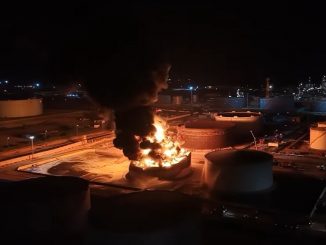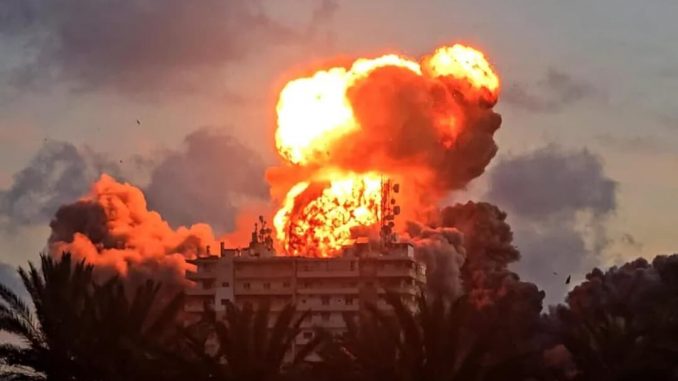
Israel strike on Tyre, Southern Lebanon on Thursday, May 28, 2026 via AFF/AJ
Published May 29, 2026
Beirut / Jerusalem —
Israeli airstrikes rocked the Lebanese capital’s southern suburbs and surrounding areas on Wednesday, killing at least 14 people and shattering a month-long period of relative calm, according to Lebanese officials and multiple reports.
The strikes mark a sharp escalation in the fragile security situation between Israel and Hezbollah, coming despite ongoing diplomatic efforts and a U.S.-brokered ceasefire framework that has struggled to hold across the region.
Beirut Targeted as Strikes Expand Beyond Southern Lebanon
Witnesses and local officials reported powerful explosions in Beirut’s southern suburbs, an area long associated with Hezbollah activity, as Israeli aircraft carried out precision strikes targeting what the Israel Defense Forces described as militant infrastructure.
Lebanese health authorities confirmed casualties, including civilians, and said rescue operations were still underway in heavily damaged residential areas. Additional strikes were reported in southern Lebanon, where fighting has remained more sustained in recent months.
The latest attacks represent one of the most significant escalations near Beirut in weeks, breaking a temporary lull in strikes closer to the capital.
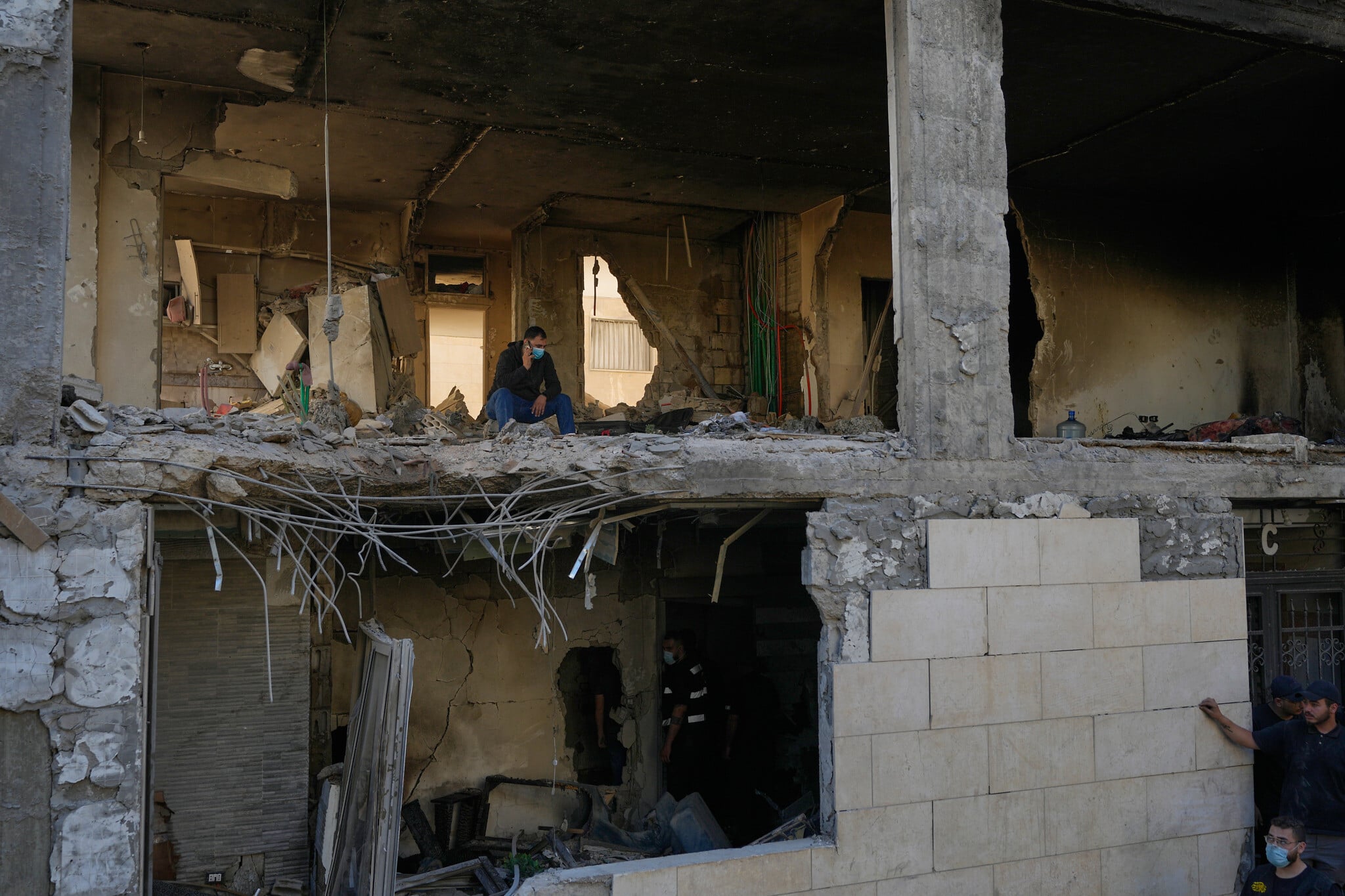
A man speaks on his phone inside a destroyed apartment that was hit in an Israeli airstrike in Shuwayfat, just south of Beirut, Lebanon, May 28, 2026. (AP Photo/Hussein Malla)
Israel Says Operations Target Hezbollah Command Structure
Israeli officials have repeatedly stated that military operations in Lebanon are aimed at degrading Hezbollah’s command structure, missile capabilities, and drone operations.
The IDF has argued that Hezbollah continues to pose a direct threat to northern Israel through cross-border rocket fire and drone attacks, requiring ongoing military responses even during periods of diplomatic negotiations.
Lebanon Reports Civilian Casualties, Rising Tensions
Lebanese authorities condemned the strikes, saying they hit residential areas and caused civilian deaths, including women and children in some incidents across southern and suburban Beirut regions.
Emergency crews have been working through damaged buildings as concerns grow that the death toll could rise further as more rubble is cleared.
The Lebanese government has warned that continued strikes near populated areas risk destabilizing already fragile ceasefire discussions.
Ceasefire Under Increasing Strain
The attacks come amid growing pressure on an already fragile ceasefire arrangement brokered by the United States, which has faced repeated violations and accusations from both sides.
While the truce was intended to reduce hostilities after months of cross-border fighting, both Israel and Hezbollah have continued limited military operations, with each side blaming the other for escalation.
Broader Regional Tensions Continue to Rise
The renewed strikes in Beirut add to a wider pattern of instability across the Middle East, where overlapping conflicts involving Iran, Hezbollah, and Israel continue to raise fears of a broader regional confrontation.
Security analysts warn that continued escalation in Lebanon could undermine diplomatic efforts elsewhere in the region, especially as multiple ceasefire frameworks remain fragile or incomplete.
Outlook Remains Uncertain
With no indication that either side intends to fully halt operations, the situation remains highly volatile.
Officials on all sides continue to balance military objectives with diplomatic pressure, but the latest strikes underscore how quickly the conflict can return to active escalation.
For now, Beirut is once again at the center of a conflict that shows no clear path toward lasting stability.
🧩 Reading Between the Lines:
The latest Israeli airstrikes near Beirut highlight how fragile the current calm in the region really is. Even after weeks of reduced fighting, tensions between Israel and Hezbollah remain unresolved, and it only takes one round of strikes or rocket fire for the situation to escalate again.
Fragile Ceasefire Conditions
One major topic being discussed is the weakness of the current ceasefire efforts. While there may be temporary pauses in fighting, both sides continue limited operations and remain prepared for further escalation. That means the region is operating under a tense “pause” rather than a stable peace.
Israel’s Security Calculations
Another key issue is Israel’s focus on preventing Hezbollah from rebuilding military infrastructure near its border. Israeli officials argue that strikes are intended to target weapons storage sites, command centers, and drone operations before they can be used in future attacks.
Civilian Impact and Urban Warfare
At the same time, the strikes near populated areas in Beirut raise concerns about civilian casualties and damage to residential neighborhoods. Urban warfare creates challenges because military targets are often located close to civilian infrastructure, increasing the humanitarian impact whenever fighting intensifies.
Hezbollah’s Regional Role
The situation is also tied to Hezbollah’s broader role in the region. The group is not only active inside Lebanon but is also connected to wider regional tensions involving Iran, Israel, and ongoing conflicts across the Middle East. That makes every confrontation part of a much larger geopolitical picture.
Pressure on Diplomacy
Another topic being discussed is how repeated military exchanges undermine diplomatic efforts. Ceasefire talks become harder to sustain when new strikes happen during negotiations, especially when both sides accuse each other of violating understandings or escalating first.
Risk of Wider Escalation
The biggest underlying concern is that localized fighting could spread more broadly. A strike near Beirut, retaliation across the border, or attacks involving regional allies could quickly pull multiple countries into a larger confrontation, especially with tensions already high elsewhere in the Middle East.
🔗 The Stakes:
The recent airstrikes near Beirut highlight how quickly the situation between Israel and Hezbollah can shift from relative calm back into active conflict. While fighting had slowed for a period, the latest escalation shows that tensions in the region remain unresolved and can flare up again with little warning.
Civilian Safety and Humanitarian Impact
One of the most immediate concerns is the risk to civilians living in and around targeted areas. Strikes in or near populated neighborhoods can lead to casualties, displacement, and damage to essential infrastructure, increasing pressure on emergency services and humanitarian groups.
Military Escalation and Retaliation
Another key issue is the cycle of action and response between both sides. Each strike has the potential to trigger retaliation, which can quickly expand the scope and intensity of the conflict if it continues without restraint.
Stability of the Ceasefire Framework
The situation also raises questions about how stable existing ceasefire arrangements really are. Even when agreements are in place, ongoing limited operations and accusations of violations make it difficult to maintain long-term calm.
Regional Spillover Risk
There is also concern about the broader region. Tensions involving Israel, Hezbollah, and other regional actors can extend beyond Lebanon’s borders, especially when allied groups or neighboring countries become indirectly involved.
Impact on Diplomatic Efforts
Finally, continued military activity can make diplomatic negotiations more difficult. Each new round of strikes reduces trust between parties, making it harder for mediators to maintain progress toward longer-term agreements or de-escalation.
🏁 The Final Word:
The latest strikes near Beirut underscore how unstable the current situation remains, even after periods of reduced fighting. While there are ongoing efforts to manage tensions through ceasefire arrangements and diplomacy, continued military activity on both sides shows how fragile those efforts are in practice. The risk of renewed escalation, civilian harm, and broader regional involvement remains present as long as underlying security concerns between Israel and Hezbollah are unresolved.
SOURCES: ZEROHEDGE – Beirut Rocked By Israeli Airstrikes After Month Of Quiet, 14 Dead
RFI – Israel launches deadly strike near Beirut, widening Lebanon offensive
ASHARQ AL- AWSAT – Israel Carries Out Strike on Beirut Suburbs, First Near Capital in Weeks
THE TIMES OF ISRAEL – Lebanon says woman, two children killed in Israeli strike on Beirut