Taneco/Oil Refinery
Published June 6, 2026
MOSCOW — Russian President Vladimir Putin is projecting confidence despite a growing wave of Ukrainian drone and missile attacks targeting critical infrastructure deep inside Russian territory. Speaking as fires burned at major energy facilities, Putin insisted that Ukraine’s campaign would not halt Russia’s military advance or alter the Kremlin’s strategic objectives.
The remarks come as Ukraine continues expanding its long-range strike capabilities, targeting oil terminals, fuel depots, industrial facilities, and logistics hubs hundreds of miles from the front lines. Ukrainian officials say the strategy is designed to weaken Russia’s war effort and increase economic pressure on Moscow.
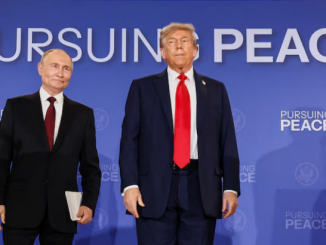
 Putin, who’s been charged with war crimes, claimed Ukraine was resorting to “terrorist methods.”Russian President official/APAImages/Shutterstock
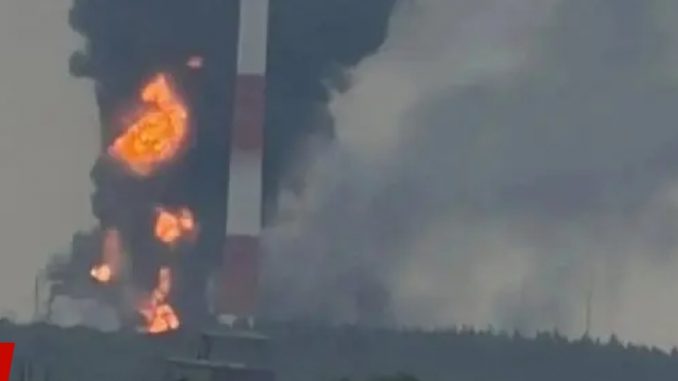
One of the most significant recent attacks struck major oil infrastructure in southern Russia, causing fires and disruptions at facilities tied to energy exports. The strikes highlight Ukraine’s growing ability to reach strategic targets far from the battlefield.
Despite the attacks, Putin said Russia continues to make progress in Ukraine, acknowledging that his forces are not advancing “as quickly as we would like” but insisting they are steadily gaining territory. He also claimed that more than 700,000 Russian personnel remain involved in the war effort.
 The Tamanneftegaz oil export hub has been the target of Ukrainian strikes several times.Gallo Images via Getty Images
The Kremlin has admitted that Ukrainian strikes are causing economic damage, though Putin maintains that Russia is recovering quickly and adapting its defenses. Moscow has pledged to strengthen air defenses as Ukrainian drones increasingly target refineries, export terminals, and military-related facilities.
 Russian strikes on Ukraine over the past day killed at least eight people and wounded 62 civilians.Anadolu via Getty Images
Military analysts say the conflict is evolving into a broader war of attrition in which both sides are increasingly relying on long-range strikes to weaken the other’s economy and military infrastructure. While Ukraine’s attacks have become more sophisticated, Russia continues to possess significant manpower and industrial capacity.
 Members of Putin’s own circle have broken with party line in recent months as Russia’s economy collapses.Russian President official/APAImages/Shutterstock
As the war enters another critical phase, neither side appears ready to back down. Ukraine is betting that sustained pressure on Russia’s economy and logistics network can change the balance of the conflict, while Putin remains convinced that Russia can absorb the attacks and continue advancing toward its objectives.
🧩 Reading Between the Lines:
More Than a War of Territory
On the surface, the latest headlines focus on Russian advances and Ukrainian strikes. But the bigger story is that both sides are trying to prove they can outlast the other. This conflict is increasingly becoming a test of endurance, resources, and political will rather than a race for immediate battlefield victories.
Putin Is Sending a Message
When Putin says Russia is still advancing despite attacks deep inside the country, he is not only speaking to the outside world. He is also speaking to the Russian public, military personnel, and political elites.
His message is simple: Russia remains in control, the war effort continues, and Ukrainian strikes have not changed Moscow’s long-term plans. Maintaining confidence is important for any government involved in a prolonged conflict.
Ukraine Wants to Raise the Cost
Ukraine’s strategy appears focused on making the war more expensive and difficult for Russia.
By targeting oil facilities, fuel depots, and other infrastructure, Kyiv is trying to force Moscow to spend more money on defense, repairs, and security. The goal is not necessarily to win overnight, but to gradually increase pressure over time.
Economic Pressure Is Becoming a Battlefield
Modern wars are not fought only with tanks and soldiers. They are also fought through economics.
Every refinery, fuel depot, or logistics hub that is damaged can affect military operations and government finances. The growing number of long-range attacks suggests that both sides understand that economic strength may be just as important as battlefield performance.
A Reminder About Military Reality
Even successful strikes do not automatically translate into victory.
While Ukraine has demonstrated an ability to hit targets inside Russia,
Moscow still possesses vast resources, a large military, and significant industrial capacity. Supporters of a strong national defense often point out that wars are rarely decided by symbolic victories alone; long-term capabilities matter more.
The West Is Watching Closely
The conflict also serves as a test of Western support for Ukraine.
Russian leaders continue to calculate whether international backing for Kyiv will remain strong over time. Ukraine, meanwhile, is counting on continued military and financial assistance from its allies. The outcome may depend as much on political decisions in foreign capitals as on events at the front lines.
🔗 The Stakes:
A War With Consequences Beyond Europe
The fighting between Russia and Ukraine is not just a regional conflict. The outcome could affect global security, energy markets, military alliances, and the balance of power between major nations. What happens on the battlefield today may influence international relations for years to come.
The Cost of a Long War
As the conflict drags on, both sides are paying a heavy price in lives, resources, and economic strain.
Russia faces growing costs from military spending, sanctions, and attacks on key infrastructure. Ukraine continues to rely heavily on foreign military and financial support to sustain its defense. The longer the war lasts, the more difficult it becomes for both countries to absorb the burden.
The Message Sent to America’s Rivals
Governments around the world are closely watching how the conflict unfolds.
Countries such as China, Iran, and North Korea are paying attention to whether military aggression is rewarded or resisted. The eventual outcome could shape how other nations calculate risks and opportunities in future international disputes.
Energy and Economic Stability
Russia remains one of the world’s major energy producers. Attacks on oil terminals, refineries, and export facilities can have ripple effects far beyond the battlefield.
Disruptions in energy markets can contribute to higher fuel costs, increased transportation expenses, and inflationary pressure that affects consumers around the world. Even people far from the conflict can feel the economic consequences.
The Future of Western Support
Ukraine’s ability to continue fighting depends heavily on support from allied nations.
As governments debate military aid, weapons transfers, and financial assistance, questions about long-term commitments become increasingly important. The willingness of Western countries to sustain support could significantly influence the course of the war.
The Risk of Escalation
One of the greatest concerns is that the conflict could expand beyond its current boundaries.
As Ukraine strikes deeper into Russian territory and Russia responds with its own attacks, the possibility of miscalculation remains. Any major escalation could create new security challenges for Europe and NATO allies.
🏁 The Final Word:
As Ukraine expands its ability to strike targets deep inside Russia and Moscow insists its military campaign remains on track, the conflict appears to be entering another difficult and unpredictable phase. Both sides are trying to demonstrate strength, resilience, and staying power, while the human and economic costs continue to grow. The latest developments show that neither Russia nor Ukraine believes it has reached a point where compromise is necessary, making a near-term resolution unlikely. For many observers, the key question is no longer whether the war will continue, but how long both sides can sustain their current strategies. In the end, the outcome will depend not only on military operations, but also on economic endurance, political resolve, and the willingness of each side to bear the costs of a prolonged conflict.
SOURCES: THE NEW YORK POST – Putin claims Ukraine can’t stop him, as fire rages at major Russian oil terminal
REUTERS – Ukrainian military hits Russia’s oil infrastructure in Volgograd region, Kyiv says
THE TIMES – Has Ukraine turned the tode against Russia