Protesters clashed with police across Italy on Saturday and even briefly stormed the Colosseum in Rome; however, Giorgia Meloni’s government claimed that widespread disorder was prevented by the expanded powers granted to police, which enabled preventative detention and led to the arrest of one of the chief architects of the Milan riots
Reported by:

Cherry Meigh Timbol
News Content Editor
Published October 25, 2026
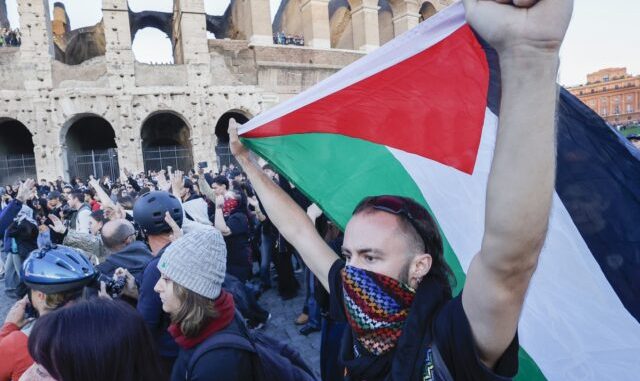
Protesters Breach the Colosseum
In Rome, demonstrators broke away from a larger march and moved toward the Colosseum, the ancient amphitheater that is one of the city’s most recognizable landmarks. Some protesters entered the historic site, prompting security personnel to intervene and escort them out.
Italian media reported that the incident lasted several minutes. Authorities said there were no confirmed reports of damage to the monument, while police began examining evidence to identify those involved.
Tensions later escalated near central government buildings after demonstrators attempted to move toward the prime minister’s office. Some protesters threw bottles, fireworks and other objects at police, who responded with water cannons and crowd-control measures.
Italian authorities reported that 96 people were taken to police headquarters in Rome for identification and questioning, while 28 preventive detentions were carried out. Eleven people were also reported to judicial authorities in connection with incidents during the demonstrations.
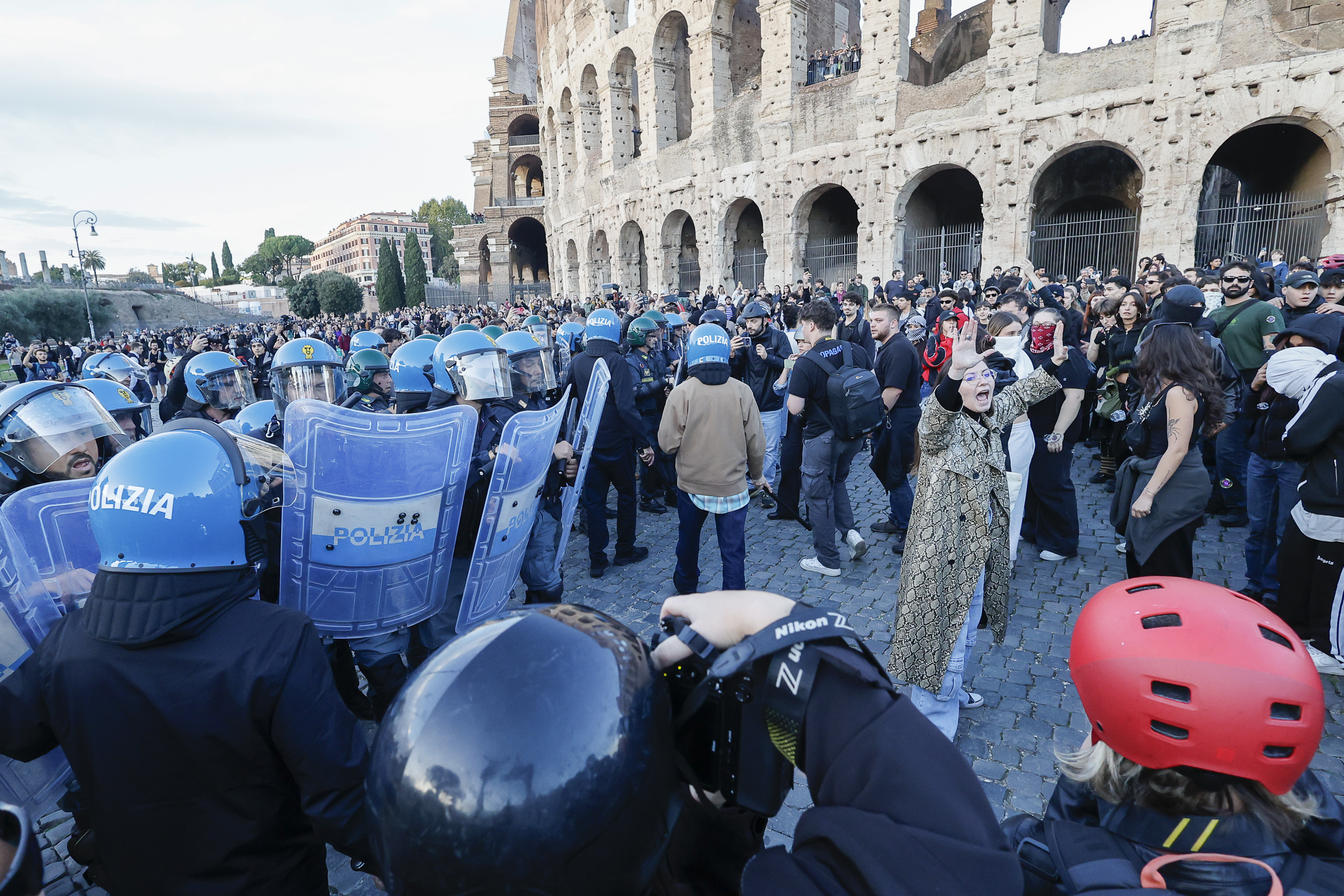 ROME, ITALY, OCTOBER 24: Anti-riot police officers face demonstrators in front of the Colosseum during a protest against the Italian government in Rome, Italy, on October 24, 2026. (Photo by Riccardo De Luca/Anadolu via Getty Images)
Clashes Spread to Other Italian Cities
Rome was not the only city affected by the unrest. In Turin, police used tear gas after demonstrators threw bottles and fireworks at officers and attempted to push through police lines.
In Bologna, clashes broke out as protesters threw bottles and firecrackers, prompting police to push the crowd back. Tensions were also reported in Florence, where officers blocked demonstrators from crossing a security cordon.
Milan, which had experienced serious unrest the previous weekend, saw a substantial police presence as thousands gathered for demonstrations. Authorities reinforced security measures and conducted preventive checks in an effort to prevent further violence and property damage.
Protests Driven by Political and Economic Grievances
The demonstrations involved a range of political and economic grievances, including opposition to rearmament, concerns over the cost of living and broader protests against government policies. Different student groups and political movements participated in marches across the country.
The unrest came after violent demonstrations the previous weekend, when clashes with police, looting and property damage prompted authorities to prepare for further disturbances.
Italian officials increased security deployments and used preventive measures ahead of Saturday’s protests. Despite the confrontations in several cities, Reuters reported that its witnesses observed no shop looting or property vandalism during the October 24 demonstrations.