Published March 22, 2026
The latest remarks from Donald Trump—labeling Democrats as the “greatest enemy” of the United States—represent more than just a provocative soundbite. They signal a deeper escalation in how political conflict is being defined in modern America.
Traditionally, U.S. politics has operated within a framework where opposing parties are seen as competitors with differing visions for governance. Disagreements—sometimes sharp—were still rooted in the assumption of a shared national interest. Trump’s statement challenges that foundation by reframing the opposition not simply as misguided, but as actively harmful to the country’s survival and stability.
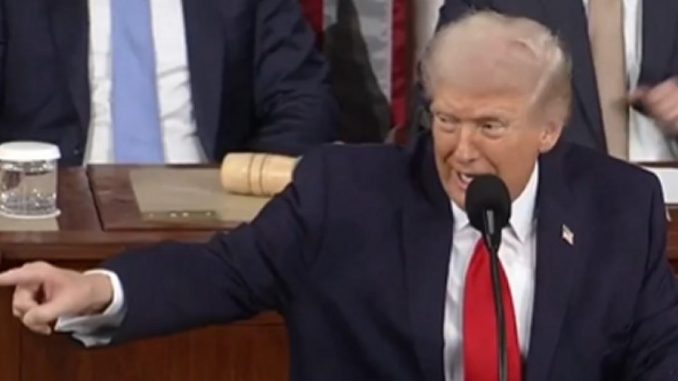
The president wrote:
Now with the death of Iran, the greatest enemy America has is the Radical Left, Highly Incompetent, Democrat Party! Thank you for your attention to this matter. President DJT
Trump wrote:
The Radical Left Democrats have hurt so many people with their vicious and uncaring ways. What they have done to the Department of Homeland Security, our fantastic TSA Officers, and, most importantly, the great people of our Country, is an absolute disgrace. If the Democrats do not allow for Just and Proper Security at our Airports, and elsewhere throughout our Country, ICE will do the job far better than ever done before!
The Fascist Democrats will never protect America, but the Republicans will. Just like the Radical Left allowed millions of Criminals to pour into our Country through their ridiculous and dangerous Open Border Policy, the Republicans closed it all down, and we now have the Strongest Border in American History. Likewise, I look forward to moving ICE in on Monday, and have already told them to, “GET READY.” NO MORE WAITING, NO MORE GAMES! President DONALD J. TRUMP
This shift matters because it transforms the nature of political discourse. When one side is described as an “enemy,” the debate is no longer about policy differences such as taxation, immigration, or national security—it becomes a question of loyalty, legitimacy, and national identity.
The context surrounding the statement further amplifies its impact. The comments emerged during ongoing disputes over federal funding, border security, and the operational strain on government agencies. In this environment, frustrations over policy gridlock can easily evolve into broader accusations about intent and competence. Trump’s framing taps into that frustration, presenting political opposition as not just ineffective, but fundamentally dangerous.
At the same time, critics argue that such rhetoric risks crossing a line by equating domestic political rivals with external threats. This raises concerns about how language at the highest levels of leadership can influence public perception and behavior. Strong rhetoric has the power to energize supporters—but it can also deepen distrust, reduce space for compromise, and increase political volatility.
Another layer to this issue is the strategic dimension. Political messaging today is not just about persuasion; it is about mobilization. By using stark and uncompromising language, leaders can consolidate their base, sharpen contrasts, and dominate the public narrative. However, this approach often comes at the cost of alienating moderates and making bipartisan cooperation more difficult.
Ultimately, the core issue is not just what was said, but what it represents: a continuing shift toward a political environment where opponents are no longer treated as part of the same national framework, but as obstacles to be defeated at all costs.
That transformation carries long-term implications—not only for elections, but for governance itself.
🧩 The Core Analysis:
At its heart, Trump’s statement reflects a growing shift in political framing: from ideological competition to existential conflict.
Rather than treating political opponents as rivals with different solutions, the rhetoric positions them as fundamentally harmful to the nation’s well-being. This kind of framing has significant implications:
- It hardens partisan lines, making compromise nearly impossible
- It reframes policy disagreements as moral or national survival issues
- It mobilizes political bases through urgency and perceived threat
The timing is also critical. The remarks come amid disputes over funding for the Department of Homeland Security and ongoing strain on public systems like airport security due to staffing shortages tied to the standoff.
In this environment, political messaging is no longer just about persuasion—it becomes a tool for defining enemies and allies in absolute terms.
🔗 The Synthesis:
This moment underscores a broader transformation in American politics: governance is increasingly shaped by conflict-driven narratives rather than consensus-building.
From one perspective, strong language signals clarity—drawing firm lines about what policies or actions are seen as harmful to the country. From another, it risks escalating divisions to a point where cooperation becomes politically impossible.
A sustainable path forward would require:
- Re-centering political debate on outcomes rather than identities
- Restoring functional negotiation on critical issues like security and funding
- Reducing reliance on rhetoric that frames domestic opposition as existential threats
Without these adjustments, the political system risks becoming locked in a cycle where escalation replaces resolution, and messaging overtakes policymaking.
🏁 The Final Word:
Trump’s declaration may resonate strongly with supporters who feel the country is on the wrong track, but it also highlights a deeper challenge: the erosion of a shared political framework.
A nation cannot function effectively when its internal divisions are treated as greater threats than external ones. Leadership, at its strongest, does not just identify problems—it creates conditions where solutions are still possible.
If the current trajectory continues, the real danger may not come from any single political party, but from a system increasingly defined by division over direction.
SOURCES: THE GATEWAY PUNDIT – Trump Torches Democrats as ‘America’s Greatest Enemy’ After ‘The Death of Iran’
ANADOLU AJANSI –Trump calls Democrats America’s greatest threat after ‘death of Iran’