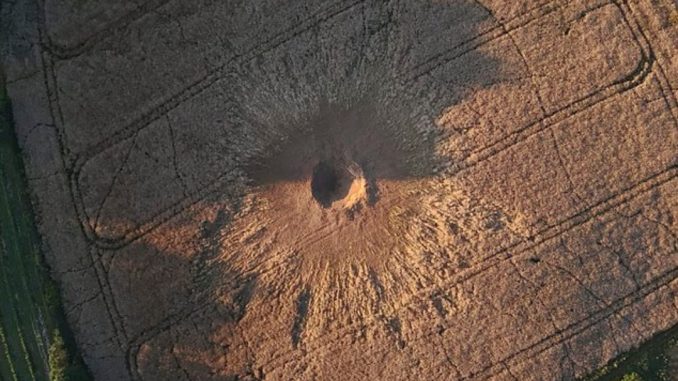
A 33ft-wide crater pictured in the Lublin region of eastern Poland, 56 miles from the Ukrainian border, amid reports a Russian missile crossed into NATO territory during a massive attack on Ukraine
Published July 31 , 2026
WARSAW, Poland — A Russian cruise missile reportedly entered Polish airspace and exploded in eastern Poland during one of Moscow’s largest missile and drone attacks against Ukraine, prompting Poland to place its armed forces on high alert and NATO to closely monitor the incident amid growing concerns over regional security.
 Polish military police and police officers work at the site of the crater, near the village of Tarnawa-Kolonia in the Lublin province
![]()
 Ukraine’s foreign ministry said a Russian cruise missile had ‘crossed into Poland’ as part an attack on Ukraine, ‘violating NATO airspace’
Polish officials said the missile landed near the village of Tarnawa-Kolonia in eastern Poland, creating a crater but causing no casualties or significant property damage. Preliminary assessments indicate the object was likely a Russian Kh-101 cruise missile, a long-range weapon capable of carrying either conventional or nuclear warheads, though authorities said there is no indication it carried a nuclear payload.
Russian Missile Crosses Into NATO Territory
The incident occurred during a large-scale overnight Russian assault on Ukraine involving hundreds of drones and dozens of missiles targeting multiple regions across the country.
Polish military radar tracked the missile after it entered the country’s airspace, and fighter aircraft were placed on standby as part of emergency defense procedures.
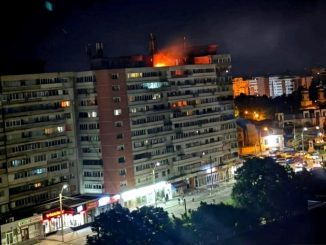
 A man reacts near an apartment building hit by a Russian missile strike, amid Russia’s attack on Ukraine, in Lviv, Ukraine July 30
 First responders operate at a residential building partially destroyed as a result of Russian missile strikes in the western Ukrainian city of Lviv on July 30, 2026, amid the Russian invasion in Ukraine
Polish officials said the missile ultimately crashed in an uninhabited area, while investigators continue examining the debris to determine its exact flight path and how it entered NATO territory.
Although the Kremlin has not commented directly on the incident, Russia has maintained that its latest strikes were aimed at military and strategic infrastructure supporting Ukraine’s war effort.
The missile’s reported entry into Polish territory has renewed concerns over the possibility of the conflict spilling beyond Ukraine’s borders, even as both Polish and NATO officials stressed there is currently no indication that Poland itself was the intended target.
👥 Public / Political Reactions:
🇵🇱 Poland
Polish authorities immediately launched an investigation after the reported Russian cruise missile entered the country’s airspace and crashed in eastern Poland.
- Prime Minister Donald Tusk said preliminary findings indicate the object was likely a Russian Kh-101 cruise missile.
- The Polish Armed Forces placed fighter aircraft on standby and activated established air defense procedures during the incident.
- Officials emphasized that there is currently no evidence Poland was deliberately targeted but pledged a thorough investigation.
➡️ Position: Poland views the incident as a serious violation of its airspace and is coordinating closely with NATO while strengthening national security measures.
🇷🇺 Russia
The Kremlin has not publicly commented on the reported missile’s entry into Polish territory.
- Russian officials have continued to state that recent missile and drone strikes were directed at Ukraine’s military and defense-related infrastructure.
- Moscow has not acknowledged responsibility for the missile that reportedly landed inside Poland.
- Russia has consistently maintained that its operations are focused on military objectives linked to Ukraine’s war effort.
➡️ Position: Russia has not confirmed the incident and continues to describe its strikes as targeting Ukrainian military infrastructure.
🇳🇱 NATO
NATO closely monitored the situation following reports that a Russian missile entered alliance territory.
- Secretary General Mark Rutte said NATO remains prepared to take all necessary measures to defend allied territory.
- Alliance officials remained in close contact with Polish authorities throughout the investigation.
- NATO emphasized that it continues monitoring developments along its eastern flank.
➡️ Position: NATO reaffirmed its commitment to collective defense while supporting Poland’s investigation into the incident.
🇺🇦 Ukraine
Ukrainian officials said the missile incident occurred during one of Russia’s largest combined air attacks in recent months.
- Kyiv renewed calls for additional Western air defense systems.
- Ukrainian leaders argued that Russia’s continued missile campaign poses risks beyond Ukraine’s borders.
- Officials stressed that stronger international support remains essential to protecting civilians and neighboring countries.
➡️ Position: Ukraine says the incident demonstrates that Russia’s attacks threaten wider European security and reinforces the need for enhanced air defenses.
🇺🇸 United States and Western Allies
Western governments closely followed developments after the missile reportedly crossed into Poland.
- Allied officials expressed support for Poland and backed its ongoing investigation.
- Several governments reiterated their commitment to NATO’s collective defense obligations.
- Western leaders also condemned Russia’s continued large-scale missile attacks on Ukraine.
➡️ Position: The United States and its allies support Poland’s response while reaffirming NATO’s commitment to defending member states.
👥 Public Response
The incident generated concern across Poland and Europe.
- Many residents expressed alarm over another wartime incident involving NATO territory.
- Security analysts warned that even accidental cross-border incidents carry the risk of escalating tensions.
- Others urged restraint until investigators complete their findings.
➡️ Position: Public reaction has largely focused on regional security concerns while supporting a careful, evidence-based investigation.
🏛️ Broader Political Impact
The reported missile incident has renewed attention on the risks posed by the ongoing war in Ukraine.
- NATO members are expected to continue reviewing air defense readiness along the alliance’s eastern border.
- The incident may strengthen calls for additional military assistance to Ukraine.
- Analysts say preventing unintended escalation between Russia and NATO will remain a top diplomatic priority.
➡️ Position: The incident underscores the continued risk that the war in Ukraine could affect neighboring NATO countries, reinforcing the importance of deterrence, coordination, and crisis management.
⚠️ Resulting Effects:
The reported Russian cruise missile’s entry into Polish territory has heightened security concerns across Eastern Europe, prompting increased military vigilance, diplomatic coordination, and renewed attention to the risks of the war in Ukraine extending beyond its borders.
1. Poland Strengthened National Security Measures
Polish authorities responded by activating emergency defense protocols.
🛡️ Fighter aircraft were placed on standby after the missile entered Polish airspace.
🚔 Military and security agencies launched an investigation into the incident.
📡 Airspace surveillance and monitoring were intensified along Poland’s eastern border.
➡️ Result: Missile enters Polish airspace → heightened national security and military readiness.
2. NATO Increased Monitoring of Its Eastern Flank
The incident prompted closer coordination among NATO allies.
🤝 Alliance officials remained in close contact with Poland throughout the investigation.
🛰️ NATO continued monitoring air activity near its eastern frontier.
⚠️ The alliance reaffirmed its commitment to defending member states against potential threats.
➡️ Result: Airspace violation → increased NATO coordination and vigilance.
3. Concerns Over Regional Escalation Intensified
The missile incident renewed fears that the war could affect neighboring NATO countries.
🌍 Security analysts warned that cross-border incidents increase the risk of unintended escalation.
⚖️ Governments emphasized the importance of avoiding actions that could widen the conflict.
📋 Diplomatic efforts continued to reduce tensions while supporting Ukraine.
➡️ Result: Cross-border incident → renewed concern over regional security.
4. Calls for Stronger Air Defense Grew
The event highlighted ongoing vulnerabilities to long-range missile attacks.
🛡️ Ukraine renewed appeals for additional Western air defense systems.
🚀 NATO members continued reviewing regional air defense capabilities.
📈 Several allies are expected to assess whether additional defensive resources are needed along NATO’s eastern border.
➡️ Result: Missile threat → greater focus on strengthening regional air defenses.
5. Diplomatic Coordination Increased
Governments moved quickly to exchange information and coordinate their responses.
🤝 Poland consulted closely with NATO allies following the incident.
📞 Diplomatic channels remained active to prevent misunderstandings and avoid escalation.
🌍 Western governments continued monitoring developments as investigators analyzed the missile debris.
➡️ Result: Security incident → expanded diplomatic coordination among allies.
6. Investigation Into the Missile Continued
Authorities are working to determine the missile’s exact trajectory and circumstances.
🔍 Investigators are examining debris recovered from the impact site.
📡 Military radar data is being reviewed to reconstruct the missile’s flight path.
⚖️ Officials have emphasized that conclusions will depend on the completed investigation.
➡️ Result: Ongoing investigation → clearer understanding of the incident expected.
7. The Ukraine War’s Spillover Risks Were Highlighted
The incident underscored how military operations near NATO territory continue to carry regional risks.
🌍 Neighboring countries remain on alert as Russia’s missile campaign continues.
🚨 Similar incidents could increase pressure on governments to strengthen border security and defense preparedness.
🕊️ Analysts say continued coordination among NATO allies will be essential to reducing the risk of unintended escalation.
➡️ Result: Missile incident → renewed focus on preventing the conflict from expanding beyond Ukraine.
🔮 Future Outlook:
The reported Russian cruise missile’s entry into Polish territory is expected to keep NATO and regional governments on heightened alert as the war in Ukraine continues. While officials have emphasized there is no indication that Poland was deliberately targeted, the incident underscores the ongoing risk of military operations spilling into neighboring alliance countries.
1. Poland Will Maintain Heightened Military Readiness
Polish authorities are expected to continue strengthening border and airspace security.
🛡️ Air defense systems and military patrols are likely to remain on elevated alert.
✈️ Fighter aircraft may continue conducting rapid-response missions during large-scale Russian attacks on Ukraine.
📡 Surveillance along Poland’s eastern border is expected to remain intensified.
➡️ Outlook: Continued regional tensions → sustained military preparedness.
2. NATO Will Continue Monitoring Russia’s Military Activity
The alliance is expected to maintain close coordination with Poland and other eastern member states.
🤝 NATO will likely continue sharing intelligence and monitoring airspace near its eastern frontier.
🛰️ Allied forces are expected to remain prepared to respond to future airspace incidents.
🛡️ The alliance is likely to reinforce its commitment to defending every inch of NATO territory.
➡️ Outlook: Ongoing conflict → continued NATO vigilance and coordination.
3. Investigators Will Seek to Determine Exactly What Happened
Polish authorities are expected to complete a comprehensive investigation.
🔍 Missile debris and radar data will continue to be analyzed.
📋 Officials will work to determine the missile’s origin, trajectory, and circumstances surrounding the incident.
⚖️ Findings may influence future military and diplomatic responses.
➡️ Outlook: Completed investigation → greater clarity on the incident.
4. Ukraine Will Continue Seeking Additional Air Defenses
Kyiv is expected to use the incident to reinforce calls for greater military assistance.
🛡️ Ukrainian officials are likely to request more advanced air defense systems from Western partners.
🚀 Additional support could help reduce the risk of future missiles approaching NATO borders.
🤝 Western governments are expected to continue evaluating Ukraine’s defense needs.
➡️ Outlook: Continued Russian missile attacks → sustained international military support discussions.
5. Diplomatic Efforts Will Focus on Preventing Escalation
Regional leaders are expected to continue balancing deterrence with restraint.
🌍 NATO members will likely seek to avoid any unintended escalation with Russia.
📞 Diplomatic communication channels are expected to remain active.
⚠️ Governments will continue emphasizing measured responses while maintaining collective defense commitments.
➡️ Outlook: Continued diplomacy → reduced risk of broader regional conflict.
6. Cross-Border Security Will Remain a Major Concern
As long as the war continues, neighboring countries are expected to remain vigilant.
🚨 Future large-scale Russian missile attacks may continue to pose risks near NATO territory.
📡 Border surveillance and early warning systems are likely to be strengthened further.
🏛️ Regional governments may continue reviewing emergency response procedures for similar incidents.
➡️ Outlook: Ongoing conflict → continued focus on cross-border security.
7. Regional Stability Will Depend on the Course of the War
The broader security environment in Eastern Europe will remain closely tied to developments in Ukraine.
🌍 Any escalation in the conflict could increase risks for neighboring countries.
🤝 Continued cooperation among NATO allies will remain essential to maintaining regional security.
🕊️ Long-term stability will ultimately depend on reducing hostilities, strengthening deterrence, and pursuing diplomatic efforts to prevent the conflict from expanding beyond Ukraine.
➡️ Outlook: The coming weeks and months will be critical in determining whether similar cross-border incidents remain isolated events or become a recurring challenge as the war continues.
🧩 Bottom Line:
The reported Russian cruise missile’s entry into Polish territory during a massive aerial assault on Ukraine has underscored how the ongoing war continues to pose risks beyond Ukraine’s borders. Although Polish authorities have indicated there is no evidence that Poland was deliberately targeted, the incident has reinforced concerns about the potential for accidental escalation involving NATO member states.
🛡️ For Poland, the incident highlights the importance of maintaining strong air defenses, rapid-response capabilities, and close coordination with NATO allies to protect its territory and citizens.
🤝 For NATO, the event serves as another reminder that the alliance must remain vigilant along its eastern flank while balancing deterrence with efforts to prevent unintended escalation with Russia.
🇺🇦 For Ukraine, the cross-border incident strengthens its argument that Russia’s large-scale missile campaign presents broader security risks for Europe and reinforces calls for additional Western military support, particularly advanced air defense systems.
🌍 For the international community, the episode illustrates how a single missile can heighten regional tensions and increase the importance of diplomatic communication, military coordination, and crisis management as the conflict continues.
➡️ Bottom Line: While the missile incident does not appear to have been a deliberate attack on NATO territory, it demonstrates the persistent danger of the war in Ukraine spilling across international borders. As Russia continues its long-range missile and drone campaign, neighboring countries are expected to remain on heightened alert, making continued cooperation, vigilance, and measured diplomatic engagement essential to preventing a broader regional conflict.
SOURCES: DAILYMAIL ONLINE – Russian missile that exploded in Poland was ‘nuke capable’, Nato member reveals – as alliance warns it will take ‘all necessary measures’ to defend territory
THE INDEPENDENT – Nato makes pledge after Russian missile explodes in Poland