Where is Mojtaba?
Published March 13, 2025

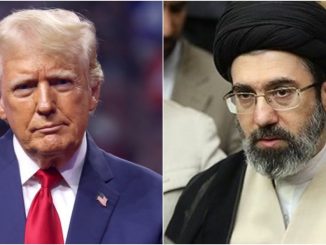
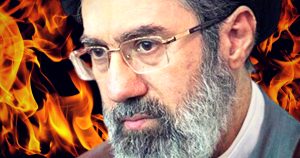
Tehran — The world is watching Iran’s new supreme leader, Mojtaba Khamenei, but there’s one major problem: no one has actually seen him.
The mysterious cleric — reportedly injured in recent strikes — has now issued his first message to the world, warning that the vital oil chokepoint known as the Strait of Hormuz will remain closed until the war ends, sending shockwaves through global energy markets.
Yet the statement, read on Iranian state television rather than delivered in person, has only deepened speculation that the man now leading the Islamic Republic may be seriously wounded — or unable to appear publicly at all.
A Supreme Leader No One Has Seen
Since taking power following the death of his father, Ali Khamenei, the younger Khamenei has remained conspicuously absent from public view.
Rumors circulating among international intelligence circles suggest the cleric may have been injured during recent military strikes targeting Iranian leadership compounds, possibly suffering fractures and other trauma.
Some unconfirmed reports even claim he is receiving intensive medical treatment after a devastating attack that struck facilities connected to the ruling elite in Tehran.
Iranian officials have dismissed those reports as enemy propaganda, insisting the new leader is fully in charge of the country’s wartime decisions.
But the fact remains: his first address was delivered by proxy, not by the man himself.

Ayatollah Ali Khamenei’s son, Mojtaba Khamenei, has lost a leg and is in a coma, a report has claimed
Threat to the World’s Oil Lifeline
In the statement attributed to him, Khamenei declared that Iran would continue fighting and maintain pressure on its adversaries by keeping the Strait of Hormuz shut.
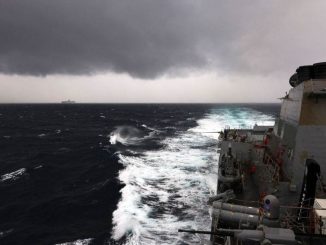
The narrow waterway is one of the most critical shipping lanes on Earth, with roughly one-fifth of the world’s oil supply normally passing through it.
If the closure continues, analysts warn it could trigger a massive shock to global energy markets, driving fuel prices higher across Europe, Asia, and the United States.
Shipping companies have already begun rerouting tankers, while insurance rates for vessels traveling through the Persian Gulf have skyrocketed.
Power Behind the Throne?
The mystery surrounding Khamenei’s condition has fueled speculation that real power may lie elsewhere inside Iran’s power structure.
Many experts believe the Islamic Revolutionary Guard Corps — the country’s powerful military and intelligence network — could effectively be running wartime operations regardless of the supreme leader’s personal health.
Iran’s political system was designed to function even during moments of leadership crisis, meaning the regime can continue issuing orders, launching attacks, and directing military strategy even if the leader himself remains unseen.
End-Times Ideology Raises Concerns
Reports about Khamenei’s worldview have also raised concerns among Western analysts.
Some observers claim the cleric holds deeply apocalyptic beliefs connected to Shiite Islamic prophecies about the return of the Mahdi — a messianic figure in Islmic tradition.
Critics warn that such beliefs could influence Iran’s wartime rhetoric and decision-making during one of the most dangerous confrontations in the Middle East in decades.
A War That Could Reshape the Region
As missile exchanges, drone attacks, and naval confrontations escalate across the Gulf, the appearance of a hidden supreme leader issuing threats from behind the scenes has only added another layer of uncertainty to the conflict.
For now, the world is left with a strange reality:
Iran’s most powerful man is making decisions that could reshape the global economy and the future of the Middle East — while remaining completely out of sight.
And until Mojtaba Khamenei finally appears in public, the question echoing through diplomatic and intelligence circles will remain the same:
Who is really running Iran?
 Implications : What Iran’s Hidden Leadership Crisis Could Mean for the World
The emergence of Mojtaba Khamenei as Iran’s new supreme leader—while remaining unseen—raises serious questions about stability inside the Islamic Republic and the direction of the current conflict.
Even as Tehran insists the leadership transition is under control, the unusual situation of a leader issuing statements without appearing publicly has sparked concerns among analysts about who is truly making decisions at the highest level.
A Regime Built to Survive Crisis
Iran’s political system was intentionally designed to survive moments of uncertainty at the top. Institutions such as the powerful Islamic Revolutionary Guard Corps control major aspects of the country’s military strategy, intelligence operations, and economic networks.
That structure allows the government to continue operating even if the supreme leader is injured, isolated, or unable to appear publicly. In practice, this means decisions affecting global security can still move forward quickly—even without clear public leadership.
For critics of the regime, this reinforces a long-standing concern: the system places enormous power in unelected institutions that are largely insulated from outside pressure.
Global Energy at Risk
The threat to keep the Strait of Hormuz closed could have far-reaching consequences for the global economy.
The narrow waterway carries roughly one-fifth of the world’s oil supply, making it one of the most strategically important energy routes on the planet. If disruptions continue, fuel prices could rise sharply, placing pressure on households, transportation systems, and industries across multiple continents.
For many governments, the crisis highlights the dangers of relying too heavily on unstable regions for critical energy supplies.
A Reminder of the Stakes in the Middle East
The growing confrontation with Iran underscores broader concerns about regional security and the influence of governments that openly challenge Western interests and allies.
Critics argue that Tehran’s strategy—using maritime pressure, proxy forces, and threats against shipping routes—demonstrates how geopolitical rivals can leverage global trade vulnerabilities.
Supporters of a tougher foreign policy say the situation illustrates the importance of maintaining strong alliances, credible deterrence, and military readiness in volatile regions.
The Question of Transparency
Another issue raised by the current situation is transparency. When a country’s top leader remains unseen while issuing major geopolitical threats, it creates uncertainty not only for foreign governments but also for global markets.
Investors, diplomats, and military planners typically rely on clear signals from national leadership. The absence of visible leadership in Iran adds an unpredictable element to an already dangerous situation.
 Overall Takeaway:
SOURCES: THE GATEWAY PUNDIT – THE INVISIBLE AYATOLLAH: Mojtaba Khamenei Still Nowhere To Be Seen, as Reports Suggest He Has ‘Lost a Leg’ and Is ‘In a Coma’
WRIC – Iran’s new leader issues first statement: Strait of Hormuz must remain closed until war ends
THE INDEPENDENT – New report reveals condition of Iran’s wounded new supreme leader