Published March 21, 2025
Iran has reported that its major uranium enrichment complex at Natanz was struck again in an airstrike, marking a new development in the ongoing conflict involving the United States, Israel, and Tehran. The attack comes as the wider war in the Middle East carries into its fourth week, with major strategic implications for nuclear tensions and regional stability.
Iran Reports Strike on Natanz Facility
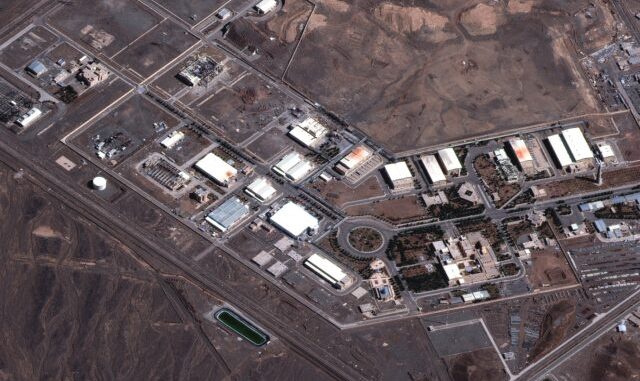
Iran’s state-linked media and officials said that the Natanz nuclear enrichment facility — one of the Islamic Republic’s most important sites for uranium enrichment — was hit in an air attack, which Tehran attributed to U.S. and Israeli forces. Iranian outlets reported that no radioactive leak or risk to nearby civilians was reported as a result of the strike.
The facility, located roughly 220 kilometers south of Tehran, has been a focal point of international concern due to its role in centrifuge-based uranium enrichment activities. Previous strikes in recent months have already drawn global attention to its strategic significance.
Regional Conflict Context
The reported attack on Natanz is unfolding as the broader conflict continues to escalate. U.S. and Israeli military pressure on Iran has intensified after earlier retaliations and strikes on Iranian infrastructure, including oil and gas targets. President Donald Trump has publicly discussed the possibility of “winding down” some U.S. military operations even as additional forces are deployed to the region to deter further escalation.
Meanwhile, Iran has responded with missile and drone attacks against U.S. and allied targets, fueling concerns that the conflict could widen further. The disruption of vital shipping lanes such as the Strait of Hormuz has also impacted global energy markets.
![A general view shows the Iranian nuclear power plant of Natanz, 270 kms south of Tehran, 30 March 2005. [Getty Images]](https://i0.wp.com/www.middleeastmonitor.com/wp-content/uploads/2021/04/GettyImages-52496519-e1618484365460.jpg?fit=920%2C613&ssl=1)
A general view shows the Iranian nuclear power plant of Natanz, 270 kms south of Tehran, 30 March 2005. [Getty Images]
Global and Diplomatic Reactions
International reactions to the new strike are beginning to emerge. Countries around the world have expressed alarm over attacks on nuclear infrastructure, while some have urged restraint on all sides to prevent further escalation and potential nuclear risks. Russia, for instance, condemned the reported strike as a violation of international law in related reporting.
Nuclear watchdogs have traditionally monitored Iran’s facilities for compliance with international agreements, but the fog of war complicates independent verification of operational status or damage beyond official claims from Tehran.
The Stakes at Natanz
Natanz is one of Iran’s most significant nuclear sites, containing vast numbers of centrifuges used in the uranium enrichment process. Targeting such a facility represents a major escalation in pressures on Tehran’s nuclear infrastructure, which Western and allied governments characterize as potential precursors to a weapons program — allegations Iran denies, insisting its program is for peaceful purposes.
 Public / Political Reactions:
The reported airstrike on Iran’s Natanz nuclear enrichment facility has sparked a range of reactions internationally, both from governments and public observers.
United States
Senior U.S. officials have not officially confirmed involvement, emphasizing that any operational decisions are classified and that the goal remains preventing Iran from advancing toward nuclear weapons. In Congress, some lawmakers expressed cautious support for maintaining U.S. deterrence, while urging transparency and consultation before any escalation.
Israel
Israeli officials have avoided direct public acknowledgment of the strike but continue to frame Iran’s nuclear program as an existential threat. Israel’s position underscores the strategic partnership with the U.S. in countering Iran’s nuclear ambitions.
Iran
Iranian authorities condemned the strike as a “flagrant act of aggression,” promising retaliation against those responsible. Public sentiment within Iran, as reported by state media, shows strong nationalist backlash, framing the attack as part of a broader campaign to undermine Iranian sovereignty.
Europe
European governments expressed concern over attacks on nuclear facilities, stressing the need for restraint to prevent further escalation. The European Union urged all parties to respect international law and pursue diplomatic channels while condemning violence targeting civilian-adjacent infrastructure.
Global Public and Analysts
Analysts note that the strike may raise public anxiety about nuclear safety and the possibility of broader regional conflict. Some commentators highlight that preemptive strikes on nuclear infrastructure can be seen as a double-edged sword: they may delay a nuclear program but also risk inflaming tensions with long-term consequences.
 Resulting Effects: Strength, Deterrence, and Regional Stability
The strike on Iran’s Natanz nuclear enrichment facility carries immediate and long-term implications for U.S. strategy, regional security, and global geopolitics.
1. Slowing Iran’s Nuclear Progress
Targeting Natanz directly disrupts Iran’s uranium enrichment capabilities, delaying any potential nuclear weapons development. This reinforces the principle that credible action, rather than mere diplomacy, can shape adversaries’ behavior and timelines.
2. Reaffirming U.S. Strategic Credibility
Demonstrating the ability and willingness to act decisively strengthens U.S. deterrence. Adversaries are reminded that critical red lines — especially regarding nuclear proliferation — will be enforced, which reduces the likelihood of further aggressive actions.
3. Pressure on Allies and Adversaries
The strike signals to both allies and rivals that the U.S. maintains operational superiority in the region. Allies are encouraged to support stabilization efforts, while adversaries must weigh the consequences of escalation carefully.
4. Energy and Economic Considerations
Attacks on key nuclear facilities may exacerbate regional instability, including disruptions to the Strait of Hormuz and global energy markets. However, these are calculated risks weighed against the far greater danger of allowing nuclear proliferation unchecked.
5. Encouraging Diplomatic Engagement from a Position of Strength
By showing resolve, the U.S. positions itself to negotiate or de-escalate from a position of authority. Adversaries are more likely to engage diplomatically when they recognize that military options are credible and enforceable.
 Future Outlook: Preparedness and Deterrence in a Volatile Region
The recent strike on Iran’s Natanz nuclear enrichment facility signals a critical turning point in the broader Middle East conflict. Looking forward, several key dynamics are likely to shape the strategic environment:
1. Continued Pressure on Iran’s Nuclear Program
The disruption at Natanz will slow Iran’s enrichment capabilities, but sustained vigilance will be necessary to prevent reconstruction or relocation of sensitive operations. Military readiness, combined with intelligence monitoring, will remain central to preventing nuclear proliferation.
2. Strategic Deterrence and Credible Threats
Future stability will depend on maintaining a credible deterrent. Visible military capability and the willingness to enforce red lines ensure that Iran and other regional actors understand the consequences of escalation.
3. Regional Alliances and Responsibilities
The strike emphasizes the importance of allies contributing to regional security. Cooperation on intelligence sharing, naval and air operations, and diplomatic coordination will likely increase, strengthening the collective ability to prevent further conflict.
4. Economic and Energy Stability
The potential for disruption to shipping lanes, particularly the Strait of Hormuz, remains a concern. Mitigating these risks will require strategic planning and rapid-response capabilities to protect global energy supplies while maintaining pressure on adversaries.
5. Diplomatic Channels from a Position of Strength
The U.S. and allied nations are positioned to pursue diplomatic solutions from a posture of strength. Maintaining credible deterrence increases the likelihood that adversaries will engage in negotiations rather than escalate militarily.
 Bottom Line: Strength and Preparedness Ensure Security
The airstrike on Iran’s Natanz nuclear enrichment facility underscores the importance of decisive action and strategic foresight. By disrupting critical nuclear infrastructure, the United States and its allies demonstrate that threats will be met with capability, resolve, and careful planning.
Security and stability in the region are not maintained by hesitation or passive diplomacy alone. Credible deterrence, sustained readiness, and the ability to act decisively shape adversaries’ calculations and reduce the likelihood of further escalation.
Looking ahead, maintaining pressure while coordinating with allies ensures that the threat of nuclear proliferation is minimized. Preparedness today safeguards long-term peace, protects vital interests, and positions the United States to respond effectively to emerging challenges in an increasingly volatile region.