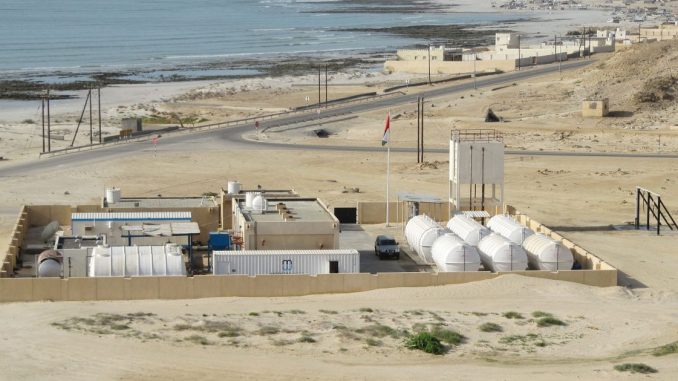
Modern Water’s containerised forward osmosis desalination plant, located at Al Khaluf in Oman.
Published March 23, 2026
Tensions in the Middle East are rapidly intensifying as Iran issues a stark warning: any major attack on its infrastructure could trigger devastating retaliation targeting the region’s water and energy systems.
According to multiple reports, Iranian officials have threatened to strike desalination plants and critical utilities across the Gulf—facilities that millions depend on for drinking water.
A Dangerous Escalation
The warning comes after the United States signaled possible military action against Iran’s power grid. In response, Tehran made it clear that it would not hold back.
Iranian leaders warned they could destroy key infrastructure across the Middle East, including systems responsible for producing fresh water.
This is especially alarming because many Gulf countries rely heavily on desalination plants—facilities that convert seawater into drinkable water. Without them, large populations could face immediate shortages.
A Reuters report confirmed that Iran specifically threatened energy and water infrastructure in neighboring countries if its own systems are attacked.
Why Water Is a Critical Target
Water infrastructure has emerged as a vulnerable and strategic target in the ongoing conflict.
- Desalination plants supply drinking water to millions
- Many are located along coastlines within missile range
- Damage could disrupt entire cities within days
Experts warn that even limited strikes on these facilities could create a regional humanitarian crisis.
Recent incidents already show how fragile the system is. Earlier in March, attacks on desalination facilities reportedly disrupted water supply to dozens of communities.
A Region on Edge
The threats are unfolding amid a broader war involving Iran, the United States, and Israel. The conflict has already seen:
- Missile and drone strikes across multiple countries
- Attacks on oil and gas infrastructure
- Disruptions to global energy supply routes
The Strait of Hormuz, a key global oil passage, has also been heavily impacted, with shipping traffic drastically reduced and oil prices surging.
Global Implications
The potential targeting of water systems raises the stakes far beyond military confrontation.
Analysts warn that:
- Millions could lose access to drinking water
- Energy markets could face further shocks
- The crisis could spill into a broader humanitarian emergency
A U.N.-linked expert even warned that desalination plants could be hit “within days,” signaling how quickly the situation could deteriorate.
🧩 The Core Analysis:
Iran’s threat to cripple water infrastructure across the Middle East represents a calculated escalation that goes far beyond traditional military posturing. By targeting desalination plants—facilities that sustain daily life in countries like Saudi Arabia and United Arab Emirates—Tehran is signaling a willingness to strike directly at civilian survival systems rather than limiting conflict to military targets.
Key Points:
- Civilian infrastructure is now a primary target
Iran’s focus on water systems shows a shift toward high-impact, non-military targets. - Desalination dependence creates vulnerability
Gulf nations rely heavily on manufactured water, making disruptions immediately dangerous. - Leverage through essential resources
Water is being used as a pressure point to deter or respond to foreign attacks. - Asymmetric warfare strategy
Iran avoids direct confrontation with stronger forces like the United States and Israel by targeting weak points.
🔗 The Synthesis:
The broader picture reveals a dangerous evolution in how conflicts are fought—where disrupting civilian life becomes a central tactic rather than a side effect.
Key Points:
- Normalization of targeting civilian systems
Essential services like water and energy are no longer off-limits in geopolitical conflicts. - Weakening deterrence globally
Open threats of mass disruption suggest declining fear of retaliation or consequences. - Dependency equals strategic risk
Centralized infrastructure systems, while efficient, are highly exposed to attack. - Global economic consequences are inevitable
Instability near the Strait of Hormuz could disrupt oil flows and impact worldwide markets.
🏁 The Final Word:
Iran’s threat to strike water infrastructure marks a dangerous turning point in the conflict. Unlike traditional military targets, these systems are essential for civilian survival.
If carried out, such attacks could trigger mass disruption across the Middle East, affecting not just regional stability—but global markets and humanitarian conditions as well.
SOURCES: THE GATEWAY PUNDIT – Iran Threatens to Wipe Out Middle East Water Supply Including Desalination Plants After President Trump Issues Brutal 48-Hour Ultimatum
FOX NEWS – Iran threatens mass ‘water war’ with strikes on key plants in days, UN official warns