Published March 23, 2026
The possibility of a broader regional conflict in the Middle East is intensifying as Iran-backed Houthi forces in Yemen signal they may soon enter the ongoing war involving United States and Israel. According to multiple regional reports, the Houthis are actively assessing their next move while increasing readiness, raising concerns that the conflict could expand beyond its current scope.
Officials and analysts cited in reports from The Jerusalem Post indicate that the group has begun making preemptive military preparations, including repositioning forces and strengthening operational capabilities. These developments suggest that the Houthis are not acting spontaneously but are instead preparing for a coordinated escalation that could align with broader regional dynamics.
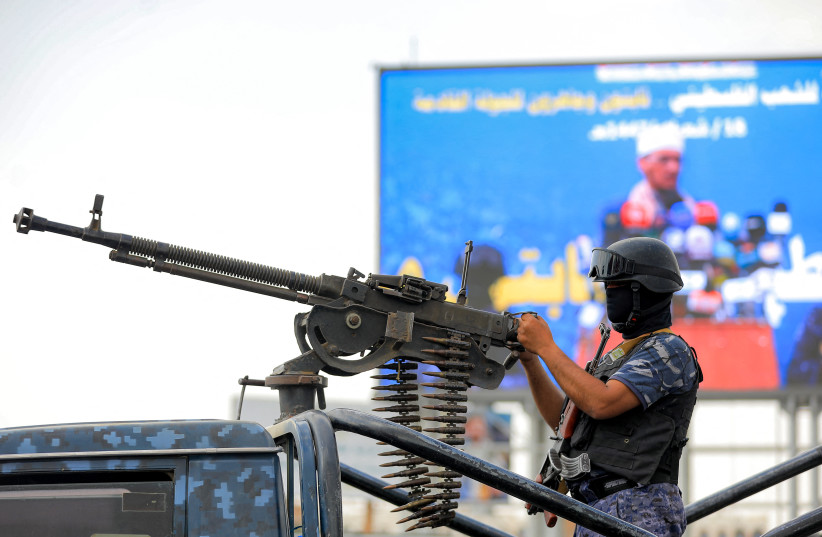
A member of security forces loyal to Yemen’s Houthis mans a turret while on guard during an anti-Israel and pro-Palestinian rally in the Houthi-held capital Sanaa on February 6, 2026. (credit: Ahmed Mohammed / AFP via Getty Images)
At the same time, reporting from Anadolu Agency highlights that the Houthis may join the conflict in coordination with Iran and its regional allies. The group, which has previously launched missile and drone attacks targeting both land and maritime assets, has remained relatively restrained in recent weeks, a move some observers interpret as a deliberate pause ahead of a larger strategic decision.
Meanwhile, coverage from The Gateway Pundit points to growing concerns that the Houthis are “poised” to escalate, particularly as tensions between Iran and its adversaries continue to rise. Their potential involvement could open a new front in the conflict, particularly in and around the Red Sea—a critical corridor for global shipping and energy transport.
The Houthis have already demonstrated their capability to disrupt international maritime routes in past confrontations, targeting vessels and threatening passage through key waterways. Any renewed or expanded operations could once again place pressure on shipping lanes, commercial vessels, and naval forces operating in the region.
As military activity and rhetoric continue to intensify across multiple fronts, the situation remains fluid, with regional observers closely watching whether the Houthis will formally enter the conflict in the coming days.
🧩 The Core Analysis:
The growing likelihood of Houthi involvement reflects a coordinated pressure strategy aligned with Iran’s broader regional objectives. While the group has so far held back from full-scale engagement, signs suggest that restraint may be temporary.
Key Points:
- Houthis are preparing for possible entry into the war
Reports indicate “preemptive moves” and military positioning ahead of a potential escalation. - Pressure from Iran and allies is increasing
Iran and Hezbollah are reportedly pushing the Houthis to formally join the fight against U.S. and Israeli forces. - Strategic delay suggests calculated timing
The Houthis have “kept their powder dry,” indicating they are waiting for the most impactful moment to act. - Potential targets include shipping and naval routes
Analysts warn that involvement could mean attacks on ships or blockades affecting U.S. and Israeli-linked vessels.
🔗 The Synthesis:
Taken together, these developments point to a broader and more dangerous reality: the conflict is no longer contained and is steadily transforming into a multi-front regional war.
Key Points:
- A new front could open in the Red Sea
Houthi involvement would extend the battlefield beyond Iran and Israel into critical maritime zones. - Global trade routes are increasingly at risk
Any disruption in key waterways could impact oil shipments and international supply chains. - The conflict is evolving into coordinated proxy warfare
Iran’s allied groups are being positioned to apply pressure across multiple regions simultaneously. - Efforts are underway to prevent escalation—but may fail
Officials are reportedly trying to avoid provoking the Houthis, recognizing the consequences if they join.
🏁 The Final Word:
The potential involvement of the Houthis in the Iran-led conflict marks a significant escalation with serious regional and global implications. Their entry would not only open a new front in Yemen but also extend the battlefield to strategic waterways like the Red Sea, placing international shipping, energy routes, and neighboring countries at heightened risk.
This development underscores the evolving nature of modern conflicts, where proxy forces and regional allies can dramatically shift the balance of power. The situation highlights the urgent need for vigilance, preparedness, and clear strategic responses to prevent the conflict from spiraling further.
Without decisive action and coordinated deterrence, what begins as a regional confrontation could quickly become a broader crisis with consequences that reach far beyond the Middle East, affecting global trade, energy stability, and international security.
SOURCES: THE GATEWAY PUNDIT – Iranian-Backed Houthis Poised to Join War Against U.S. and Israel as Early as Monday
THE JERUSALEM POST – Houthis making preemptive ‘moves’ in case of war, UAE media says
ANADOLU AJANSI – Houthis may join Iran in US-Israeli war Monday: Israeli report