Published May 6, 2026
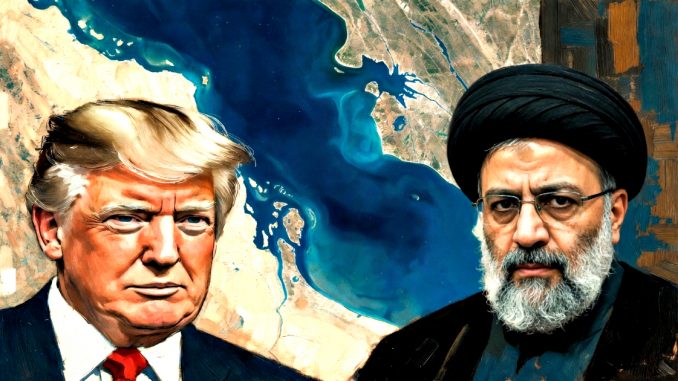
WASHINGTON, D.C. — After more than two months of escalating conflict, the United States and Iran now appear to be on the brink of a major breakthrough—one that could bring a sudden end to a war that has rattled global markets, strained military resources, and raised fears of a wider Middle East crisis.
According to multiple reports, officials on both sides are closing in on a framework agreement that would halt hostilities and open the door to broader negotiations.
A Deal Within Reach
Sources involved in the talks say a one-page memorandum of understanding is being finalized, with mediation led by Pakistan.
The proposed deal would:
- End active fighting
- Reopen the critical Strait of Hormuz
- Launch a 30-day negotiation window for a more detailed agreement
- Begin discussions on Iran’s nuclear program and sanctions relief.
President Donald Trump signaled optimism, even pausing a key naval operation—“Project Freedom”—to give diplomacy a chance.
Still, the administration has made it clear: if talks fail, military options remain on the table.

An Iranian woman walks past a mural on the street of Tehran, Iran, on May 6, 2026.
War at a Breaking Point
The conflict, now entering its 67th day, has already taken a toll:
- Vital oil routes were disrupted, choking global supply
- Civilian casualties and stranded ships mounted
- Energy prices surged, fueling economic uncertainty.
At its peak, the Strait of Hormuz—through which a large portion of the world’s oil flows—was effectively shut down, triggering worldwide concern.
Now, with peace talks advancing, oil prices are dropping and global markets are rallying—clear signs that investors see a possible end in sight.
Major Gaps Remain
Despite the progress, serious sticking points remain unresolved.
Notably absent from the current framework:
- Iran’s missile program
- Its support for regional proxy groups
- Full transparency on near weapons-grade uranium stockpiles.
Iran, for its part, is reportedly pushing for:
- Broad sanctions relief
- Control over shipping access terms
- Recognition of its nuclear capabilities
In short, both sides are negotiating—but neither appears ready to give up core demands.

A man holds an Iranian flag and a picture of the new Supreme Leader Mojtaba Khamenei in Tehran, Iran
Strategic Shift—or Temporary Pause?
Critics argue the sudden pivot to diplomacy raises questions about long-term strategy.
After weeks of military action, including strikes and naval deployments, the U.S. is now signaling restraint—prompting concerns about whether Iran is being given leverage without making firm concessions.
At the same time, officials insist the military campaign achieved its objectives and forced Tehran to the negotiating table.
🔍 Critical View:
There’s growing concern that this deal may be moving too fast without locking in the hard guarantees that actually prevent future conflict. On paper, stopping the fighting sounds like a win—but critics point out that ending a war is not the same as solving the problem that caused it.
1. Nuclear Program (The Core Issue)
This is the heart of the entire conflict. Iran insists its nuclear program is for civilian use, but critics worry about how close it could get to weapons-grade capability.
What’s at stake: Uranium enrichment levels, centrifuge capacity, and stockpile size
Why it matters: The closer enrichment gets to weapons-grade (around 90%), the shorter the “breakout time” to build a bomb
Risk: A deal that freezes—but doesn’t roll back—progress could leave Iran just steps away from nuclear capability
In simple terms: If the ceiling is too high, the risk never really goes away.
2. Sanctions Relief (Leverage vs. Incentive)
Sanctions have crippled parts of Iran’s economy and are a major reason Tehran came to the table.
What’s at stake: Oil exports, banking access, and frozen assets
Why it matters: Sanctions are the main bargaining chip of the U.S.
Risk: If lifted too early, Iran gains economic strength without making lasting concessions
Think of it like negotiating a deal: if you pay upfront before the job is done, you lose leverage.
3. Missile Development (The Missing Piece)
Iran’s ballistic missile program is one of the biggest military concerns—and it’s often left out of nuclear-focused talks.
What’s at stake: Long-range missile capability
Why it matters: Missiles are the delivery system for potential warheads
Risk: Even with nuclear limits, missile growth could continue unchecked
Bottom line: Limiting the engine but ignoring the delivery system leaves a gap.
4. Regional Influence & Proxy Groups (Wider Impact)
Iran has influence across the Middle East through allied militias and groups in countries like Iraq, Syria, Lebanon, and Yemen.
What’s at stake: Regional stability and security
Why it matters: These groups can carry out attacks without direct Iranian involvement
Risk: A deal that ignores this allows indirect conflict to continue
In everyday terms: You may stop direct fighting, but the conflict keeps going through others.
5. Verification & Enforcement (Trust but Verify)
Even the strongest deal means little without strict monitoring.
What’s at stake: Inspection access, monitoring technology, compliance rules
Why it matters: Past agreements have faced accusations of violations
Risk: Weak inspection systems = delayed detection of violations
Key question: If rules are broken, who enforces consequences—and how fast?
6. Strait of Hormuz & Energy Security (Global Ripple Effect)
This narrow waterway handles a huge portion of the world’s oil shipments.
What’s at stake: Global oil supply and shipping safety.
Why it matters: Even small disruptions can spike fuel prices worldwide
Risk: Temporary reopening without long-term guarantees could lead to repeat crises
Put simply: If this chokepoint isn’t secured long-term, the world economy stays vulnerable.
7. Military Pressure vs. Diplomacy (Timing Matters)
The shift from active conflict to negotiation raises questions about strategy.
What’s at stake: Whether pressure forced meaningful concessions
Why it matters: Negotiations tend to favor whoever has stronger leverage
Risk: Moving to talks too soon could reduce pressure before goals are achieved
Analogy: If you walk away from a strong position too early, you may settle for less.
8. Short-Term Ceasefire vs. Long-Term Solution
Stopping the war is urgent—but preventing the next one is harder.
What’s at stake: Lasting peace vs. temporary pause
Why it matters: Many past agreements have collapsed over time
Risk: A quick deal may reduce immediate tension but fail to address root causes
Reality check: A ceasefire ends the noise—but not always the problem.
9. Political Trust & History (The Hidden Factor)
There’s a long history of broken agreements, mistrust, and shifting leadership on both sides.
What’s at stake: Whether either side believes the other will follow through
Why it matters: Deals depend on long-term commitment, not just signatures
Risk: Changes in leadership or policy could unravel the agreement
In simple terms: Even a good deal can fail if neither side truly trusts it.
👥 On the Ground:
In the region, the shift from open conflict to possible ceasefire is already being felt—but uncertainty still hangs in the air.
1. Shipping Safety & Movement (Fragile Recovery)
Traffic near the Strait of Hormuz is picking up, but it’s far from normal.
What’s happening: Tankers and cargo ships are moving again, often in tighter formations or with added security
Ground reality: Crews are under strict protocols—reduced speeds, constant monitoring, and contingency routes
Lingering risk: Even rumors of threats can cause delays or cancellations
For sailors and shipping companies, it’s not business as usual—it’s business under caution.
2. Fuel Prices & Supply Chains (Ripple Effects)
The conflict disrupted oil flow, and the aftershocks are still being felt.
What’s happening: Supply is slowly stabilizing, but pricing remains volatile
Ground reality: Transport costs—fuel for trucks, fishing boats, and delivery vehicles—are still fluctuating
Wider impact: Food prices, public transport fares, and electricity costs can rise quickly when fuel shifts
For ordinary households, this shows up as higher daily expenses, not just abstract global prices.
3. Military Presence & Readiness (Tension Beneath Calm)
Even with diplomacy underway, the military footprint hasn’t disappeared.
What’s happening: Naval fleets and air assets remain positioned across the region
Ground reality: Patrols continue, and rules of engagement stay tight
Flashpoint risk: A misunderstanding—like a warning shot or misidentified vessel—could escalate quickly
So while headlines talk about peace talks, soldiers are still operating as if conflict could resume at any moment.
4. Civilian Life & Safety (Cautious Normalcy)
For civilians, daily life is slowly returning—but with hesitation.
What’s happening: Some businesses are reopening, and travel restrictions are easing
Ground reality: Families remain alert, with some still displaced or avoiding high-risk areas
Emotional toll: Anxiety and uncertainty linger, especially in communities closest to strategic zones
In simple terms: people are moving forward—but not fully relaxed.
5. Business & Trade Disruptions (Unstable Environment)
Companies—local and international—are navigating a shaky recovery.
What’s happening: Ports are reopening and shipments resuming
Ground reality: Insurance costs for shipping remain high, and delivery timelines are unreliable
Longer-term concern: Investors and traders are hesitant to fully commit until stability is proven
For businesses, uncertainty means higher costs, slower growth, and cautious decision-making.
6. Proxy Activity & Indirect Conflict (Conflict in the Shadows)
Even if direct clashes slow, indirect tensions may continue.
What’s happening: Activity from regional armed groups hasn’t clearly stopped
Ground reality: Smaller-scale incidents or threats may continue outside the spotlight
Strategic concern: Conflict could shift form rather than truly end
This creates a situation where peace exists on paper—but not always in practice.
7. Trust in the Ceasefire (Wait-and-See Mindset)
Confidence in any agreement remains low among people on the ground.
What’s happening: Announcements of progress are being met with cautious optimism
Ground reality: Many are preparing for both outcomes—peace or renewed conflict
Historical factor: Past agreements have collapsed, making people skeptical
The overall mood: hopeful, but not convinced.
8. Humanitarian & Worker Conditions (Often Overlooked)
Behind the larger geopolitical story are workers and vulnerable groups.
What’s happening: Seafarers, port workers, and laborers are returning to jobs under pressure
Ground reality: Long hours, safety concerns, and delayed wages in some sectors
Human cost: Stress, fatigue, and risk exposure remain high
These are the people keeping systems running—even while conditions are uncertain.
9. Information Gaps & Rumors (Confusion on the Ground)
Reliable information isn’t always easy to come by.
What’s happening: Conflicting reports about deals and timelines
Ground reality: Locals often rely on word of mouth or partial updates
Risk: Rumors can trigger panic, price spikes, or sudden behavior shifts
In tense environments, uncertainty spreads faster than facts.
🎯 The Final Word:
At the end of the day, a possible deal between the U.S. and Iran may bring a much-needed pause in fighting—but it doesn’t automatically mean the danger has passed. Stopping the shooting is one thing; making sure it doesn’t start again is something else entirely. If the agreement focuses mainly on short-term calm without locking in firm limits on nuclear activity, missile development, and regional influence, then the core tensions remain in place—just temporarily quiet.
There’s also the question of timing and leverage. If pressure is eased too soon through sanctions relief or reduced military posture, it may weaken the ability to push for stronger, longer-lasting terms later. Deals like this often depend not just on what’s promised, but on what can actually be enforced. Without clear consequences for violations and reliable inspections, even a well-written agreement can fall apart when tested.
On the ground, people and businesses are already trying to move forward, but with caution. Shipping lanes are reopening, prices are adjusting, and daily life is inching back—but no one is fully convinced the stability will last. That uncertainty matters, because real recovery depends on confidence, not just temporary calm.
In simple terms, the success of this deal won’t be measured by how quickly it ends the current conflict, but by whether it prevents the next one. If it delivers real accountability and addresses the deeper issues, it could mark a turning point. If not, it risks becoming just another pause in a cycle that repeats—leaving the same problems to resurface under different circumstances.