Published May 6, 2026
A major political controversy is unfolding in Virginia after FBI agents executed court-authorized search warrants at the office of a sitting state Senate leader as part of an ongoing federal corruption investigation, sending shockwaves through state politics and intensifying scrutiny on top Democratic figures.
The raid, which also reportedly included a search of a cannabis-related business tied to the lawmaker, has quickly escalated into a wider debate over political accountability, law enforcement action, and growing tensions inside Virginia’s state government.
FBI Executes Search Warrant in Corruption Investigation
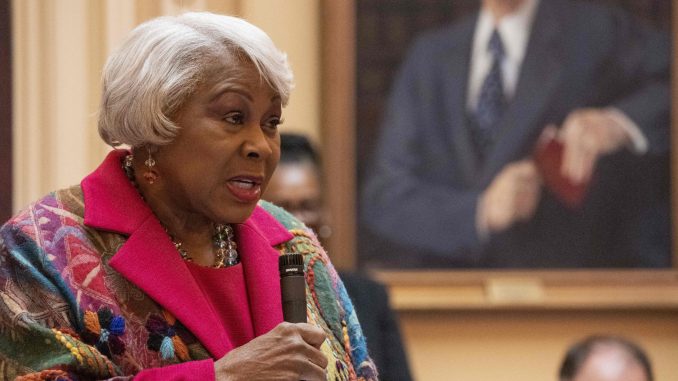
Federal agents carried out the raid at the office of Virginia State Senator L. Louise Lucas in Portsmouth as part of what officials describe as a court-approved corruption probe. The investigation is also reportedly connected to regulatory concerns involving cannabis sales and compliance issues tied to a dispensary under scrutiny.
Lucas, a senior figure in Virginia politics, was present at the scene during the raid and has said she was not informed in advance of the operation. Federal authorities have not publicly detailed the full scope of the investigation, but the search warrants were approved by a federal judge, indicating probable cause had been established.
The FBI, as the nation’s primary federal investigative agency, routinely handles corruption, public integrity, and federal law violations cases across state and local governments.
Political Fallout Hits Virginia Leadership
The raid has immediately triggered political repercussions, with critics and supporters interpreting the move in sharply different ways. Supporters of the investigation argue it reflects the need for stronger enforcement of corruption laws, while allies of the senator are framing it as politically motivated targeting during a highly polarized environment.
Attention is also turning toward Governor Abigail Spanberger, a political ally of Lucas, as opposition figures question whether the investigation could widen to include broader networks of influence within Virginia’s Democratic leadership.
Cannabis Industry Angle Adds Complexity
Part of the investigation is reportedly linked to a cannabis dispensary associated with Lucas, raising additional questions about regulatory compliance in Virginia’s expanding marijuana market. Officials have not confirmed specific allegations, but earlier scrutiny of cannabis operations in the state has focused on labeling standards, licensing rules, and THC content regulations.
This adds a second layer to the probe, combining public corruption concerns with regulatory enforcement issues in a rapidly growing industry.
Rising Tensions in State Politics
The raid comes at a time when Virginia politics is already under heightened national attention due to redistricting battles and shifting party dynamics in the state legislature. Lawmakers from both parties are now weighing in, with some calling for transparency and others warning against drawing conclusions before the investigation is complete.
The incident has also intensified debate over how aggressively federal agencies should intervene in state-level political and regulatory matters, especially when elected officials are involved.
🔍 Critical View:
There is growing concern that the FBI raid on a Virginia Senate leader’s office reflects deeper issues around government accountability, selective enforcement, and political trust in institutions, especially when high-profile officials become the focus of federal investigations.
1. Federal Power and Political Oversight (Scope of enforcement)
A key concern is how federal agencies are using their authority in cases involving elected state officials, particularly when investigations involve sensitive political environments.
What’s at stake: federal investigative power, state-level autonomy, and public corruption enforcement
Why it matters: federal agencies have wide authority, but their actions in political spaces are closely scrutinized for fairness
Risk: perceived overreach can deepen public skepticism toward enforcement institutions
In simple terms: when federal power enters state politics, people question whether it is purely legal—or also political.
2. Timing and Political Impact (Public perception concerns)
Another major issue is how the timing of high-profile raids can influence public opinion before any formal charges or findings are made.
What’s at stake: public trust in due process, reputational impact on officials under investigation
Why it matters: even lawful investigations can shape political narratives early
Risk: individuals may face lasting public judgment before facts are fully established
In simple terms: the announcement alone can affect reputations, even before outcomes are known.
3. Corruption Allegations and Transparency (Trust in leadership)
The investigation has also reignited concerns about public corruption and transparency in state government, particularly in areas involving regulatory industries like cannabis.
What’s at stake: public confidence in elected officials and regulatory oversight
Why it matters: industries with new or complex regulations often attract scrutiny
Risk: unclear boundaries between regulation and politics can fuel suspicion on all sides
In simple terms: when rules are still evolving, even legal activity can become politically sensitive.
👥 On the Ground:
In Virginia, the FBI raid on a state Senate leader’s office has quickly become the dominant political story, with reactions spreading across Richmond and local communities as residents try to understand what the investigation could mean for state leadership and public trust.
Federal presence in state politics (Government accountability concerns)
On the ground, much of the attention is focused on federal involvement in state government affairs, with people debating how far federal agencies should go when investigating elected officials. Some residents see it as necessary oversight, while others question the timing and visibility of such high-profile actions.
Public reaction to corruption allegations (Trust in elected officials)
There is also growing discussion around public corruption concerns and political accountability, especially as the investigation involves a senior state lawmaker. In everyday conversations, voters are expressing frustration that these types of allegations continue to surface in state politics.
Cannabis regulation scrutiny (New industry pressure)
Part of the investigation reportedly involves a cannabis-related business, which has drawn attention to regulatory oversight in Virginia’s expanding marijuana market. On the ground, business owners and local officials are watching closely, noting that rules in the industry are still evolving and can create legal gray areas.
Media attention and early narratives (Public perception impact)
Residents are also noticing how quickly the story is being covered across national and local media, with early reporting shaping public perception before full details are confirmed. This has led to mixed reactions, with some urging caution and others already forming strong opinions.
Political atmosphere in Richmond (Heightened tension)
In Richmond, the overall political atmosphere is described as tense, with lawmakers from both parties reacting to the raid while avoiding firm conclusions. The situation has added pressure to an already divided state political environment, where trust in institutions is a recurring theme in voter conversations.
🎯 The Final Word:
At this point, the FBI raid in Virginia has become more than just a single investigation—it has turned into a wider test of public trust in how corruption cases are handled and how political figures are scrutinized. While officials emphasize that the probe is ongoing and no conclusions should be drawn yet, critics argue that high-profile enforcement actions like this can quickly shape public perception long before all the facts are established. In simple terms, the situation leaves Virginia in a familiar position: waiting for clarity while questions grow about accountability, transparency, and whether the process will ultimately be seen as fair and fully justified once the investigation runs its course.