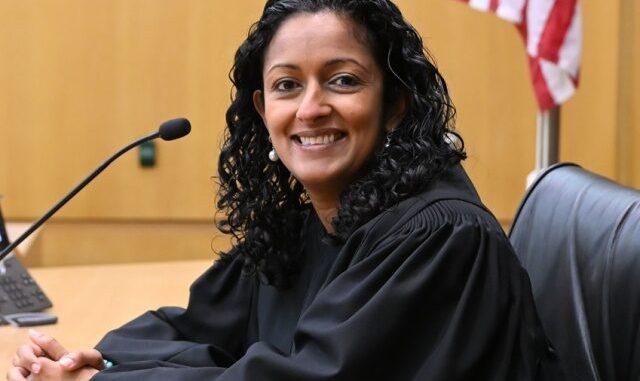
A federal judge, appointed by President Joe Biden, has blocked President Donald Trump’s administration from using an updated verification system, known as the SAVE program, to remove foreign nationals from state voter rolls.
Published June 23, 2026
WASHINGTON — A federal judge on Monday halted the Trump administration’s expanded use of a federal immigration database designed to help states identify noncitizens on voter rolls, marking another legal setback for the administration’s election integrity agenda.
U.S. District Judge Sparkle L. Sooknanan ruled that recent changes to the Department of Homeland Security’s Systematic Alien Verification for Entitlements (SAVE) program violated federal privacy protections and created an unacceptable risk that eligible American citizens could be wrongly removed from voter registration lists.
The ruling immediately prevents federal officials from continuing the expanded use of the system while litigation proceeds.
The Trump administration has argued that modernizing the SAVE database gives election officials a valuable tool to verify citizenship and maintain accurate voter rolls. Administration officials have repeatedly maintained that only U.S. citizens should be registered to vote and that states deserve access to better verification resources.
The ruling immediately prevents federal officials from continuing the expanded use of the system while litigation proceeds.
The Trump administration has argued that modernizing the SAVE database gives election officials a valuable tool to verify citizenship and maintain accurate voter rolls. Administration officials have repeatedly maintained that only U.S. citizens should be registered to vote and that states deserve access to better verification resources.
 A poll worker holds a roll of ‘I voted’ stickers at an El Dorado County polling station during California’s special election on Proposition 50 in El Dorado Hills, California, U.S., November 4, 2025. REUTERS/Fred Greaves/File Photo
Supporters of the initiative say stronger verification measures help reinforce confidence in elections and discourage improper voter registrations.
Judge Sooknanan, however, concluded that the redesigned system collected and shared sensitive personal information—including Social Security data—in ways that exceeded statutory limits. The court also found that database inaccuracies could result in lawful voters, particularly naturalized citizens whose records may not be fully updated, being incorrectly identified as noncitizens.
Voting rights organizations, including the League of Women Voters and privacy advocacy groups, filed the lawsuit challenging the program. They argued that the expanded database threatened both voter privacy and ballot access by increasing the likelihood of erroneous voter roll removals.
The administration defended the SAVE modernization as a lawful effort to assist states with election administration and has indicated it is reviewing the decision and considering its legal options.
The case is the latest chapter in an ongoing national debate over election security, voter eligibility verification, and the proper role of the federal government in state-run elections. Since returning to office, President Donald Trump has pursued several election-related initiatives aimed at strengthening citizenship verification and increasing federal oversight of election administration, many of which have faced legal challenges.
Republican lawmakers have largely supported expanded voter verification efforts, arguing they are necessary safeguards to preserve election integrity.
Democratic officials and voting-rights advocates counter that documented cases of noncitizen voting remain rare and warn that overly broad verification systems risk disenfranchising eligible voters through database errors.
The administration is expected to appeal the ruling, setting the stage for another significant legal battle over the balance between election security measures and voter protections.
🧩 Reading Between the Lines:
What does this ruling really mean?
The judge’s decision does not say that states cannot verify whether someone is eligible to vote. Instead, it says the federal government likely went beyond what the law allows when it expanded access to a database originally created for immigration-related benefit verification.
In simple terms, the court is saying, “You may have a legitimate goal, but you still have to follow the legal rules for how you collect and use people’s information.”
Why did the Trump administration want this system?
The administration argues that voter rolls should contain only eligible U.S. citizens. By allowing election officials to check immigration records more easily, they believe states can identify people who may not be legally allowed to vote and remove ineligible registrations before elections.
Supporters see this as a way to strengthen election integrity and increase public confidence in election results.
Why did opponents challenge it?
Voting rights groups and privacy advocates say immigration databases were never designed to serve as voter registration databases. They argue that records can be incomplete or outdated, especially for naturalized citizens, creating the risk that eligible voters could be mistakenly flagged.
Their concern isn’t only privacy—it’s also preventing lawful voters from being wrongly removed from voter rolls.
What happens next?
The ruling temporarily stops the expanded system while the lawsuit continues. The Trump administration is expected to appeal, meaning higher courts could ultimately decide whether the verification system complies with federal law.
The bigger picture
This case reflects a broader debate that has continued for years:
- How should governments verify voter eligibility?
- How can election officials prevent ineligible voting without making it harder for eligible citizens to vote?
- Where should courts draw the line between election security and individual privacy?
Both sides generally agree that only eligible citizens should vote. The disagreement is over which tools are legally appropriate and how much risk of error is acceptable when trying to verify voter eligibility.
🔗 The Stakes: Why this case matters
This lawsuit is about more than one voter verification system. It could shape how far the federal government can go in helping states verify voter eligibility, how personal data is used in election administration, and how courts balance election security with voter protections.
For election integrity
If higher courts eventually allow the expanded verification system, states could gain another tool to identify people who may not be eligible to vote. Supporters argue this could improve the accuracy of voter rolls and strengthen public confidence that only eligible citizens are participating in elections.
If the ruling stands, the federal government may need to redesign the program or seek new authority from Congress before expanding similar verification efforts.
For eligible voters
Critics of the system worry that errors in government databases could affect lawful voters, particularly naturalized citizens whose immigration records may not always be current. Even if mistakes are uncommon, correcting them can take time and may create confusion during election periods.
The case could influence what safeguards governments must put in place before using personal data to verify voter eligibility.
For privacy and government data
The lawsuit also raises questions about how government agencies share personal information. The court’s ruling suggests that even when agencies pursue legitimate goals, they must stay within the legal limits governing how data is collected, shared, and used.
The outcome could affect future government programs that rely on sharing information across agencies.
For future elections
The final decision may establish legal guidelines for future administrations—regardless of political party—on how citizenship verification systems can be used in elections. It may also influence whether Congress considers new legislation to clarify what tools states can legally use to maintain voter rolls.
🏁 The Final Word:
The court’s ruling pauses one approach to voter verification, but it does not settle the broader debate over election security and voter access. As the case moves through the appeals process, courts will continue to weigh whether the federal government’s methods comply with privacy laws and existing legal authority.
Regardless of the final outcome, the decision is likely to influence how future administrations work with states to verify voter eligibility, how government agencies share personal data, and what safeguards are required to protect both election integrity and the rights of eligible voters. The case underscores a continuing challenge in election policy: finding a balance between maintaining accurate voter rolls and ensuring that lawful voters are not mistakenly affected.
SOURCES: BREITBART News – Biden-Appointed Judge Blocks Trump’s New Verification System to Remove Foreign Nationals from Voter Rolls
REUTERS – Judge blocks Trump’s use of revamped immigration database for voter checks
CENTRAL FLORIDA PUBLIC MEDIA – A federal judge finds a Trump data system to verify voters is unlawful