
Reported by:

Cherry Meigh Timbol
News Content Editor
Published September 27, 2026
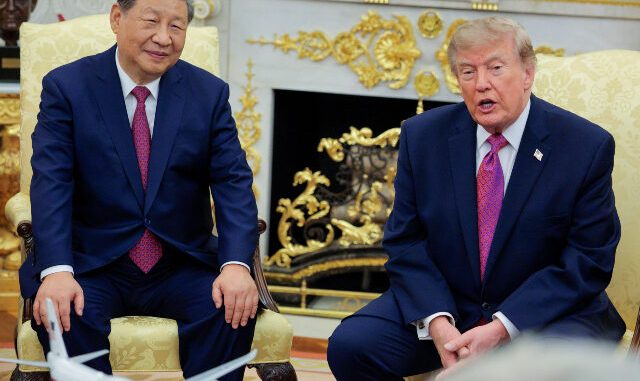
WASHINGTON, D.C. — The United States and China emerged from President Xi Jinping’s three-day state visit with their most significant trade breakthrough in months, agreeing to reduce tariffs on $30 billion worth of goods in each direction, establish a bilateral trade council, and launch formal dialogue on artificial intelligence.
The agreement follows an eight-point consensus reached during meetings between President Donald Trump and President Xi, with both governments aiming to preserve a fragile trade truce while laying the groundwork for a broader long-term economic agreement.
What the agreement includes
According to officials from both countries, the summit produced several major commitments:
- Reciprocal tariff reductions covering $30 billion in non-sensitive goods.
- Creation of a new U.S.–China Trade Council.
- Extension of previous trade understandings reached in Kuala Lumpur.
- Launch of a formal bilateral dialogue on artificial intelligence, including safety and crisis communication.
Rather than eliminating tariffs across the board, the agreement targets selected product categories. American exporters expected to benefit include agriculture, timber, cosmetics, and energy commodities, while Chinese exports gaining tariff relief include consumer goods such as small appliances, toys, and decorative products.
China expands purchases of U.S. coal
One of the summit’s most significant commercial outcomes was Beijing’s commitment to increase purchases of American coal. The White House described the pledge as a boost for U.S. mining communities and energy producers, while Chinese officials framed it as part of a broader effort to expand imports of American industrial and agricultural goods as trade tensions ease.
AI becomes a new area of cooperation
Beyond trade, Washington and Beijing agreed to begin structured discussions on artificial intelligence. The dialogue will focus on managing the risks of advanced AI systems, improving communication during AI-related incidents, and exploring safeguards as the technology develops.
Despite opening the talks, President Trump emphasized that the United States intends to maintain its technological leadership, while China said the discussions are intended to build mutual understanding rather than merge AI development efforts.
Why the summit matters
The United States and China remain deeply interconnected economically despite years of tariffs, export controls, and strategic rivalry. Analysts say the latest agreement represents a confidence-building measure designed to prevent renewed escalation while negotiators continue pursuing a broader trade framework.
Businesses and global markets will now closely watch whether the promised tariff reductions are fully implemented and whether China’s purchasing commitments result in measurable increases in U.S. exports.
🧩 Bottom Line:
The Trump–Xi summit delivered one of the largest bilateral trade breakthroughs of 2026: $30 billion in reciprocal tariff cuts, renewed Chinese purchases of U.S. coal, and the launch of an AI dialogue. While major strategic disagreements remain unresolved, the agreement signals a meaningful pause in trade tensions and creates momentum for future negotiations between the world’s two largest economies.
SOURCES: BREITBART NEWS – Trump-Xi Summit Delivers Tariff Cuts on $30 Billion in Goods, Chinese Commitment to Buy U.S. Coal
REUTERS – China, US agree to AI dialogue, tariff cuts on $30 billion in goods during Xi visit




