
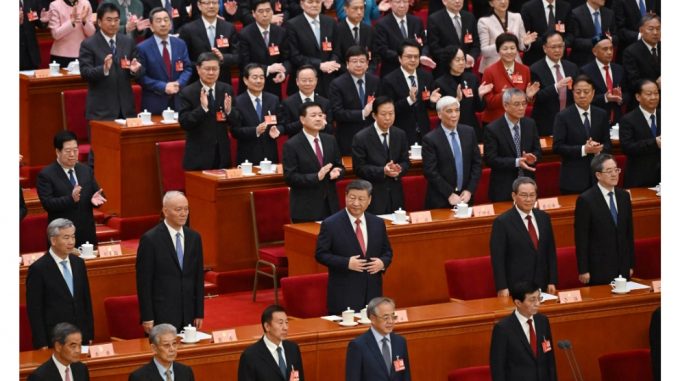
China’s ruling Communist Party’s Politburo emphasized on Thursday the need to full use of existing policies, suggesting that no big-bang easing is in the pipeline. greg baker/
Published July 30 , 2026
BEIJING — China’s top leadership has pledged additional support for the country’s slowing economy but stopped short of unveiling a large-scale stimulus package, signaling that Beijing intends to rely on targeted fiscal measures rather than broad-based spending to stabilize growth.
The announcement followed a meeting of the Communist Party’s Politburo, where officials acknowledged mounting economic pressures while emphasizing the need to accelerate existing infrastructure investments and implement what they described as “incremental” policy measures. The decision disappointed some investors who had anticipated a more aggressive economic rescue package after weaker-than-expected second-quarter growth.
Beijing Chooses Targeted Measures Over Massive Bailout
Instead of launching a sweeping stimulus program, Chinese leaders said they would speed up spending already approved in this year’s budget, particularly on major infrastructure projects and measures aimed at supporting employment and domestic demand.
Officials also pledged to strengthen policies designed to stabilize economic activity while addressing long-term structural challenges, including local government debt, industrial overcapacity, and the prolonged downturn in the property sector.
Economic Growth Continues to Slow
China’s economy expanded by 4.3% in the second quarter, marking its slowest pace of growth in more than three years and falling below Beijing’s annual target range of 4.5% to 5%. Economists have pointed to weak household consumption, sluggish consumer confidence, and the ongoing real estate slowdown as key factors weighing on the recovery.
While exports and advanced manufacturing have continued to provide support, domestic demand has remained subdued, prompting renewed calls from some analysts for stronger measures to stimulate consumer spending.
Factories Show Signs of Losing Momentum
Fresh economic indicators also suggest China’s manufacturing sector remains under pressure. A Reuters survey found that factory activity was expected to stall in July as weaker domestic demand and softening export orders offset gains made earlier in the year.
Manufacturers continue to face challenges from slowing orders, rising competition, and persistent uncertainty surrounding the global economic outlook.
Property Market Remains a Major Challenge
China’s years-long property downturn continues to weigh heavily on the broader economy.
Although authorities have introduced targeted support for the housing market, declining investment, cautious homebuyers, and financial strains facing local governments have limited the pace of recovery. Analysts say resolving problems in the real estate sector remains critical to restoring consumer confidence and sustaining long-term economic growth.
Balancing Stability With Long-Term Reform
Despite slowing growth, Beijing continues to prioritize long-term economic restructuring over large-scale stimulus. Leaders reiterated plans to promote advanced manufacturing, technological innovation, and strategic infrastructure while seeking to boost domestic demand without significantly increasing financial risks.
Economists say the government’s cautious approach reflects concerns about adding to already elevated debt levels while attempting to maintain steady growth in an increasingly uncertain global economy.
👥 Public / Political Reactions:
🇨🇳 Chinese Government
China’s leadership defended its decision to avoid a large-scale economic stimulus package, arguing that targeted support would provide more sustainable growth.
- Officials pledged to accelerate spending on already-approved infrastructure projects.
- Beijing emphasized the need to boost domestic demand while managing financial risks, including local government debt and property market weakness.
- Leaders said incremental policy measures would help stabilize the economy without creating long-term fiscal imbalances.
➡️ Position: Beijing believes targeted, incremental support is a more sustainable strategy than launching a broad economic bailout.
📊 Economists and Market Analysts
Many economists said the Politburo’s announcements fell short of investor expectations.
- Analysts noted the absence of a major stimulus package despite slowing economic growth.
- Some warned that targeted measures alone may not be enough to revive weak consumer spending.
- Others said Beijing still has room to introduce stronger support if economic conditions deteriorate later this year.
➡️ Position: Analysts remain cautiously optimistic but say stronger policy action may be needed if growth continues to weaken.
💹 Financial Markets
Investors reacted cautiously to the government’s latest economic strategy.
- Markets had anticipated a more aggressive stimulus announcement following weaker second-quarter growth.
- Investor attention has shifted to whether Beijing introduces additional fiscal or monetary measures in the coming months.
- Financial institutions continue monitoring consumer demand, manufacturing activity, and the property sector for signs of recovery.
➡️ Position: Investors are waiting for clearer evidence that targeted policies can restore stronger economic momentum.
🏢 Business Community
Businesses welcomed continued government support but expressed concern over weak domestic demand.
- Manufacturers continue facing slowing orders and uneven consumer spending.
- Property-related industries remain under pressure as the real estate downturn persists.
- Many companies are looking for additional measures to strengthen consumer confidence and private investment.
➡️ Position: Businesses support policy stability but hope for stronger measures to stimulate consumption and investment.
🌍 International Community
Global economists and financial institutions are closely watching China’s next economic moves.
- China remains a major driver of global trade and manufacturing.
- Slower Chinese growth could affect commodity demand, exports, and international supply chains.
- International markets continue assessing whether Beijing’s targeted approach will be sufficient to sustain economic growth.
➡️ Position: Global observers say China’s economic performance will continue to have significant implications for worldwide growth and financial markets.
👥 Public Response
Public sentiment remains mixed as households continue dealing with economic uncertainty.
- Consumers remain cautious about spending amid employment concerns and the prolonged property slowdown.
- Many citizens are hoping for policies that directly improve household income and consumer confidence.
- Online discussions have reflected concerns over job opportunities and the pace of the economic recovery.
➡️ Position: Many Chinese consumers are looking for stronger measures that directly support household spending and employment.
🏛️ Broader Political Impact
The Politburo’s decision reflects Beijing’s effort to balance economic support with long-term financial stability.
- Leaders continue prioritizing structural reforms, advanced manufacturing, and technological innovation.
- Policymakers remain cautious about introducing large-scale stimulus that could worsen debt risks.
- The government’s approach signals that long-term economic restructuring remains a higher priority than short-term growth alone.
➡️ Position: China’s leadership is signaling that sustainable, long-term economic reform will take precedence over aggressive short-term stimulus.
⚠️ Resulting Effects:
China’s decision to avoid a large-scale economic stimulus while relying on targeted support measures has significant implications for its domestic economy and the global market. Although Beijing aims to promote sustainable long-term growth, economists warn that continued weakness in consumer demand and the property sector could prolong the country’s economic slowdown.
1. Economic Growth May Remain Under Pressure
China’s cautious policy approach may limit the pace of economic recovery.
📉 Weak consumer spending continues to weigh on domestic demand.
🏭 Slowing industrial activity and soft business investment could restrain growth.
📊 Economists expect policymakers to closely monitor economic indicators in the coming months.
➡️ Result: Limited stimulus → slower economic recovery and continued growth challenges.
2. Investors Remain Cautious
Financial markets reacted with tempered expectations following Beijing’s announcement.
💹 Investors had anticipated a broader stimulus package to boost confidence.
📈 Market attention has shifted to future fiscal and monetary policy decisions.
💰 Investor sentiment may remain volatile if economic data continues to disappoint.
➡️ Result: No major bailout → cautious market sentiment and heightened investor uncertainty.
3. Property Sector Challenges Persist
China’s struggling real estate market remains one of the economy’s biggest risks.
🏘️ Housing investment continues to face downward pressure.
🏦 Local governments remain challenged by declining land-sale revenues.
💼 Property developers continue navigating financial stress despite targeted support measures.
➡️ Result: Continued property weakness → prolonged pressure on economic activity and local finances.
4. Consumer Confidence May Recover Slowly
Households remain cautious despite government efforts to support the economy.
🛒 Consumers continue limiting discretionary spending amid economic uncertainty.
👥 Employment concerns remain a key factor affecting household confidence.
💵 Policymakers may face increasing pressure to introduce measures that directly stimulate consumption.
➡️ Result: Weak consumer confidence → slower recovery in domestic demand.
5. Global Trade and Supply Chains Remain Affected
China’s economic performance continues to influence international markets.
🚢 Slower growth could reduce demand for imported commodities and manufactured goods.
🌍 Export-dependent economies may feel the effects of weaker Chinese consumption.
📦 Global supply chains will continue monitoring China’s manufacturing activity and policy direction.
➡️ Result: China’s slowdown → broader implications for global trade and economic growth.
6. Pressure Builds for Additional Policy Support
Analysts believe Beijing could face growing calls to do more if conditions worsen.
🏛️ Policymakers may consider additional targeted fiscal or monetary measures later this year.
💼 Businesses are seeking stronger policies to encourage investment and hiring.
📋 Future economic data will likely determine whether further intervention becomes necessary.
➡️ Result: Weak economic momentum → increasing expectations for additional government support.
7. Long-Term Reform Remains the Government’s Priority
Despite short-term challenges, Beijing continues emphasizing structural reform.
⚙️ Authorities remain focused on advanced manufacturing, technology, and infrastructure development.
📚 Leaders are seeking sustainable growth while avoiding excessive debt accumulation.
🌱 The government believes gradual reforms will strengthen China’s long-term economic resilience.
➡️ Result: Targeted support over large stimulus → emphasis on long-term stability and structural transformation.
🔮 Future Outlook:
China’s leadership is expected to maintain its cautious economic strategy in the coming months, balancing targeted policy support with long-term structural reforms. While officials remain confident that incremental measures can stabilize growth, economists say upcoming economic data will determine whether Beijing is forced to introduce stronger stimulus to support the world’s second-largest economy.
1. Additional Targeted Support Is Likely
Beijing is expected to continue rolling out selective measures rather than a broad economic bailout.
🏗️ Infrastructure spending is likely to accelerate under previously approved government programs.
💼 Policymakers may introduce additional support for businesses, employment, and domestic consumption.
🏛️ Authorities are expected to fine-tune policies based on economic performance.
➡️ Outlook: Incremental policy measures → continued targeted economic support.
2. A Major Stimulus Package Remains Possible
Although officials have ruled out a large-scale bailout for now, the option remains available.
📉 Weaker-than-expected economic growth could prompt stronger fiscal or monetary intervention.
🏦 China’s central bank may introduce additional liquidity or interest-rate measures if needed.
📊 Future GDP, manufacturing, and consumer spending data will heavily influence policy decisions.
➡️ Outlook: Slowing economy → possibility of broader stimulus if conditions worsen.
3. Property Market Recovery Will Be Closely Watched
The real estate sector is expected to remain one of China’s biggest economic challenges.
🏘️ Additional housing support measures may be introduced to stabilize the market.
💰 Local governments will continue seeking ways to manage debt and declining land-sale revenues.
📈 A sustained recovery in property sales would significantly improve overall economic confidence.
➡️ Outlook: Housing sector → gradual recovery remains uncertain.
4. Consumer Spending Will Be Critical
Beijing is expected to prioritize policies aimed at strengthening domestic demand.
🛒 Consumer confidence will remain a key indicator of economic recovery.
👥 Employment conditions are likely to influence household spending.
💵 Stronger consumption could reduce China’s reliance on exports and investment-driven growth.
➡️ Outlook: Domestic demand → central to achieving sustainable economic growth.
5. Global Markets Will Continue Monitoring China
International investors are expected to closely follow Beijing’s policy decisions.
🌍 China’s economic performance will continue influencing global trade and financial markets.
📦 Commodity exporters and manufacturing partners will monitor Chinese demand for signs of recovery.
💹 Investor confidence may improve if upcoming economic indicators exceed expectations.
➡️ Outlook: China’s recovery → significant implications for the global economy.
6. Structural Reforms Will Remain a Long-Term Priority
Chinese leaders are expected to continue focusing on economic transformation.
⚙️ Investment in advanced manufacturing, artificial intelligence, and high-tech industries is likely to expand.
🔬 Innovation and technological self-reliance will remain central government objectives.
📚 Policymakers are expected to pursue sustainable growth while limiting financial risks.
➡️ Outlook: Long-term reforms → continued emphasis on high-quality economic development.
7. The Pace of Recovery Will Depend on Economic Data
The coming months will be critical in determining whether China’s current strategy succeeds.
📊 GDP growth, retail sales, manufacturing activity, and employment figures will guide future policy.
⚠️ Continued weakness could increase pressure for more aggressive intervention.
🤝 If targeted measures prove effective, Beijing may continue avoiding a large-scale stimulus package.
➡️ Outlook: China’s economic trajectory will depend on whether targeted support can restore confidence and generate stronger, sustainable growth.
🧩 Bottom Line:
China’s decision to avoid a large-scale economic stimulus reflects Beijing’s determination to prioritize long-term financial stability over short-term economic expansion, even as growth slows and pressure mounts on policymakers. While targeted support measures are intended to stabilize key sectors, questions remain over whether they will be enough to restore consumer confidence and revive domestic demand.
📉 Economic growth remains under pressure as weak consumer spending, sluggish manufacturing activity, and the prolonged property downturn continue weighing on the world’s second-largest economy.
🏗️ Beijing’s strategy favors targeted fiscal support, infrastructure investment, and structural reforms rather than launching a broad stimulus package that could increase debt and financial risks.
🌍 Global markets are closely monitoring China’s next policy moves, as the country’s economic performance has major implications for international trade, commodity demand, manufacturing, and supply chains.
📊 Investor confidence will likely depend on upcoming economic data, with GDP growth, retail sales, factory activity, and employment figures expected to determine whether additional government intervention becomes necessary.
➡️ Bottom Line: China’s leadership is betting that gradual, targeted policies can steer the economy toward a more sustainable recovery without resorting to a massive bailout. However, if economic conditions continue to weaken, Beijing may face increasing pressure to adopt stronger measures to support growth, making the coming months critical for both China’s economy and the global financial outlook.
SOURCES: REUTERS – China’s leaders pledge to support economy without big new stimulus plans
FINANCIAL TIMES – Beijing pledges faster spending to support China’s economy
WALL STREET JOURNAL – China Signals Little Appetite for Major Stimulus Despite Growth Headwinds




