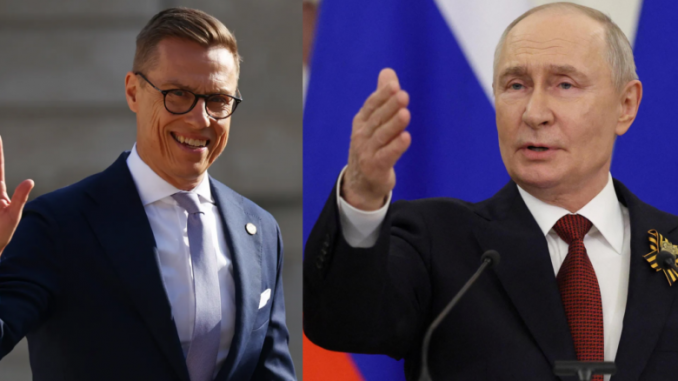
Finnish President Alexander Stubb believes that European states must begin direct talks with Russia, given that the current policy of the United States towards the war in Ukraine no longer corresponds to Europe’s strategic interests.
Published May 11, 2026
Finnish President Alexander Stubb is trying to steady nerves across Europe as discussions grow louder about what could happen if the United States reduces its military presence on the continent. His message is not alarmist—instead, it is focused on calm thinking, practical planning, and a shift in responsibility.
In simple terms, Stubb is telling Europe: stop reacting emotionally to every signal from Washington, and start preparing for a future where Europe may have to carry more of its own defense burden.
“Don’t Panic—Prepare”
Stubb’s core message is that Europe should not treat possible U.S. troop adjustments as a crisis.
Instead, he argues it should be seen as a warning sign to get serious about long-term defense planning.
From his perspective, Europe has spent years relying heavily on the United States for security. That arrangement has worked, especially under NATO, but it also means Europe has not always built enough independent military strength.
Now, with global tensions rising and U.S. foreign policy priorities shifting, he believes Europe needs to be ready for more responsibility.
Europe’s Growing Security Pressure
The timing of his comments matters.
Europe is already dealing with:
- The ongoing war in Ukraine
- Long-term concerns about Russian military pressure
- Rising defense costs across NATO countries
- Political debates over how much to spend on the military
In this environment, even small discussions about U.S. troop reductions can create anxiety.
Some European leaders worry that any pullback by Washington could weaken NATO’s deterrence. Others, like Stubb, are arguing the opposite: that Europe should use this moment to become stronger on its own.
“America Is Still an Ally—But Things Can Change”
Stubb is not suggesting that the United States is abandoning Europe. In fact, he continues to describe America as a critical partner in security and defense.
But he is also realistic about politics in Washington.
His message, in everyday terms, is:
- Governments change
- Priorities shift
- Alliances evolve over time
So Europe should not assume that U.S. military support will always look the same as it does today.
This is not a warning of immediate withdrawal—it is a warning against dependence.
Building a More Self-Reliant Europe
One of the key ideas behind Stubb’s position is the concept of “strategic autonomy,” meaning Europe should be able to defend itself even if U.S. support becomes limited in the future.
That does not mean replacing NATO or cutting ties with the United States. Instead, it means:
- Increasing European defense spending
- Improving military coordination inside Europe
- Strengthening rapid-response capabilities
- Reducing gaps in ammunition, logistics, and readiness
In simple terms, it’s about making sure Europe is not caught off guard.
The Ukraine Factor
The war in Ukraine continues to shape every discussion about European security.
For countries close to Russia—like Finland—the conflict has made defense planning much more urgent. Stubb’s views reflect that reality.
He argues that Europe must be able to respond quickly and independently to threats, even while working closely with NATO and the United States.
Calm Tone, Serious Message
What makes Stubb’s remarks stand out is the tone. He is not calling for panic, emergency measures, or dramatic political shifts.
Instead, he is trying to keep Europe steady while quietly pushing for long-term preparation.
In plain language, his message is:
“Don’t panic about America. Stay calm—but also start preparing for a future where Europe does more on its own.”
🔍 Critical View: Why Some Say Europe Should Stop Relying So Heavily on the U.S. for Security
From a blunt, practical viewpoint, Finland’s President Alexander Stubb is highlighting something many people have been saying for years: Europe cannot keep relying on the United States to carry most of its defense burden.
The idea is simple—if Europe is one of the richest regions in the world, then it should be able to defend itself without depending so heavily on American troops, American money, and American military leadership.
“If It Matters, Pay for It”
Supporters of this view argue that security is not free. If European countries want strong protection, they should invest in it themselves instead of assuming the U.S. will always step in.
From this perspective, NATO has become uneven:
- The U.S. spends far more on defense than most European allies
- American troops are stationed across Europe for decades
- European countries still debate defense spending levels
To critics, this looks like a system where one country does most of the work while others benefit.
Europe Has the Money and the Economy
Another key point is capability.
Europe is not poor or weak. It has major economies, advanced industries, and strong governments. Critics argue that if Europe truly prioritized defense, it could build a much stronger military system without waiting for Washington.
So the argument becomes:
“If Europe says security is important, then it should act like it is important.”
U.S. Should Not Carry the Permanent Load
Many supporters of this view also believe the United States has been in the role of “global security provider” for too long.
They argue that:
- American taxpayers fund overseas military commitments
- U.S. troops are stationed far from home for long periods
- Domestic problems in the U.S. often compete with foreign spending
From this angle, it does not make sense for America to permanently carry Europe’s defense responsibilities when Europe can contribute more.
Calm Talk, Real Message
While Stubb’s tone is measured, the underlying message is still significant: Europe should prepare to stand more on its own.
Supporters of this view say that is not a threat—it is reality. Governments change, priorities shift, and global power balances move over time.
So depending too heavily on one partner, even a strong ally like the United States, is seen as risky.
Ukraine Changed Everything
The war in Ukraine has exposed weaknesses in European defense readiness. It showed that Europe still depends heavily on U.S. military support for logistics, intelligence, and deterrence.
That reality strengthens the argument that Europe should urgently fix its own gaps instead of assuming outside help will always be immediate and unlimited.
👥 On the Ground: Why Many Say Europe Needs to Step Up Its Own Defense Instead of Relying on the U.S.
On the ground, the message from Finland’s President Alexander Stubb is being heard in a very practical way: Europe should not panic about possible U.S. troop changes—it should prepare for them.
For many everyday observers, the takeaway is simple. The United States has been the backbone of European security for decades, but that support was never meant to be unlimited or permanent.
“America Can Help, But Europe Must Carry More”
People who agree with this view say the U.S. has done more than its fair share in NATO for a long time.
American troops are stationed across Europe. American taxpayers fund a large portion of alliance defense. And in many crises, Europe has depended heavily on U.S. military strength, intelligence, and logistics.
From this ground-level perspective, the argument is straightforward:
If Europe is wealthy and stable, it should be able to defend itself more fully instead of depending so much on Washington.
Real-World Concerns Driving the Debate
The war in Ukraine changed how many people look at European security.
It exposed gaps in:
- Weapons stockpiles
- Military readiness
- Rapid response capability
- Coordination between countries
So when leaders like Stubb talk about “preparing for change,” many people interpret it as common sense planning—not politics.
The thinking is:
“If something serious happens, Europe should not be caught unprepared.”
U.S. Focus Is Shifting
Another factor driving the discussion is the belief that the United States cannot be everywhere at once.
Many Americans feel their country is dealing with its own problems—economic pressure, border issues, and global commitments in multiple regions.
So from that point of view, it makes sense that the U.S. would eventually expect allies to take on more responsibility for their own defense.
Europe Has the Tools, But Not Always the Will
Critics of Europe’s current setup argue that the continent has:
- Large economies
- Advanced technology
- Strong industrial bases
- Skilled militaries
But they say what is missing is consistent political will to spend more on defense and build stronger coordination.
So the frustration comes down to this:
Europe has the ability—but not always the urgency.
“Don’t Panic, But Don’t Wait”
Stubb’s message is not about breaking alliances. It is about timing.
He is essentially telling Europe:
- Stay calm about U.S. policy changes
- But don’t assume things will always stay the same
- Start building stronger defense capacity now
On the ground, supporters of this view say this is just responsible planning—like not relying on one backup system forever.
🎯 The Final Word:
In the end, many people see Stubb’s message as less of a warning and more of a reality check about how the world is changing. The basic idea is that Europe should remain a close ally of the United States, but it should not assume that American military support will always stay the same or always be the main line of defense. From this point of view, strong alliances like NATO only work properly when every member contributes fairly, instead of one country carrying most of the responsibility while others gradually depend on it.
Supporters of this thinking argue that Europe is not weak or lacking resources—it has major economies, advanced industries, and large populations that are capable of supporting stronger defense systems if there is enough political will. They believe the issue is not ability, but priority. If European leaders treat security as a top concern, then investment in military readiness, equipment, and coordination should follow naturally instead of relying heavily on outside help.
At the same time, they point out that global conditions are becoming less predictable. With ongoing tensions involving Russia and the lessons from the war in Ukraine, waiting until a crisis happens is seen as risky. In simple terms, they believe it is better to prepare early than to react late.
So for many on this side of the debate, the conclusion is straightforward: Europe should continue working with the United States, but it should also strengthen its own defense so it is not overly dependent on any one partner. Real security, in their view, comes from being able to stand on your own when needed—not just from trusting that someone else will always be there to step in.