
Published March 12, 2025
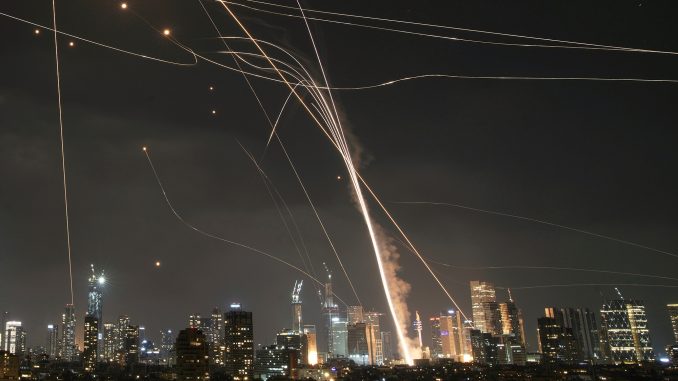
On March 11–12, 2026, the Iran‑backed Lebanese militant group Hezbollah launched a large‑scale rocket assault on northern Israel, firing around 100–150 rockets in coordinated barrages from southern Lebanon.
The salvo triggered air‑raid sirens across multiple communities including Haifa, Acre, the Krayot region, and other northern towns, forcing residents to seek cover as the rockets soared toward populated areas.
Iron Dome Under Pressure
Israel’s famed Iron Dome air‑defense system — designed to detect, track, and intercept short‑range rockets — came under intense strain. Israeli military sources reported that only about half of the incoming rockets were intercepted, meaning that a significant proportion penetrated the defense net and reached Israeli territory or fell in open areas.
The barrage represented one of Hezbollah’s most sustained attacks from Lebanon in the recent round of hostilities and underscored the challenges facing Israel’s air defenses when confronted with high‑volume rocket volleys.
 An illustration showing the impact of the airstrikes in the war against Iran by the Strait of Hormuz.
Casualties and Damage
Initial reports indicate light injuries in several communities, including at least one civilian struck by debris in the area near Tiberias. Property damage was also reported from rockets and falling interceptor fragments, though full assessments are ongoing.
Israel’s Military Response
In retaliation, the Israel Defense Forces (IDF) launched an extensive round of airstrikes on Hezbollah infrastructure and rocket launch sites throughout southern Lebanon and parts of Beirut, targeting launchers, command centers, and suspected weapon depots.
Senior Israeli officials warned that if Hezbollah’s attacks continued, a ground operation into Lebanon could be considered, and Israel has increased military operations along the northern border.
Regional Conflict Context
This dramatic escalation comes amid the wider Israel‑Iran conflict, with Iranian forces and allied militias also engaged in various fronts. The rocket barrage added pressure on Israel’s defenses not only from the south (Gaza and other groups) but now strongly from the north, raising concerns that the war could spread into a broader regional confrontation.
Analysts note that Hezbollah has been rebuilding its arsenal with Iranian support for months and is capable of firing large numbers of rockets in quick succession — a tactic meant in part to overwhelm air‑defense systems like the Iron Dome.
 Public / Political Reactions
🇮🇱 Israeli Government and Military
- Harsh Condemnation & Tough Stance — Israeli officials, including Defence Minister Israel Katz, publicly criticized Hezbollah’s attack as an unacceptable escalation and announced an expansion of military operations into southern Lebanon. Katz warned that if the Lebanese state does not curb Hezbollah, Israel will act independently.
- Hardening Policy Toward Lebanon — Some Israeli security voices are urging even broader action, including potential strikes on infrastructure linked to the Lebanese government and the establishment of a deeper buffer zone. (Security commentary shared on social media reflects sentiment for stronger measures, citing that past efforts have failed to ensure northern Israel’s safety.)
- Public Fear and Disruption in the North — Beyond official statements, citizens in northern towns have endured frequent alerts, with communities like Metula effectively turning into ghost towns as residents take cover and many services close due to security concerns. Humanitarian impacts, including school closures and mass shelter use, reflect growing anxiety among civilians.
🇱🇧 Lebanese Political Reaction
- Government Criticism of Hezbollah — Within Lebanon, there is growing political backlash against Hezbollah’s military actions. Prominent Lebanese voices and parties have openly criticized the group for dragging the country into war, endangering civilians, and undermining national stability.
- Calls for Disarmament and State Authority — Previous government actions (as documented before this latest barrage) included efforts to ban Hezbollah’s military activities, arguing that armed militias should operate only under state control. Lebanese leaders stressed that decisions about war and peace must rest with the state, not independent armed factions.
📊 Public Opinion and Societal Responses
- Internal Lebanese Divides — Inside Lebanon, public sentiment is mixed: while some communities condemn Hezbollah’s actions for bringing devastating retaliation and displacement, others still view the group as a defender against Israeli actions — particularly where memories of prior conflicts and ceasefire terms remain contentious. (Some analysts note that criticism is rising but may be muted due to fear of reprisal or social pressure.)
- Israeli Public Expectations — In Israel, decades of intermittent rocket fire from Hezbollah have shaped a public expectation of strong retaliation when northern communities are threatened, with many supporting decisive military responses to prevent future barrages.
🌍 Regional and International Context
While reactions vary widely across the Middle East and the world, the recent exchange of fire has heightened fears of broader regional conflict, especially given Hezbollah’s ties to Iran and the wider Israel‑Iran confrontation. Regional governments and international observers are closely watching whether escalation will draw in other state and non‑state actors.
 Resulting Effects of Hezbollah Rocket Barrage
1. Northern Israel Under Strain
- The intense rocket fire disrupted daily life across northern Israel, forcing school closures, work interruptions, and large-scale use of shelters.
- Civilian anxiety has increased, with communities along the border now acutely aware of the threat posed by cross-border attacks.
- Infrastructure damage, though limited, underscores that even sophisticated missile defense systems like the Iron Dome cannot fully neutralize massed barrages, leaving towns vulnerable.
2. Military Posture and Readiness
- The IDF responded with rapid airstrikes targeting Hezbollah launch sites and command centers in southern Lebanon, sending a clear message of retaliation and deterrence.
- Israel has expanded its northern deployments and increased border security, signaling readiness to escalate operations if Hezbollah continues its attacks.
- The barrage exposed potential vulnerabilities in missile defense under saturation attacks, prompting a reevaluation of strategic and tactical defensive measures.
3. Hezbollah’s Position and Lebanon’s Stability
- Hezbollah’s aggressive action has drawn international attention and criticism, isolating it politically within Lebanon.
- Lebanese civilians and political actors increasingly perceive Hezbollah as a destabilizing force, risking internal dissent and weakening its domestic support base.
- The organization’s willingness to provoke Israel escalates the risk of broader regional conflict, making Lebanon a potential battleground in the Israel-Iran confrontation.
4. Regional Deterrence and Message to Iran
- The barrage, combined with Israel’s immediate and forceful retaliation, demonstrates that attempts to overwhelm Israel’s defenses will trigger decisive and disproportionate responses.
- It reinforces Israel’s stance that cross-border aggression will be met with strong consequences, sending a warning not only to Hezbollah but also to its backers, including Iran.
5. Strategic and Psychological Impact
- The attack reinforces the perception that Israel faces threats on multiple fronts simultaneously (Gaza, northern border, and potential Iranian proxies), highlighting the necessity of vigilance and rapid response.
- Public morale, while shaken by the attacks, is bolstered by visible defensive successes and decisive retaliatory measures, reinforcing the notion of resilience under fire.
 Future Outlook
1. Heightened Northern Defense
- Israel is expected to maintain an elevated military posture along the northern border, including increased troop deployments, air defense coverage, and intelligence operations.
- Continued surveillance and rapid-response readiness will aim to preempt future rocket barrages and minimize civilian casualties.
- Investments in missile defense systems and early-warning infrastructure are likely to accelerate to counter saturation attacks.
2. Strategic Retaliation as Deterrence
- Israel’s decisive retaliatory strikes against Hezbollah positions send a clear message that attacks will be met with proportional or overwhelming responses.
- Future engagements are likely to prioritize swift, targeted strikes designed to degrade Hezbollah’s military capabilities while deterring further provocations.
- The emphasis on immediate retaliation reinforces a policy of deterrence through strength, ensuring that adversaries think twice before initiating attacks.
3. Regional Escalation Risk
- While Israel seeks to contain the conflict, the risk remains that Hezbollah or other Iranian-backed militias could attempt coordinated multi-front operations, including Gaza or Syria.
- Israel may continue to preemptively strike or monitor proxy activities across the region to maintain strategic superiority.
Diplomatic and intelligence efforts will likely focus on isolating - Hezbollah internationally, reducing external support, and mitigating regional escalation.
4. Domestic and Public Preparedness
- Civilian readiness in northern communities will continue to be emphasized, with ongoing drills, shelter access, and public alert systems reinforcing a culture of resilience.
- Maintaining public confidence in Israel’s defense capabilities is a priority, both to minimize panic and to underscore that national security infrastructure is robust and responsive.
5. Long-Term Strategic Implications
- Hezbollah’s reliance on mass rocket attacks to challenge Israel may backfire politically and militarily, strengthening Israel’s case for proactive defense measures.
- Israel is likely to continue developing layered defense strategies, combining air defense, intelligence, and rapid retaliatory capabilities, ensuring adversaries are aware of the high cost of aggression.
- The broader regional balance may shift as Israel demonstrates both military precision and resolve, deterring future escalations and reinforcing deterrence across multiple fronts.
 Bottom Line
The recent Hezbollah rocket barrage underscores the persistent threats Israel faces along its northern border. While the Iron Dome successfully intercepted many incoming rockets, the attack revealed vulnerabilities under sustained assault, emphasizing the need for continuous military readiness, advanced defensive systems, and rapid retaliatory capabilities.
Israel’s decisive response demonstrates a commitment to protecting its citizens and maintaining regional stability. By combining strong defensive measures, targeted retaliatory strikes, and strategic vigilance, Israel signals that aggression against its territory carries immediate and serious consequences.
Looking forward, sustained deterrence, robust civilian preparedness, and proactive intelligence operations will remain critical. Hezbollah’s actions have reinforced the importance of strength, vigilance, and resilience, ensuring that Israel can respond effectively to threats while minimizing both civilian and military risk.
The broader lesson is clear: security requires a balance of defensive readiness and decisive response, ensuring that attempts to challenge Israel’s sovereignty are met with unwavering resolve.




