
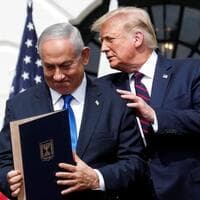
President Donald Trump says Israeli Prime Minister Benjamin Netanyahu could visit the White House in the coming weeks following a recent phone call, as Washington and Jerusalem seek to manage tensions over Iran, Lebanon, and the future of Middle East security.
Published July 6, 2026
WASHINGTON, D.C. — U.S. President Donald Trump has indicated that Israeli Prime Minister Benjamin Netanyahu could soon travel to Washington for a high-level White House meeting, describing their relationship as strong while making the striking remark that Netanyahu “knows who the boss is.”
The comments followed a phone conversation between the two leaders in which they agreed to meet in the United States in the near future. According to Trump’s interview with Axios, the meeting could take place after his return from the upcoming NATO summit, although Israeli officials suggested the visit may occur later depending on scheduling.
The planned meeting would mark the first face-to-face talks between Trump and Netanyahu since their highly publicized discussions earlier this year over Iran, regional security, and Israel’s military operations.
 President Trump shakes hands with Israeli Prime Minister Benjamin Netanyahu during a press conference after meeting at Mar-a-Lago club in Palm Beach, Florida, on Dec. 29, 2025.REUTERS
A Relationship Under Pressure
Although both leaders continue to emphasize the strength of the U.S.-Israel alliance, recent months have exposed growing differences over regional strategy.
The Trump administration has pursued diplomatic efforts aimed at limiting Iran’s nuclear ambitions while preventing a broader regional conflict. Israeli officials, meanwhile, have repeatedly voiced concerns that any agreement with Tehran must adequately address Iran’s missile capabilities and regional influence.
Those differing priorities have occasionally produced public friction, particularly regarding Israeli military operations in Lebanon and Washington’s efforts to reduce regional escalation.
 Vessels at the Strait of Hormuz, as seen from Musandam, Oman, July 1, 2026.REUTERS
“Knows Who the Boss Is”
Speaking to Axios, Trump dismissed suggestions that relations with Netanyahu had deteriorated.
“We get along very good,” Trump said before adding that Netanyahu “knows who the boss is,” referring to himself.
The remark immediately attracted international attention, with analysts viewing it as an effort by Trump to underscore Washington’s influence over one of its closest Middle Eastern allies while projecting confidence ahead of the anticipated White House meeting.
Israeli officials did not publicly respond to the comment but confirmed that the two leaders had spoken by telephone and agreed to meet in the near future.
Iran Expected to Dominate Talks
Iran is expected to be at the center of any upcoming discussions.
The White House has continued pursuing diplomatic engagement intended to prevent Iran from acquiring nuclear weapons while reducing the risk of another regional war.
Israeli leaders, however, have consistently argued that Iran remains the region’s primary security threat and have called for stronger measures to limit Tehran’s military capabilities.
Analysts expect Trump and Netanyahu to discuss the future of U.S.-Iran diplomacy, regional deterrence, intelligence cooperation, and the broader security environment following months of heightened tensions involving Iran, Israel, Hezbollah, and other regional actors.
 Trump and Netanyahu agreed to meet in the US “in the near future.”Getty Images
Beyond Iran: Regional Security and Lebanon
The leaders are also expected to address the continuing security situation in Lebanon, where cross-border hostilities and military operations have raised concerns about a wider regional conflict.
Washington has sought to prevent further escalation while maintaining its longstanding commitment to Israel’s security.
The meeting may also include discussions on Gaza, defense cooperation, intelligence sharing, and broader U.S. policy toward the Middle East.
Political Importance for Both Leaders
The planned meeting comes at an important political moment for both governments.
For Trump, the talks offer an opportunity to reinforce U.S. leadership in Middle East diplomacy while balancing support for Israel with efforts to avoid a wider regional war.
For Netanyahu, a White House meeting would highlight the enduring strategic partnership between Israel and the United States as his government navigates complex security challenges and domestic political pressures.
 Public / Political Reactions:
🇺🇸 Trump Administration
President Donald Trump portrayed his recent phone call with Israeli Prime Minister Benjamin Netanyahu as productive and emphasized the strength of the U.S.-Israel relationship.
- Trump confirmed that the two leaders are expected to meet at the White House in the coming weeks.
- He stated that Netanyahu “knows who the boss is,” suggesting that the United States continues to play the leading role in shaping strategic discussions with Israel.
- White House officials said the upcoming meeting will focus on Iran, regional security, and strengthening bilateral cooperation.
➡️ Position: The Trump administration says the planned meeting demonstrates continued U.S. leadership in Middle East diplomacy while reaffirming America’s commitment to Israel’s security.
🇮🇱 Israeli Government
Israeli officials welcomed plans for the upcoming White House meeting and reaffirmed the importance of close coordination with Washington.
- Prime Minister Benjamin Netanyahu’s office confirmed the recent phone conversation and said both leaders agreed to meet soon.
- Israeli officials indicated that discussions will center on Iran’s nuclear program, regional security threats, and ongoing military operations.
- Jerusalem continues to stress that preventing Iran from obtaining nuclear weapons remains Israel’s highest national security priority.
➡️ Position: Israel views the meeting as an opportunity to strengthen strategic cooperation with the United States and coordinate regional security policy.
🌍 International and Regional Observers
The announcement drew significant attention from diplomats and security analysts across the Middle East and Europe.
- Analysts believe Iran will dominate discussions between the two leaders.
- Regional observers are closely watching for any changes in U.S. policy regarding Iran, Lebanon, Gaza, and broader Middle East security.
- Several experts noted that the meeting could influence future diplomatic efforts and regional stability.
➡️ Position: International observers see the meeting as a potentially important development for Middle East diplomacy and regional security.
🏛️ Political Analysts
Foreign policy analysts offered differing views on Trump’s remarks regarding Netanyahu.
- Some viewed the “knows who the boss is” comment as a display of political confidence and an attempt to emphasize Washington’s influence over regional affairs.
- Others suggested the statement reflects Trump’s negotiating style and his desire to project strong American leadership.
- Analysts expect the White House meeting to clarify how closely the two governments are aligned on Iran and regional conflicts.
➡️ Position: Experts believe the upcoming meeting will provide important insight into the future direction of U.S.-Israel relations.
👥 Public Response
Reaction among the public and across social media was mixed.
- Supporters of both leaders welcomed the announcement as a sign of continued cooperation between two longstanding allies.
- Others debated Trump’s remarks, with some praising his direct approach while critics argued the language was unusually blunt for discussions involving close allies.
- The planned meeting quickly became a widely discussed topic across international media and political commentary.
➡️ Position: Public reaction reflects both support for stronger U.S.-Israel cooperation and debate over the tone of Trump’s comments.
🏛️ Broader Political Impact
The planned White House meeting is expected to have broader implications for Middle East diplomacy.
- Discussions are likely to focus on Iran’s nuclear ambitions, regional security, military cooperation, and intelligence sharing.
- The meeting may influence future U.S. policy toward Iran, Lebanon, Gaza, and broader regional stability.
- Allies and adversaries alike are expected to closely monitor the outcome for signs of future diplomatic or military initiatives.
➡️ Position: The upcoming Trump–Netanyahu meeting is expected to shape regional diplomacy and reinforce the strategic partnership between the United States and Israel while influencing future Middle East policy.
 Resulting Effects:
The announcement of a planned White House meeting between President Donald Trump and Israeli Prime Minister Benjamin Netanyahu is expected to have significant diplomatic, military, and geopolitical implications. Coming amid ongoing tensions involving Iran, Gaza, and Lebanon, the meeting reinforces the strategic importance of the U.S.-Israel alliance and could shape future policy across the Middle East.
1. Strengthened U.S.-Israel Strategic Coordination
The planned meeting signals continued close cooperation between Washington and Jerusalem on key regional issues.
🤝 U.S. and Israeli officials are expected to coordinate strategies on Iran, regional security, and defense cooperation.
🛡️ Military and intelligence collaboration between the two allies is likely to remain a central focus.
📋 The discussions may also strengthen bilateral cooperation on future security initiatives.
➡️ Result: Planned White House meeting → reinforced strategic partnership between the United States and Israel.
2. Increased Focus on Iran
Iran is expected to dominate discussions between the two leaders.
☢️ Both governments are likely to review Iran’s nuclear program and regional military activities.
🚀 Additional measures to deter Iranian missile development and support for proxy groups may be discussed.
🌍 The meeting could influence future U.S. diplomatic and security policy toward Tehran.
➡️ Result: High-level consultations → greater international attention on Iran and regional security.
3. Potential Influence on Middle East Security
The talks are expected to address several ongoing regional conflicts.
⚔️ Officials are likely to discuss the situations in Gaza, Lebanon, Syria, and other regional flashpoints.
🛰️ Intelligence sharing and joint defense planning may be expanded.
🌐 Neighboring countries will closely monitor any policy announcements resulting from the meeting.
➡️ Result: U.S.-Israel consultations → increased focus on regional stability and security cooperation.
4. Renewed Diplomatic Activity
The planned summit is expected to generate renewed diplomatic engagement across the region.
🤝 Allies may increase consultations ahead of any major U.S. policy announcements.
🏛️ Regional governments are expected to closely follow developments from Washington.
📢 The meeting could influence future diplomatic initiatives involving Middle Eastern partners.
➡️ Result: High-level diplomacy → expanded regional political engagement and international attention.
5. Domestic and International Political Attention
Trump’s remarks and the planned meeting have already generated widespread political discussion.
🗳️ Supporters view the meeting as evidence of strong American leadership and continued support for Israel.
📰 Critics have debated Trump’s “knows who the boss is” comment, arguing that it may affect diplomatic perceptions.
🌍 International media are expected to closely scrutinize both the tone and outcomes of the meeting.
➡️ Result: High-profile political statements → increased public debate and global media attention.
6. Long-Term Impact on U.S. Middle East Policy
The meeting could help shape Washington’s broader strategy in the region.
📖 Future U.S. policy toward Iran, Israel, and regional security may be influenced by the discussions.
🛡️ Defense cooperation, intelligence sharing, and military assistance are expected to remain priorities.
🤝 The outcome may also affect future diplomatic efforts aimed at reducing regional tensions while maintaining strong alliances.
➡️ Result: Strategic White House meeting → potential influence on long-term U.S. foreign policy and Middle East security.
 Future Outlook:
The anticipated White House meeting between President Donald Trump and Israeli Prime Minister Benjamin Netanyahu is expected to play an important role in shaping U.S.-Israel relations and the broader security landscape in the Middle East. With regional tensions remaining high, the discussions could influence future diplomatic initiatives, military cooperation, and policy toward Iran and other regional conflicts.
1. U.S.-Israel Relations Are Expected to Remain Strong
Despite occasional public differences, both governments are likely to continue their close strategic partnership.
🤝 Washington and Jerusalem are expected to strengthen cooperation on defense, intelligence sharing, and regional security.
🛡️ Military assistance and joint security initiatives will likely remain central pillars of the alliance.
📋 Senior officials are expected to continue regular consultations on emerging regional threats.
➡️ Outlook: Continued high-level engagement → stronger U.S.-Israel strategic cooperation.
2. Iran Will Remain the Primary Focus
Iran is expected to dominate future discussions between the two governments.
☢️ U.S. and Israeli leaders are likely to coordinate policies aimed at preventing Iran from developing a nuclear weapon.
🚀 Additional diplomatic, economic, or military measures may be considered if regional tensions increase.
🌍 Developments involving Iran’s regional allies and proxy groups are expected to remain under close observation.
➡️ Outlook: Ongoing concerns over Iran → continued diplomatic and security coordination between Washington and Jerusalem.
3. Regional Security Challenges Will Continue
Conflicts across the Middle East are expected to remain major topics of discussion.
⚔️ The situations in Gaza, Lebanon, Syria, and the broader region are likely to require continued coordination.
🛰️ Intelligence cooperation and regional defense planning may expand as security threats evolve.
🌐 The outcome of the White House meeting could influence future responses to regional crises.
➡️ Outlook: Persistent regional instability → continued focus on security cooperation and crisis management.
4. Diplomatic Engagement May Increase
The planned meeting could encourage broader diplomatic activity involving U.S. allies and regional partners.
🤝 Additional consultations with Middle Eastern governments are likely following the White House talks.
🏛️ Future diplomatic initiatives may focus on reducing regional tensions while maintaining strong security partnerships.
📢 International observers will closely monitor any policy announcements or agreements emerging from the meeting.
➡️ Outlook: High-level diplomacy → expanded regional engagement and renewed international attention.
5. Political Implications Will Continue to Develop
The meeting is expected to carry both domestic and international political significance.
🗳️ Analysts will closely examine whether the discussions produce concrete policy decisions or symbolic commitments.
📰 Trump’s comments regarding Netanyahu are likely to remain part of the broader political conversation surrounding the visit.
🌍 The outcome could influence perceptions of U.S. leadership in Middle East affairs among allies and adversaries alike.
➡️ Outlook: Continued political attention → ongoing debate over U.S. leadership and regional strategy.
6. The Meeting Could Shape Future Middle East Policy
Beyond immediate security concerns, the discussions may influence the direction of American policy in the region.
📖 Decisions reached during the meeting could affect future military assistance, diplomatic initiatives, and strategic planning.
🛡️ Long-term cooperation on defense, intelligence, and regional deterrence is expected to remain a priority.
🤝 While major breakthroughs are not guaranteed, the meeting may establish the framework for future cooperation on key regional challenges.
➡️ Outlook: Continued U.S.-Israel coordination → lasting influence on Middle East diplomacy, security, and regional stability.
 Bottom Line:
The planned White House meeting between President Donald Trump and Israeli Prime Minister Benjamin Netanyahu underscores the enduring importance of the U.S.-Israel alliance at a time of heightened uncertainty across the Middle East. While Trump’s remark that Netanyahu “knows who the boss is” drew headlines and sparked political debate, both governments have emphasized that the upcoming talks will focus on far more consequential issues—including Iran’s nuclear ambitions, regional security, military cooperation, and ongoing conflicts in Gaza and Lebanon.
For Washington, the meeting presents an opportunity to reaffirm American leadership and coordinate closely with one of its closest allies on rapidly evolving security challenges. For Israel, it offers a chance to strengthen strategic cooperation with the United States while ensuring its security concerns remain at the forefront of regional diplomacy.
Although the meeting is unlikely to resolve the Middle East’s complex conflicts overnight, it could influence the direction of U.S. policy, shape future diplomatic initiatives, and reinforce defense coordination between the two nations. As tensions with Iran persist and instability continues across the region, the outcome of the Trump–Netanyahu discussions will be closely watched by allies, adversaries, and global markets alike.
Ultimately, the significance of the meeting extends beyond the two leaders themselves. It reflects the continuing role of the United States and Israel in addressing some of the region’s most pressing security challenges and may help define the next chapter of Middle East diplomacy in an increasingly volatile geopolitical landscape.
SOURCES: ZEROHEDGE – Trump: ‘Netanyahu Knows Who The Boss Is’ After Phone Call
AXIOS – Exclusive: Trump says Netanyahu “knows who the boss is” ahead of possible WH visit
THE NEW YORK POST – Trump, Netanyahu speak on phone, agree to meet soon




