Published March 12, 2025
Fresh Escalation in a Widening Regional War
In a dramatic escalation of the ongoing Middle East war, **the Israeli military has begun a fresh round of strikes across Iran and against the Iran‑backed militia Hezbollah in Lebanon, marking one of the most intense phases of the conflict yet.
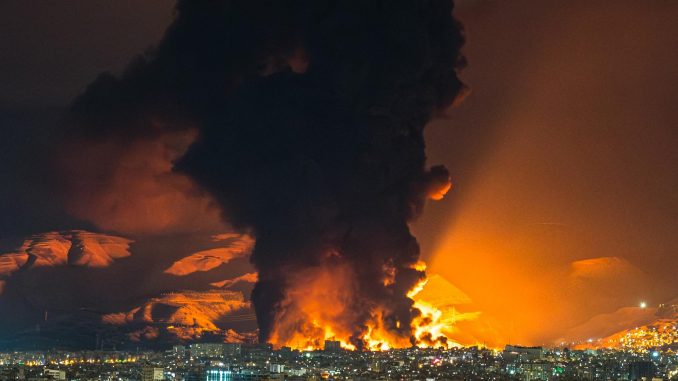
According to official statements, the Israel Defense Forces (IDF) launched “wide‑scale waves” of aerial attacks targeting what they describe as Iranian regime infrastructure and Hezbollah facilities in Beirut and southern Lebanon. Iranian media and state sources reported explosions in Tehran and nearby regions as air defenses engaged incoming threats.
This latest offensive comes amid a broader U.S.–Israeli military campaign that began in late February 2026 against Iranian strategic targets, following an intensification of hostilities sparked by the killing of Iran’s Supreme Leader.
Why Now? Context of the Conflict
1. A Multi‑Front War
What began as heavy strikes by the United States and Israel on Iranian military sites has quickly grown into a multi‑front conflict:
- Iran has carried out missile and drone barrages against Israeli and U.S. positions across the Middle East and Gulf states.
- Hezbollah, aligned with Tehran, formally joined the fight against Israel with major rocket salvos, including recent barrages involving hundreds of missiles and drones aimed at northern Israeli towns.
- These actions have drawn Israel into intensified operations in Lebanon, including airstrikes in densely populated suburbs of Beirut.
The conflict has spilled beyond Iran, Lebanon and Israel, affecting Gulf shipping lanes and prompting fears of wider regional and global economic disruption.
Hezbollah’s Role and the Lebanon Front
Hezbollah’s engagement represents a significant broadening of the war beyond the original Israel–Iran axis. On March 11, Hezbollah launched massive attacks—reportedly around 100 rockets and drones—striking northern parts of Israel and overwhelming air defenses.
In retaliation, Israel has:
- Bombarded southern Lebanon and Beirut suburbs
- Targeted Hezbollah compounds and missile launch sites
- Deployed elite ground forces to the northern border in preparation for possible land operations.
These strikes have contributed to hundreds of civilian deaths, widespread damage, and large‑scale displacement within Lebanon.
Iran’s Retaliatory Actions
Iran continues to respond robustly to the U.S. and Israeli strikes. Recent reports indicate:
- The Islamic Revolutionary Guard Corps (IRGC) conducted what it described as its “heaviest” joint missile operation with Hezbollah against Israeli targets.
Iran has also carried out attacks targeting oil infrastructure and shipping in the Persian Gulf. - These actions have heightened global anxiety over maritime security, particularly through the Strategic Strait of Hormuz, a vital artery for world oil shipments.
Humanitarian and Geopolitical Consequences
Casualties and Displacement
The human toll continues to rise:
- Hundreds are reported killed in Lebanon and Iran
- Thousands more wounded
- Massive displacement as civilians flee bombardment zones in both countries.
Economic Impact
Global energy markets are under strain as conflict threatens oil export routes. Insurance costs and shipping disruptions have pushed oil prices higher, with analysts warning of continuing volatility.
The YouTube video titled “Israel UNLEASHES fresh strikes on Iran, Hezbollah” reports on a new escalation in the ongoing Middle East conflict, showing recent military strikes carried out by the Israeli military against Iranian targets and Hezbollah positions in Lebanon. The footage and commentary, attributed to a Fox News feed, highlight intense military action that aligns with broader hostilities unfolding this week across the region.
 Public / Political Reactions
Domestic Reactions in Israel
- Support for Military Action: Many Israelis express strong support for the government’s strikes, viewing them as necessary to defend national security against Hezbollah and Iran-backed threats. Social media trends show widespread patriotic sentiment, especially in northern towns facing rocket attacks.
- Calls for Restraint: Some Israeli citizens and human rights groups have voiced concern over civilian casualties in Lebanon and the risk of a wider war, calling for a more targeted approach.
Domestic Reactions in Lebanon
- Outrage and Protests: Lebanese civilians and political groups have condemned Israeli airstrikes in Beirut suburbs and southern Lebanon. Protests have erupted in cities like Beirut, demanding an end to the violence and accountability for civilian casualties.
- Hezbollah’s Political Position: Hezbollah frames the conflict as a defensive struggle against Israeli aggression, strengthening its support base in southern Lebanon and parts of Beirut despite the humanitarian toll.
Reactions in Iran
- National Unity Messaging: Iranian state media emphasizes resistance against “foreign aggression”, portraying the strikes as a rallying point for national unity.
- Government Hardline Stance: Tehran has rejected calls for ceasefire and doubled down on missile and drone operations targeting Israel and U.S. positions in the Gulf.
International Reactions
- United States & Western Allies: The U.S. has reaffirmed support for Israel’s right to self-defense while urging caution to prevent escalation. Some European nations emphasize diplomacy and urge both sides to de-escalate.
- United Nations: The UN Secretary-General has called for immediate de-escalation, highlighting the urgent need to protect civilians and humanitarian corridors in Lebanon and Iran.
- Global Public Opinion: International reactions are polarized. Many in the West express sympathy for Israel’s security concerns, while protests in parts of Europe, the Middle East, and South Asia highlight concerns over civilian casualties and potential regional destabilization.
Social Media and Information Warfare
- Both Israel and Hezbollah/Iran-backed sources are actively using social media to frame narratives. Videos and footage of airstrikes, civilian impacts, and military engagements are widely circulated, intensifying global public debate and shaping political pressure internationally.
 Resulting Effects
1. Strengthened Military Deterrence
The recent strikes on Iran and Hezbollah positions have demonstrated the precision and reach of Israel’s military capabilities, reinforcing its deterrence against regional adversaries. This signals to both Iran and its proxies that aggressive actions against Israel or its allies carry immediate and significant consequences.
2. Regional Power Shifts
- Hezbollah’s losses and the damage to Iranian military infrastructure may weaken their operational effectiveness in the short term, reducing their ability to launch coordinated attacks.
- Neighboring countries are recalibrating security postures, particularly in Jordan, Saudi Arabia, and the Gulf states, as the conflict underscores the volatility of regional alliances.
3. Civilian and Economic Impact
While military objectives have been met, civilian populations in Lebanon and Iran face severe consequences:
- Displacement of tens of thousands and increased humanitarian needs.
- Disruption of critical infrastructure, including ports and energy facilities, which ripple into global markets, particularly oil and trade.
- Insurance and shipping costs in the Gulf have surged, signaling broader economic implications.
4. Political Messaging
The strikes reinforce Israel’s position as a strong regional actor willing to take decisive action to protect its citizens. At the same time, Iran’s retaliatory strikes highlight the enduring threat posed by hostile state actors and non-state militias.
 Future Outlook
1.Potential Escalation or Containment
- Israel is likely to maintain pressure on Hezbollah and Iranian targets to suppress further threats, possibly including limited ground operations in southern Lebanon.
- Iran may continue missile and drone attacks in the Gulf, prompting Israel and allies to prepare for ongoing defense operations.
- The conflict could remain localized if deterrence holds, or expand if other actors are drawn in.
2. Geopolitical Consequences
- Countries in the region will reassess alliances and security frameworks.
- International stakeholders may push for diplomacy, but the priority for Israel and aligned nations will remain securing borders and protecting strategic assets.
3. Long-Term Strategic Implications
- The strikes establish a precedent for rapid and decisive response to threats, shaping the calculus of both state and non-state actors in the region.
- Hezbollah’s capabilities may be degraded for months to come, and Iran will face increased pressure both domestically and internationally.
- The message to adversaries is clear: aggression will be met with swift and comprehensive retaliation, shaping regional behavior for the foreseeable future.
 Bottom Line
The recent wave of strikes by Israel against Iran and Hezbollah underscores a clear and unwavering approach to national security: threats to the homeland and its allies will be met with decisive action. While the conflict carries serious humanitarian and economic consequences, it has also reinforced deterrence, weakened hostile actors, and signaled the resolve of Israel and its partners in the region.
Looking ahead, the situation will remain tense, but the demonstration of military precision and readiness may prevent further escalation. Regional actors are being reminded that security and strategic interests must guide decisions, and that decisive defense measures are essential to maintaining stability in an increasingly volatile environment.
In essence, the strikes reflect a pragmatic, measured approach to protecting citizens and strategic assets, balancing the immediate need for defense with long-term regional security considerations.