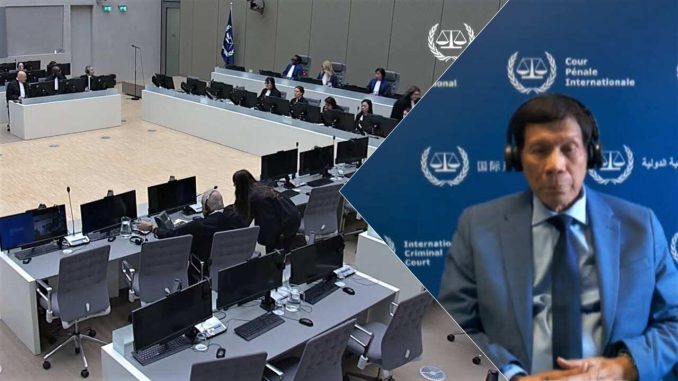
Former Philippine President Rodrigo Duterte faces proceedings before the International Criminal Court (ICC) in The Hague, Netherlands, as prosecutors prepare to present witness testimonies in the case involving alleged crimes against humanity linked to his administration’s anti-drug campaign. The upcoming trial is scheduled to begin on November 30, 2026.

by Diana Zapata •
News Writer /Editorial Specialist
Published November 4, 2026
The International Criminal Court (ICC) is moving forward with preparations for the trial of former Philippine President Rodrigo Duterte, as prosecutors seek to introduce additional witness testimonies and his defense challenges the relevance of certain evidence ahead of proceedings scheduled to begin on November 30, 2026.
Defense Challenges Prosecution Evidence
On November 4, Duterte’s defense team asked ICC Trial Chamber III to reject a report associated with a prosecution witness identified as P-1357. In its filing, the defense argued that the witness’s testimony was peripheral to the case and did not provide substantial information about the research, allegations or findings contained in the report.
The defense also said it would not cross-examine the witness, citing what it described as the limited relevance of her testimony. However, the defense did not oppose the admission of statements from two other witnesses, identified as P-0024 and P-1359. The court has yet to issue a ruling on the application.
Prosecutors Seek Seven Additional Witnesses
In a separate development, ICC prosecutors have sought permission to introduce the previously recorded testimonies of seven additional witnesses. According to reports published by VERA Files on November 4, the proposed evidence concerns alleged extrajudicial killings in Davao City and other parts of the Philippines during Duterte’s anti-drug campaign.
The prosecution intends to use the testimonies to support its case concerning the alleged pattern of killings and the implementation of the anti-drug campaign. The proposed evidence forms part of the prosecution’s efforts to present witness accounts and supporting materials during the upcoming trial.
The request remains subject to the court’s review. The defense will have opportunities to challenge evidence and question witnesses in accordance with the court’s procedures.
ICC Requires Duterte to Attend Trial Daily
Meanwhile, ICC Trial Chamber III has stated that Duterte is expected to attend the trial proceedings on a daily basis once the trial formally begins on November 30.
Presiding Judge Joanna Korner made the clarification during the fifth and final status conference on November 2. Duterte had been allowed to waive his appearance at that particular conference, but the judge emphasized that the expectation would be different once the trial proper starts.
The court also discussed procedural arrangements, including the presentation of evidence, witness appearances and the trial schedule. The proceedings are expected to take place in The Hague, Netherlands.
What Happens Next
The November 30 opening date marks the next major stage in the ICC proceedings against Duterte. Before and during the trial, judges will consider pending applications concerning witness testimonies and other evidence submitted by the prosecution and defense.
Duterte faces three counts of crimes against humanity involving alleged killings connected to the anti-drug campaign during his time as Davao City mayor and Philippine president. The charges were confirmed by the ICC in April 2026, and he has denied the allegations.
The court has not yet ruled on the defense’s request concerning the witness-linked report or the prosecution’s latest applications for additional witness evidence.
The Conclusion
The upcoming trial is entering a critical preparatory stage, with prosecutors seeking to expand the evidence they intend to present while Duterte’s defense challenges the relevance and admissibility of certain materials. The November 30 proceedings will allow the ICC to examine the allegations through the judicial process, with both sides given the opportunity to present and challenge evidence.