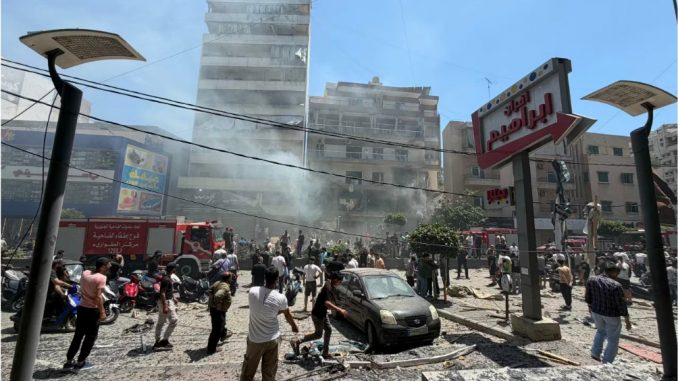
People gather at the site of an Israeli airstrike that targeted a building in Beirut’s southern suburbs on June 14, 2026. The office of Israeli Prime Minister Benjamin Netanyahu said on June 14 the military had carried out strikes in Beirut’s southern suburbs, known as Dahiyeh, while Lebanese state media said a strike hit the Ghobeiry neighbourhood. (Photo by Ibrahim AMRO / AFP)
Published June 14, 2026
Middle East — Latest Developments (June 14–15, 2026) –
Iran has sharply warned that there is “no point” in continuing peace negotiations with the United States after a recent Israeli airstrike on Beirut, escalating tensions at a critical moment when a US-led diplomatic agreement was reportedly nearing completion.
The comments come amid conflicting signals: while Iranian officials are expressing anger over Israeli military actions, US mediators insist that a broader peace framework is still within reach.
💥 Beirut Strike Triggers Diplomatic Breakdown
According to multiple reports, Israel carried out airstrikes in the southern suburbs of Beirut, targeting Hezbollah-linked positions following rocket fire into northern Israel.
🏚️ The strikes hit areas in the Dahiyeh district
⚔️ Israel said the operation targeted Hezbollah infrastructure
💥 Casualties were reported on both sides of the exchange
🚨 Hezbollah responded with rocket and drone attacks
The escalation has intensified fears that the Lebanon front could derail wider regional diplomacy.
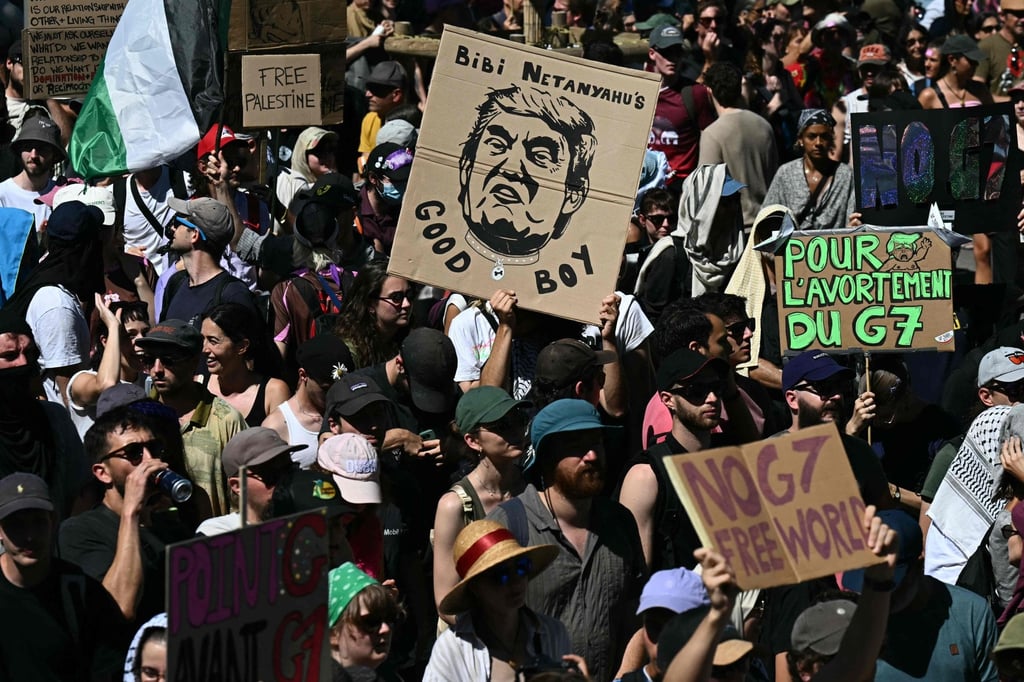 Demonstrators with placards, including one (centre) depicting US President Donald Trump and reading ‘Bibi Netanyahu’s good boy’ during an anti-G& rally ahead of the group’s summit in Geneva, on Sunday. Photo: AFP
🇮🇷 Iran: “US Cannot Be Trusted to Deliver Commitments”
Iran’s chief negotiator Mohammad Bagher Ghalibaf said the Beirut strike proves that peace negotiations are meaningless if the United States cannot ensure compliance by its allies.
Key Iranian positions include:
❌ No continuation of talks under current conditions
⚠️ Accusation that the US cannot enforce commitments or restrain Israel
🧭 Demand for guarantees on regional de-escalation before returning to negotiations
Iranian officials argue that repeated military actions undermine diplomatic credibility and make agreements impossible to implement.
🇺🇸 US Position: Deal Still “Within Reach”
Despite the escalation, US officials and mediators continue to push forward with a draft peace framework involving Iran, reportedly backed by regional intermediaries.
Key elements under discussion:
💰 Release of frozen Iranian assets
🛢️ Easing of oil-related sanctions
🚢 Reopening of key shipping routes such as the Strait of Hormuz
🕊️ A temporary regional ceasefire framework
President Donald Trump has reportedly criticized the timing of the Israeli strike, warning that it could complicate final agreement efforts.
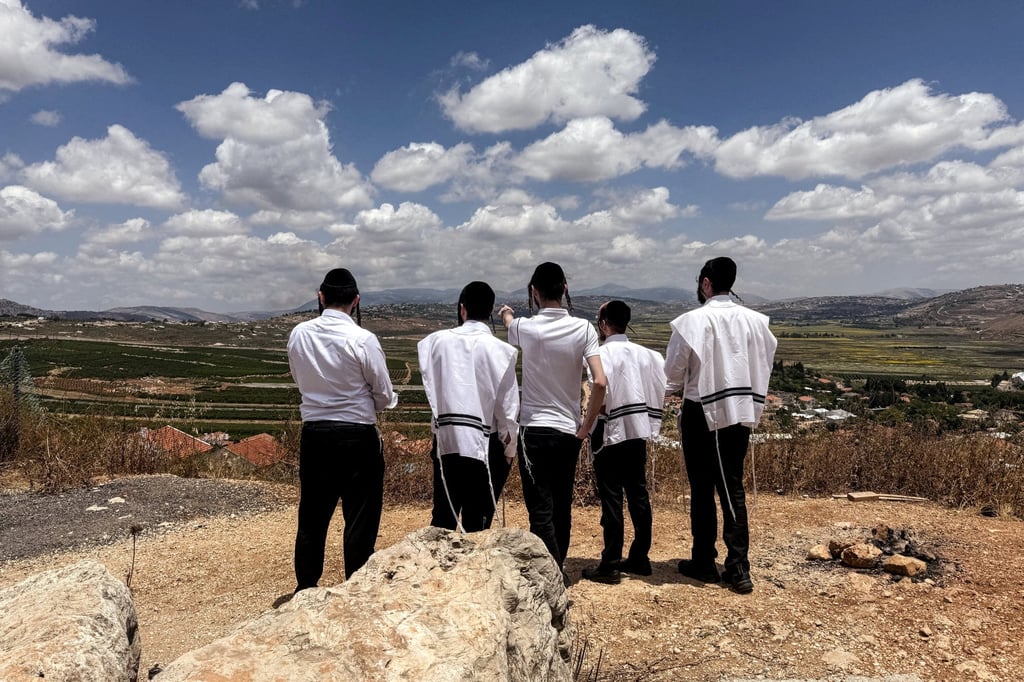 A group of ultra-Orthodox Jewish men looks towards southern Lebanon, from the Israeli side of the Israel-Lebanon border, in northern Israel on Sunday. Photo: Reuters
🔥 Israel–Hezbollah Escalation Complicates Talks
The Beirut strike is part of a broader cycle of violence involving Israel and Hezbollah:
🔴 Hezbollah launched rockets into northern Israel
🔵 Israel responded with targeted airstrikes in Beirut
⚔️ Both sides accuse each other of violating ceasefire understandings
🌍 Lebanon has become a key flashpoint in the wider US–Iran diplomatic crisis
Analysts warn that the Lebanon front is now directly affecting negotiations between Washington and Tehran.
🌍 Diplomatic Crossroads: Deal Near Collapse or Final Push?
Observers say the situation has reached a critical point:
⚠️ Risks:
Talks could collapse if Iran formally withdraws
Escalation in Lebanon could expand regionally
Proxy conflicts risk derailing US–Iran negotiations
🕊️ Possibilities:
- Emergency mediation by Qatar, Pakistan, and other intermediaries
- Limited ceasefire agreements separating Lebanon conflict from Iran talks
- Last-minute political intervention to salvage the deal
 Public / Political Reactions:
🏛️ 🇮🇷 Iran (Government + Negotiators)
Iran’s leadership has taken the strongest stance against continuing negotiations.
- Iran’s chief negotiator said there is “no point in peace talks” if the United States cannot ensure commitments are enforced or restrain Israeli military actions.
- Tehran argues the Beirut strike proves the US cannot control escalation in the region
- Iranian officials are now linking any agreement to broader regional ceasefire conditions, especially Lebanon
➡️ Key message from Iran:
Talks cannot continue while strikes on allied or proxy territories continue.
🏛️ 🇺🇸 United States (Trump administration / mediators)
The US response has been more cautious and diplomatic.
- President Trump criticized the Israeli strike as potentially damaging to a near-final deal.
- US officials still insist a framework agreement is close, involving sanctions relief and frozen asset releases
- Mediators (including Qatar and Pakistan) are still actively trying to keep both sides at the table
➡️ US position:
The deal is fragile, but still possible if escalation is contained.
🏛️ 🇮🇱 Israel
Israel has defended its military actions.
- The Beirut strike was described as a targeted operation against Hezbollah infrastructure
- Israeli officials argue strikes are in response to rocket and drone attacks from Lebanon
- Israel maintains it will continue operations regardless of diplomatic negotiations
➡️ Israeli stance:
Security operations will continue even during peace talks.
🏛️ 🇱🇧 Lebanon / Hezbollah
- Hezbollah has responded with rocket and drone attacks after Israeli strikes
- Lebanese territory (especially Beirut’s southern suburbs) has become a major flashpoint
- The conflict has further escalated tensions across the Israel–Lebanon border region
🌍 International / Regional Mediation
- Qatar and Pakistan are actively involved in behind-the-scenes mediation efforts
- Regional actors warn that the Lebanon escalation is threatening to collapse the US–Iran negotiation track
- Some analysts describe the situation as a “dual-track crisis”: diplomacy on one side, regional war escalation on the other
Political Analysis (what everyone is really reacting to)
Across all sides, the core issue is:
🇮🇷 Iran: “US cannot guarantee Israel’s behavior”
🇺🇸 US: “We are close to a deal but need restraint”
🇮🇱 Israel: “Military security comes first, not negotiations”
🌍 Mediators: “One more escalation could collapse everything”
 Resulting Effects
Based on the latest verified reporting from Reuters, AP, The SCMP, Time, and Inquirer, the Beirut strike and Iran’s reaction have produced immediate diplomatic and security consequences across the Middle East.
⚠️ 1. Peace talks placed in serious jeopardy
The most direct effect is on the US–Iran peace framework, which was reportedly close to agreement before the Beirut strike.
- 🇮🇷 Iran says there is “no point in continuing talks” if the US cannot enforce commitments or restrain Israeli actions
- 🕊️ Negotiations that were near a final draft are now delayed or potentially suspended
- 🧭 Mediators warn the deal could collapse if escalation continues in Lebanon
➡️ Result: Diplomatic momentum has shifted from “near-deal” → “crisis pause”
🔥 2. Lebanon becomes an active escalation front
The Beirut strike has widened the conflict zone.
- 🇮🇱 Israel targeted Hezbollah-linked positions in Beirut after rocket fire into northern Israel
- 🇱🇧 Hezbollah responded with rockets and drones
- 🏚️ Civilian areas in southern Beirut were hit, increasing regional instability
➡️ Result: Lebanon is now directly tied to US–Iran negotiations, not just a side conflict
🇺🇸 3. US diplomatic pressure and internal tension
The United States is now under pressure from multiple directions:
- 🇺🇸 President Trump warned the strike could derail a near-final deal
- US mediators still insist a framework agreement is achievable
- Allies (Qatar, Pakistan, others) are attempting emergency mediation
➡️ Result: US policy is split between military ally coordination (Israel) and diplomatic deal-making (Iran talks)
🧨 4. Increased risk of regional escalation
Analysts warn of a wider spillover effect:
- Iran-linked forces (Hezbollah and allies) may expand retaliatory actions
- Israel continues operations in Lebanon despite diplomacy
- Each strike increases risk of multi-front escalation
➡️ Result: Conflict is no longer bilateral — it is becoming multi-theater (Iran–Israel–Lebanon–US diplomacy)
💰 5. Economic and energy market pressure
Even before a full collapse of talks, markets react quickly:
⚡ Risk to Strait of Hormuz stability remains central in negotiations
🛢️ Oil markets face volatility due to fear of renewed escalation
📉 Investors are pricing in higher geopolitical risk premiums
➡️ Result: Global energy markets remain unstable despite partial peace optimism
🧠 6. Political narratives harden on all sides
Each actor is strengthening its position:
🇮🇷 Iran: “US cannot guarantee security or compliance”
🇺🇸 US: “Deal still possible, but needs restraint”
🇮🇱 Israel: “Military operations continue regardless of talks”
🌍 Mediators: “One more escalation could collapse everything”
➡️ Result: Positions are becoming less flexible, more conditional
 Future Outlook
Based on the latest breaking reports (June 14–15, 2026) from Reuters, SCMP, Time, and Inquirer, the situation is now at a critical diplomatic turning point where both escalation and deal-making are happening at the same time.
⚖️ 1. Peace deal still alive — but extremely fragile
Despite Iran’s anger over the Beirut strike, reporting indicates the US–Iran framework agreement is not fully dead yet.
🇺🇸 US officials still describe the deal as “close to completion” with final technical steps pending.
💰 Proposed deal includes sanctions relief and frozen Iranian assets in exchange for nuclear limits and regional de-escalation
🧭 Mediators say a final signing could still happen if violence slows
➡️ Outlook: The deal is paused, not cancelled — for now
🔥 2. Lebanon escalation is the biggest risk factor
The Beirut strike has become the main threat to diplomacy.
🇮🇱 Israel continues targeted strikes on Hezbollah positions
🇱🇧 Hezbollah continues rocket and drone retaliation
🇮🇷 Iran says talks are meaningless unless Israel’s regional actions are included in any agreement
➡️ Outlook: If Lebanon escalates further, Iran may formally withdraw from talks
🇺🇸 3. US pushing “deal despite conflict”
The United States is trying to separate diplomacy from battlefield escalation:
🇺🇸 President Trump urged restraint after the Beirut strike
Washington is still coordinating with mediators (Qatar, Pakistan, others)
US position: deal can survive if escalation is contained
➡️ Outlook: US strategy depends on keeping negotiations insulated from Lebanon conflict
🧨 4. High risk of regional spillover
Analysts warn the conflict is no longer isolated:
- Lebanon front is now directly tied to Iran negotiations
- Risk of wider proxy escalation involving Hezbollah and allied groups
- Possibility of multi-front confrontation if retaliation expands
➡️ Outlook: The region is in a “trigger-sensitive escalation cycle”
💰 5. Markets and energy remain volatile
Even without full war expansion:
- Oil markets remain sensitive to Strait of Hormuz risk
- Energy infrastructure attacks continue on both sides
- Investors price in high geopolitical uncertainty
➡️ Outlook: Economic pressure may increase urgency for a deal — or worsen instability if talks collapse
🧭 6. Three possible scenarios ahead
🟢 Scenario A — Deal survives (moderate stability)
- Lebanon violence contained
- US–Iran agreement signed with limited scope
- Israel continues separate security operations
🟡 Scenario B — Negotiations delayed (most likely short-term)
- Iran suspends talks temporarily
- Mediation resumes after de-escalation
- No formal collapse
🔴 Scenario C — Full diplomatic breakdown (worst case)
- Iran formally withdraws from talks
- Lebanon conflict expands regionally
- US–Iran deal collapses completely
 Bottom Line
The US–Iran peace process is still technically alive, but it is now extremely fragile after the Israeli strike in Beirut triggered Iran’s warning that continued talks may be pointless if the United States cannot enforce commitments or restrain further escalation. While Washington still believes a final agreement is possible, the situation in Lebanon has become the main obstacle, with ongoing clashes involving Israel and Hezbollah increasing regional instability. In simple terms, diplomacy has not collapsed yet, but it is now under severe pressure, and any further escalation in Lebanon could cause the negotiations to fully break down.
SOURCES: INQUIRER.NET – Iran says ‘no point’ in US talks after Beirut strike
SOUTH CHINA MORNING POST – Israeli strikes on Beirut foil US peace plans, Iran says ‘no point’ in talks
TIME MAGAZINE – Iran Peace Deal at Risk After Israeli Strikes on Beirut