Reported by:

Cherry Meigh Timbol
News Content Editor
Published October 12, 2026
Deadly strikes deepen uncertainty over Gaza truce
The fragile ceasefire in Gaza faced renewed pressure Monday after Israeli strikes killed at least two Palestinians in the southern Gaza Strip, according to local health officials cited by Reuters.
The Israeli military said it had targeted a militant but did not provide further details. The latest incident followed an airstrike late Sunday that hit a tent in the Mawasi area of Khan Younis, killing three people, according to medical officials. Israel said that strike also targeted militants.
The deaths highlight the continuing gap between the ceasefire’s stated objective of ending the war and conditions on the ground. Although the agreement halted major military operations and enabled the release of hostages and prisoners, repeated attacks and disagreements over its next stages have prevented a durable settlement.

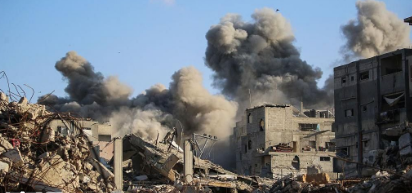
For civilians in Gaza, the renewed violence brings further uncertainty to a territory already devastated by years of conflict, widespread displacement and severe damage to homes and infrastructure.
What happened in Khan Younis?
The latest incidents occurred in southern Gaza, where displaced families continue to live in temporary shelters and tent camps.
According to Reuters, the Monday strike killed at least two Palestinians. The previous night’s strike hit a tent in Mawasi, an area where many displaced Palestinians have sought shelter, killing three people, according to medical officials. The Israeli military said it targeted militants in both incidents.
The reported deaths underscore the risks facing civilians even during a ceasefire. However, the available reports do not establish the identities of all those killed or independently confirm the circumstances surrounding each death.
The incidents also raise questions about how the agreement defines permissible military action, how alleged violations are investigated and what protections are available to civilians in affected areas.

A year after the ceasefire, key commitments remain unfulfilled
The U.S.-brokered Gaza ceasefire took effect on October 10, 2025. Its first phase helped secure the release of hostages and Palestinian prisoners and improved humanitarian access, but major political and security provisions remain unresolved.
A Reuters report published October 6 found that progress on the broader peace plan remained limited. The proposed disarmament of Hamas, further Israeli troop withdrawals, the establishment of a new Palestinian administration and large-scale reconstruction had all encountered significant obstacles.
The Associated Press similarly reported on October 10 that the agreement had not delivered a lasting end to Israeli military activity or substantial reconstruction across the devastated territory.
Israel has maintained that Hamas must disarm before further troop withdrawals can proceed. Hamas and the Trump administration have argued that key elements of the agreement should advance in parallel, rather than making progress on every issue conditional on complete disarmament.
That disagreement has become one of the central obstacles to moving beyond the initial ceasefire.