
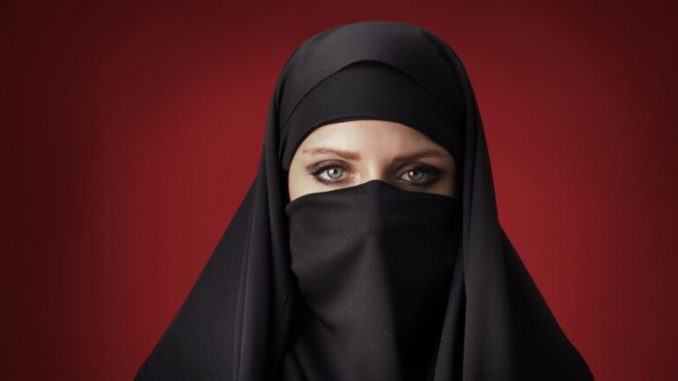
Portugal’s Executive Director of Amnesty International, João Godinho Martins, criticized the face-covering ban as “a direct threat to [women’s] freedom of expression and freedom of religion.” (narvikk – stock photo / Getty Images)
Reported by:

Cherry Meigh Timbol
News Content Editor
Published August 22, 2026
LISBON, Portugal — Portugal has officially become the latest European nation to prohibit face coverings in public spaces after President António José Seguro signed legislation widely known as the “burqa law,” triggering a heated national and international debate over security, women’s rights, and religious freedom.
The new law bans clothing that conceals a person’s face in streets, parks, public transportation, schools, and government buildings. Although written as a general prohibition on face coverings, the measure is broadly viewed as targeting the burqa and niqab, garments worn by a small number of Muslim women.

Portuguese President António José Seguro enacted a law banning public face coverings, with violators facing fines of up to $3,500.
What the law prohibits
Under the legislation, individuals who intentionally conceal their faces in public may face fines ranging from €150 to €3,000. The law includes several exemptions, allowing face coverings for health reasons, certain professions, artistic performances, adverse weather, places of worship, diplomatic facilities, and commercial airline travel.
Supporters argue the measure strengthens public safety by ensuring people can be identified in public while reinforcing principles of gender equality and social integration. The Portuguese presidency said an uncovered face is fundamental to trust, communication, and mutual recognition within democratic society.
Government says equality and security come first
President Seguro defended the legislation as consistent with rulings from the European Court of Human Rights, arguing that requiring women to conceal their faces creates an unequal social standard incompatible with modern European democratic values.
The law also makes it illegal to compel another person to cover their face on the basis of gender, religion, age, or origin, a provision supporters describe as protecting women from coercion.

The law does have some carve-outs for individuals in certain lines of employment, artistic or weather-related issues, when people are at places of worship, along with those on diplomatic missions or aboard planes.AFP via Getty Images
Critics call the measure discriminatory
Human rights organizations and Muslim advocacy groups have sharply criticized the legislation, arguing that it disproportionately affects Muslim women despite avoiding explicit references to Islam. Amnesty International warned that the ban threatens freedom of religion, freedom of expression, privacy, and peaceful assembly, while potentially increasing the social isolation of women who choose to wear the niqab or burqa.
Opponents also argue that the number of women wearing full-face veils in Portugal is extremely small, raising questions about whether the law addresses a genuine public safety issue or symbolizes a broader political debate over immigration and national identity.
🧩 Bottom Line:
Portugal’s face-covering ban represents more than a dress code policy—it marks another chapter in Europe’s ongoing struggle to balance security, cultural integration, and religious liberty. Supporters see the law as a defense of equality and public trust, while critics argue it risks restricting the freedoms of a small religious minority in the name of national values.
SOURCES: THE WESTERN JOURNAL – More Westerners Waking up to Islam as Gov’t Bans Face Coverings, Leaving Both Muslims and (Ironically) Feminists Angry
RTL TODAY – Portugal bans full-face veils in public
THE NEW YORK POST – Portugal prohibits face coverings in public after enacting ‘burqa law’



Spain’s Pools Hit By Disgusting ‘Brown Challenge’ TikTok Filth